Families serving curry tea at home
Mini naans make it easier to offer a smaller piece, while a larger plain naan can be divided between diners. Match the pack to how many people will eat it.


Choose mini plain naan when smaller, flexible portions and familiar flavours matter most. A larger plain tandoori-style naan can work for a shared curry tea; choose garlic and coriander only if the child likes those flavours. Whichever format you choose, check the current pack for allergens, salt, storage and heating instructions, and check the school’s own rules if packing it for school.
Mini naans make it easier to offer a smaller piece, while a larger plain naan can be divided between diners. Match the pack to how many people will eat it.
Plain naan avoids the added garlic, coriander or sweet filling found in some alternatives. Pick a flavoured version when you know the child enjoys those ingredients.
Read the exact pack rather than judging by a premium-style description. The M&S, Waitrose and Sainsbury’s examples discussed here declare wheat or cereals containing gluten, and salt figures need to be read against the amount served.
Start with portion size and flavour, then compare the current labels for the bread you would actually serve.
| Priority | What to check | Your needs |
|---|---|---|
| Portion format | Check the number and size of naans and whether a larger bread can be divided. M&S lists four mini plain naans; Waitrose lists two 130g tandoori plain naans. | For a smaller tea, I’d rather offer a mini naan than expect a child to finish a large one. For a family curry, we could share a bigger bread. |
| Flavour | Compare plain recipes with garlic-and-coriander or filled versions. Hand-stretched or flame-baked describes preparation, not whether a child will like the seasoning. | If familiar flavours matter, I’d start with plain naan. Garlic and coriander make more sense when the child already enjoys them. |
| Allergens | Read the current ingredients and allergen declaration on the exact pack. GOV.UK identifies cereals containing gluten, including wheat, among the allergens that must be declared when present. | I need to check the bread itself for an allergy or coeliac requirement, and the school’s own food rules if it is going into a packed tea or lunch. |
| Salt | Use the label’s per-100g or per-serving basis and the portion you plan to serve; include the rest of the meal in the comparison. NHS daily maximums are 3g for ages 4–6 and 5g for ages 7–10, not per-meal targets. | A smaller-looking salt figure may refer to a smaller serving. I’d compare the amount of bread being served, alongside the curry and sides. |
| Storage and preparation | Check the use-after-opening, freezing, defrosting and heating instructions for that pack. For example, Waitrose describes its two tandoori plain naans as chilled and freezable. | If we will not use the whole pack at tea time, I need storage instructions that work for the leftovers. |
A hand-stretched or tandoori-style naan may still be larger or more strongly flavoured than the child wants. Preparation does not tell you its allergens or salt content.
Choose the portion format and flavour first, then read the exact product label.
Retailer panels may give salt per 100g, per whole naan or per half naan. Those figures do not describe equal amounts of food.
Compare the portions you expect to serve, including any sauce or sides when considering the meal.
The named M&S, Waitrose and Sainsbury’s examples declare wheat or cereals containing gluten. A different recipe or a similarly named pack needs its own check.
For an allergy or coeliac requirement, read the current physical pack before serving.
After-opening and freezing instructions differ between products, so a pack that suits a family meal may be less practical when only a few pieces are needed.
Check the date mark and storage directions before deciding how much to buy or freeze.
Bread left beyond its stated storage period may have to be discarded.
These retailer ranges offer different formats and flavours; compare individual packs rather than treating a retailer name as a measure of suitability.
M&S lists mini plain naans as well as larger garlic-and-coriander naans.
Waitrose lists a pack of two 130g tandoori plain naans, described as hand-stretched and flame-baked.
Sainsbury’s lists plain, mini and Peshwari formats, alongside a Taste the Difference garlic-and-coriander naan.
Tesco’s naan category includes mini and standard formats, with plain and flavoured choices.
These Humza options cover plain and garlic-and-coriander naan in four-piece and family packs. Choose the flavour and pack size that fit the tea you are planning, then check the current product and pack details.
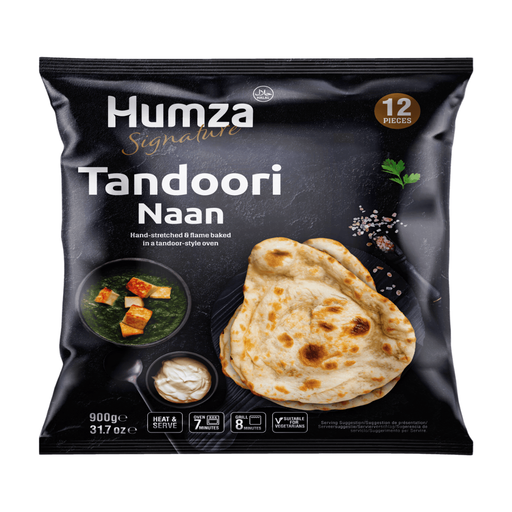 No image available
For a tea where plain flavour is preferred, this is a 300g four-piece tandoori naan pack. Check the current pack for allergens, salt and heating instructions.
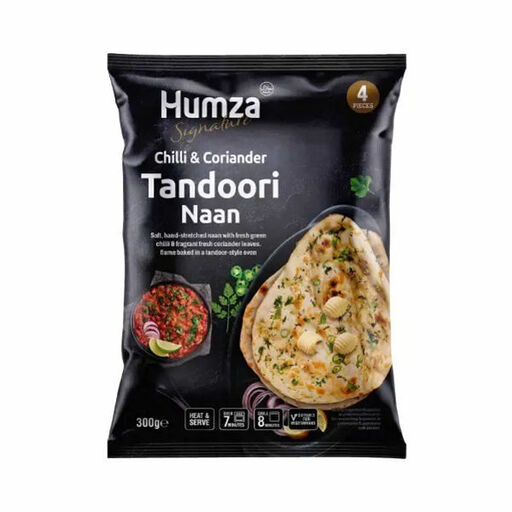 No image available
Consider this 300g four-piece pack when the child already enjoys garlic and coriander. Check the current pack for allergens, salt and heating instructions.
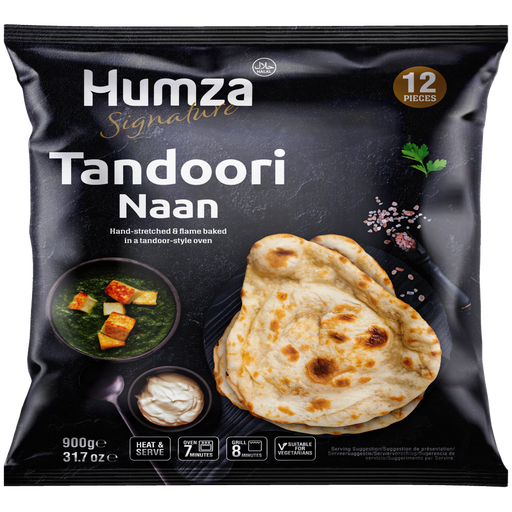 No image available
This plain 12-piece, 900g pack is a format to consider when several people will eat naan or later meals are planned. Check the current pack for allergens, salt and storage instructions for unused pieces.
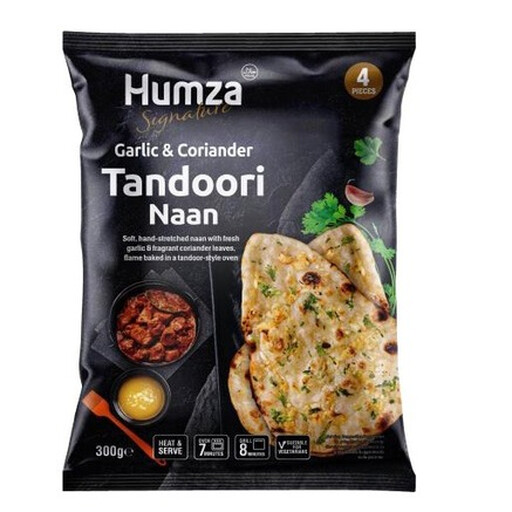 No image available
This flavoured 12-piece family pack suits a planned shared meal when garlic and coriander are welcome. Joybuy’s listing declares wheat flour as a source of gluten; check the current pack for its full allergen, salt and storage information.
No: the named examples declare wheat or cereals containing gluten. Check the current physical pack of any alternative for its exact ingredients and allergen declaration.
Hand-stretched or flame-baked describes how a naan is prepared, not a nutritional advantage. Compare the nutrition panel and the portion you intend to serve for each exact product.
Compare salt for the portion of naan being served and consider the rest of the meal. NHS guidance gives daily maximums of 3g for ages 4–6 and 5g for ages 7–10; these are not per-meal amounts.
Some products can be frozen, but follow the directions for the exact pack. M&S says to freeze its mini plain naans by the date mark and use them within three months; Waitrose says to freeze its tandoori plain naans within the best-before date and use them within one month.
Check the individual school’s food rules and the naan’s current allergen label before packing it. GOV.UK guidance for England, Northern Ireland and Wales identifies cereals containing gluten, including wheat, among the allergens food businesses must declare when present.