Hosts adding an optional bread side
If some guests want bread alongside a saucy dish, compare the number and size of pieces with what the table is likely to eat. A full-size two-pack and a pack of minis offer different ways to share.


Naan is an optional side for a Chinese takeaway, so start with how many diners actually want bread. A plain two-pack may suit a small table, while mini pieces give diners smaller portions; if someone needs to avoid gluten or milk, assess a specifically labelled product against their requirements rather than assuming an ordinary naan is suitable.
If some guests want bread alongside a saucy dish, compare the number and size of pieces with what the table is likely to eat. A full-size two-pack and a pack of minis offer different ways to share.
Ordinary plain naan and a specifically labelled free-from naan are different products. Check the current pack’s ingredients and allergen information against the diner’s requirements before serving it.
Decide whether bread is wanted at all, then choose a portion size and check the exact product’s suitability.
| Priority | What to check | Your needs |
|---|---|---|
| Amount of bread | Compare the number of pieces and declared pack weight. Two-packs can differ in weight: Sainsbury’s lists 260 g for its plain two-pack, while Waitrose lists 220 g for its plain two-pack. | I only want an extra side if the people at the table will eat it. |
| Portion size and flavour | Check whether the pack contains full-size or mini naans, and whether the bread is plain or flavoured. Asda lists both an ordinary plain two-pack and a four-piece mini plain pack. | Smaller individual pieces would help if several diners want just a little bread. If the takeaway has strong flavours, I can decide whether plain bread suits the meal. |
| Allergens | Read the exact pack’s ingredients and allergen statements. Asda identifies wheat in its ordinary plain naan and separately lists a gluten-free, milk-free naan; Sainsbury’s plain naan carries a milk-allergy warning. | Someone eating with us needs the bread checked against their own requirements, not chosen because its name says “plain”. |
| Preparation and storage | Follow the selected pack’s heating and storage directions. Check its date mark if bread will be kept: GOV.UK distinguishes a use-by date, which concerns safety, from a best-before date, which concerns quality. | If there may be bread left over, I want a pack size we can use and storage instructions we can follow. |
Piece count does not tell you how much bread is in the pack. The plain two-packs listed by Sainsbury’s and Waitrose weigh 260 g and 220 g respectively.
Compare the declared weight as well as the number of naans, then consider how much the table will eat.
Asda’s ordinary plain naan contains wheat, and Sainsbury’s plain naan warns that it is not suitable for customers with a milk allergy because of manufacturing methods.
Check the current physical pack against the diner’s requirements. Assess a specifically labelled free-from naan as a separate product, not as an automatic substitute.
A pack of minis and a pack of full-size naans offer different portion choices. Unused bread also needs to be handled according to its own storage instructions.
Ask who wants bread before choosing the pack, and follow its directions if any is left.
These retailer examples show different pack sizes and labelling to compare; each detail applies to the named product, not every naan in the retailer’s range.
Asda lists ordinary plain, mini plain and separately labelled free-from naans.
Tesco’s naan category lists a 260 g plain two-pack and a 282 g pack of six mini plain naans.
Sainsbury’s lists a 260 g plain two-pack with product-level ingredients and preparation information.
Waitrose lists a 220 g two-pack of plain naans with kalonji seeds.
M&S lists 200 g plain naans with product-specific ingredients and storage information.
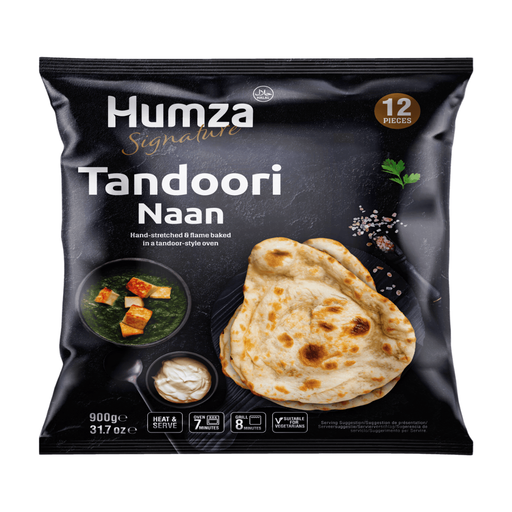
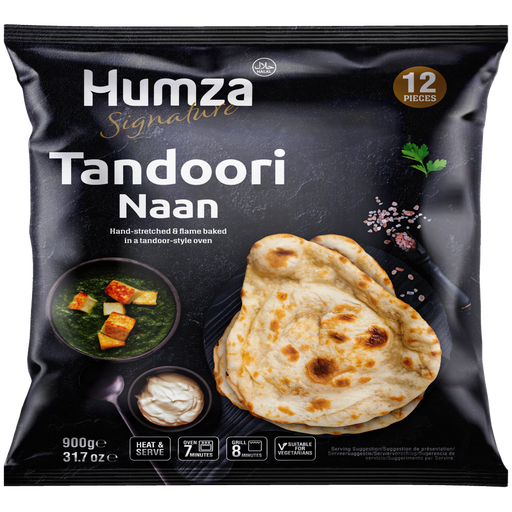
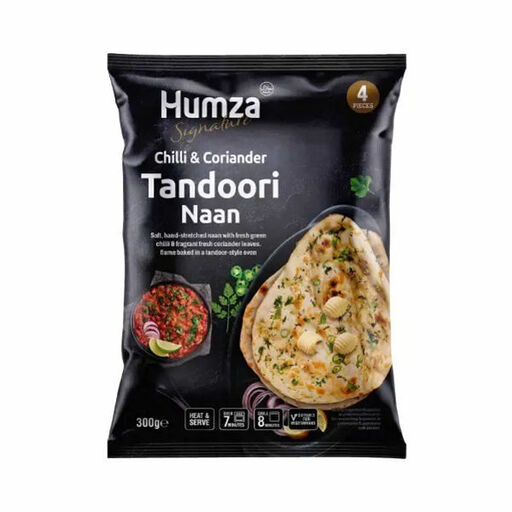
These Humza packs offer four-piece plain or garlic-and-coriander naan, plus a 12-piece plain family pack. Choose by the flavour and amount of bread your table wants; check the current pack for ingredients and preparation directions.
 No image available
A plain four-piece pack to consider when several diners want bread with the takeaway. Check how much the table will eat, along with the current ingredients and heating directions.
 No image available
This plain 12-piece pack is an option when a larger group wants naan. For a small table, consider whether that many pieces will be used, and check the pack’s storage, ingredient and heating instructions.
 No image available
This four-piece pack has garlic and coriander flavour, so choose it if diners want flavoured bread rather than plain naan. Check the current ingredients and preparation directions before serving.
No. Naan is an optional bread side: add it if diners want bread with their meal, rather than assuming it is part of the takeaway.
Choose according to how many people want bread and how much each person is likely to eat. Mini pieces offer smaller individual portions, but also compare the pack’s total weight; piece count alone does not show how much bread you are getting.
Follow the heating instructions on the exact pack you buy. Preparation directions for one retailer’s naan should not be assumed to apply to another product.
Check the current physical pack’s ingredients and allergen statements against that person’s requirements. Sainsbury’s cited plain naan carries a milk-allergy warning, while Asda lists a separate product described as gluten-free and milk-free; neither a “plain” name nor another product’s label establishes suitability.
No. GOV.UK explains that use-by dates concern food safety, whereas best-before dates concern quality. Identify which mark is on the naan and follow its storage instructions.