White-and-wholemeal naan shoppers
Look for both wheat flour and wholemeal wheat flour in the ingredients. Warburtons lists both for its 4 Naan Flatbreads, but the ingredient blend and the fibre figure answer different questions.


Choose a white-and-wholemeal naan if you want both flours in the bread, but compare its declared fibre per 100 g rather than assuming the blend has more fibre. A wholemeal naan suits a flour-first comparison, while plain or mini naans make sense when sharing and portion size matter more. If bread is optional, consider whether rice fits the Chinese takeaway better.
The useful distinction is whether you care most about the flour blend, the declared fibre figure or how the bread will be served.
Look for both wheat flour and wholemeal wheat flour in the ingredients. Warburtons lists both for its 4 Naan Flatbreads, but the ingredient blend and the fibre figure answer different questions.
Compare labels on a per-100 g basis, whether the naan is blended, wholemeal or plain. Warburtons declares 1.8 g fibre per 100 g for its blended flatbreads; Sounas declares 6.2 g per 100 g for its Wholemeal Naan. These are figures for the cited products, not their categories as a whole.
Choose the number and size of pieces to suit the people eating. ASDA lists a six-piece mini-naan pack, while Sainsbury’s lists two plain naans; check the chosen pack’s heating and storage directions when planning the meal.
Start with whether you want bread alongside the takeaway at all, then compare flour ingredients, label figures and pack format.
| Priority | What to check | Your needs |
|---|---|---|
| Flour and fibre | Read the flour ingredients, then compare declared fibre per 100 g. Warburtons lists wheat and wholemeal wheat flour in its 4 Naan Flatbreads and declares 1.8 g fibre per 100 g; Sounas lists wholemeal flour and declares 6.2 g per 100 g for its Wholemeal Naan. | I want both flours in my naan—or I care more about the stated fibre figure than the word “wholemeal” on its own. |
| Meal and portions | Decide whether naan suits the dishes you have ordered. If it does, compare pieces per pack and per-piece information: ASDA lists six mini naans, while Sainsbury’s lists two plain naans. | We may want individual small pieces rather than dividing larger naans. If nobody particularly wants bread, I can choose a different side instead. |
| Allergens | Check the current bread packaging and ask the takeaway about its dishes separately. Warburtons specifically warns that its 4 Naan Flatbreads are unsuitable for someone with a sesame allergy. | An allergy or dietary restriction means I need information for both the naan and the takeaway food, not an assumption based on one item. |
| Heating and storage | Follow the selected pack’s heating method and check its directions for an opened pack or freezing. ASDA states that its cited mini naans should be consumed within 24 hours of opening; that period does not describe other naans. | I’m buying ahead, or expect leftovers, so the pack’s storage instructions matter as much as getting the bread ready with the meal. |
A blend describes ingredients, not a fixed nutritional result. Warburtons declares 1.8 g fibre per 100 g for its white-and-wholemeal flatbreads, compared with Sounas’s 6.2 g per 100 g for its Wholemeal Naan.
Check the ingredients if the blend matters to you, and the per-100 g fibre declaration if you are comparing fibre.
Warburtons says its 4 Naan Flatbreads are unsuitable for someone with a sesame allergy. The takeaway dishes need their own allergen check.
Use the current naan pack’s information and ask the takeaway about each relevant dish.
Six mini naans and two standard-sized naans divide differently between diners. Storage directions also matter if some pieces will be left over.
Compare piece size, pack count and the selected product’s opened-pack instructions before buying.
These examples show how particular ingredient lists and pack formats differ; the details do not apply to every product from each brand.
Its 4 Naan Flatbreads are an example of a naan made with both wheat flour and wholemeal wheat flour.
Its Wholemeal Naan offers a wholemeal-flour alternative to a white-and-wholemeal blend.
The cited own-label pack contains six plain mini naans for diners who want smaller individual pieces.
The cited Indian Plain Naan pack contains two naans rather than individual mini pieces.
Its cited Mini Plain Naans include wheat fibre in the recipe.
Its cited Plain Naan pack contains two naans.
These two Humza packs are plain-naan options for serving alongside a takeaway. Check the current ingredients and fibre declaration if a white-and-wholemeal blend or a particular fibre figure is central to your choice.
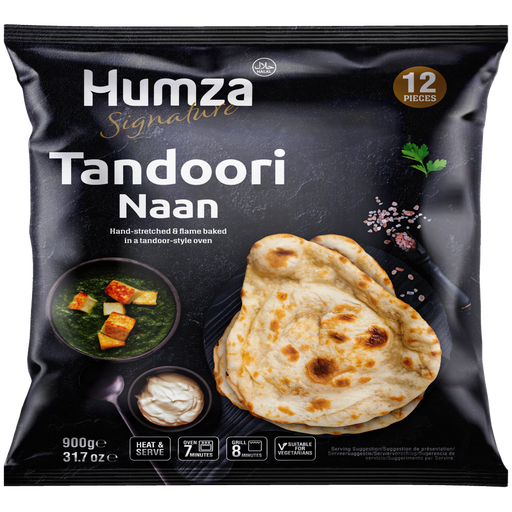 Image unavailable
For a meal where several people want naan, this plain pack contains 12 pieces. Check the current pack’s flour ingredients and fibre per 100 g if you are comparing it with a blended or wholemeal naan.
 Image unavailable
This four-piece plain pack is another format for serving naan with a shared takeaway. If flour type or fibre matters to your decision, compare the current pack’s ingredients and per-100 g declaration.
No: compare the declared fibre on the same per-100 g basis. Warburtons lists 1.8 g per 100 g for its blended 4 Naan Flatbreads, while Sainsbury’s lists 3.6 g per 100 g for its cited plain naan. Those figures describe the particular products, not every blended or plain naan.
Follow the directions on the pack you bought. For its cited plain naan, Sainsbury’s specifies a preheated oven at 200°C, or 180°C fan, for 3–4 minutes from chilled; another naan may have different instructions.
Yes, if the chosen pack’s date and storage directions fit your plans. ASDA states that its cited mini naans should be consumed within 24 hours once opened and provides separate freezing instructions; check the directions for any other pack individually.
No. Check the current naan packaging and obtain allergen information for the takeaway dishes separately. Warburtons specifically warns that its 4 Naan Flatbreads are unsuitable for someone with a sesame allergy; that warning does not describe every naan or the rest of the meal.