Hosts setting out dips and savoury snacks
Mini naan gives guests separate pieces to pick up. Tesco describes its six-pack of mini plain naan as suitable for dipping, tearing and sharing; larger breads can instead be cut before guests arrive.


Choose mini naan if guests will pick up individual portions for dips; choose larger naan if you plan to warm it and cut or tear it into sharing pieces. Do not use pack weight as a measure of “thick cut”: compare the number of breads and serving format, then check flavour, allergens and heating instructions for the product you buy.
Mini naan gives guests separate pieces to pick up. Tesco describes its six-pack of mini plain naan as suitable for dipping, tearing and sharing; larger breads can instead be cut before guests arrive.
Look at the number of breads and their described format before deciding what to cut or tear. M&S calls its garlic-and-coriander naan restaurant-size, while Waitrose describes its tandoori plain naan as suitable for tearing and sharing. Neither description establishes a thickness.
Choose a naan whose current label meets the guest’s requirement, and plan separate handling where cross-contact with wheat-containing naan is a concern. Tesco labels its BFree two-pack gluten-free and wheat-free; check that product’s full allergen information too.
Choose when: Guests will serve themselves individual pieces with dips, without someone cutting each bread.
Bear in mind: A mini format does not establish thickness and may not give you the large pieces planned for toppings.
Choose when: You can warm the naan and prepare sharing pieces for a dip board or savoury toppings.
Bear in mind: You will need to portion it, and descriptions such as “restaurant-size” do not confirm how thick it is.
| Priority | What to check | Your needs |
|---|---|---|
| Portioning | Compare the number of breads per pack with the pieces you intend to serve. Check whether they are mini or standard-size. | I’d like guests to take a piece without waiting for naan to be cut. Tesco describes its six mini plain naans as suitable for dipping, tearing and sharing. |
| Sharing pieces | Check the bread count and described format. Treat pack weight as quantity information, not a thickness measurement. | For dips or toppings, I’d rather warm larger naan and cut or tear it. M&S describes its garlic-and-coriander naan as restaurant-size; Waitrose presents its two tandoori plain naans as breads to tear and share. |
| Flavour | Check whether the naan is plain or flavoured, and match it to the dips and toppings you plan to serve. | Plain naan leaves the flavour choice to the accompaniments; I’d choose garlic and coriander only if it suits this menu and these guests. |
| Allergens | Read the current ingredient and allergen label. For a gluten-free requirement, check the alternative’s full label and how it will be handled during service. | I need to identify wheat-containing naan before setting out a shared platter. Tesco labels its BFree naan gluten-free and wheat-free, but its other allergen information still matters. |
| Warming and serving | Follow the pack’s heating, storage and reheating instructions. If caterer hot-holding guidance applies, plan suitable equipment or a limited display period. | I want to serve warm pieces without preparing the entire batch too early. The Food Standards Agency’s caterer guidance says hot food held for service should be kept at 63°C or above; where hot holding is not possible, it permits one display period of up to two hours. |
Pack weights and bread counts describe different quantities; they do not provide a common thickness measurement. A heavier pack might still be the wrong serving format for your table.
Decide whether you need individual mini breads or larger pieces to cut, then check the bread count and current product description.
Garlic-and-coriander naan brings a distinct flavour that may not match every dip, topping or guest preference.
Match flavoured naan to the menu; consider plain naan when guests will choose between varied accompaniments.
The standard naan examples from Tesco, Sainsbury’s, M&S and Waitrose identify wheat or gluten-containing cereals. A gluten-free label does not replace a check of the product’s other allergen information or how it will be served.
Read the current pack label and keep a separately required alternative clearly identified and handled apart where cross-contact is a concern.
Some product instructions say to serve naan warm and not reheat it. If the event falls within caterer food-service practice, the Food Standards Agency’s hot-holding guidance also affects how hot food may be displayed.
Follow each pack’s instructions and warm manageable batches close to service. Where caterer hot-holding guidance applies, use suitable equipment to maintain 63°C or above, or follow its once-only, up-to-two-hour display provision when hot holding is not possible.
Tesco’s own-label examples include standard two-pack naan and a six-pack of mini plain naan.
Sainsbury’s Indian Plain Naan is a two-bread, 260 g standard-format pack described as hand-stretched and flame-baked in a tandoor-style oven.
M&S lists a four-pack of mini plain naan and describes its garlic-and-coriander naan as restaurant-size.
Waitrose examples include a two-pack of 220 g plain naan and two tandoori plain naans of 130 g each.
BFree’s two-pack naan is a separately labelled option for a gluten-free requirement.
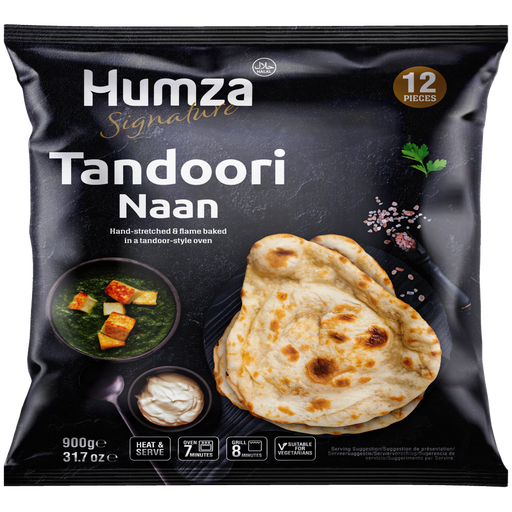
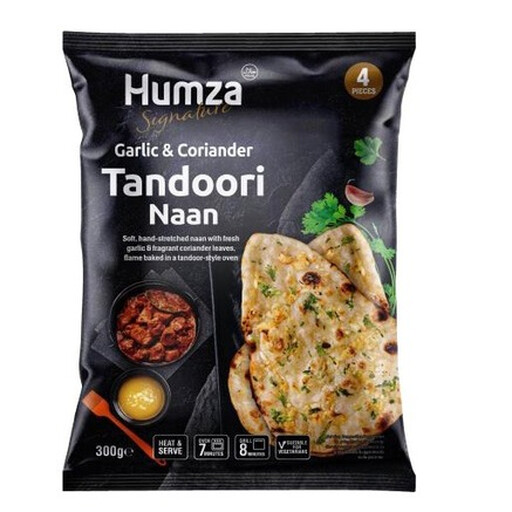
These Humza packs offer plain or garlic-and-coriander naan in four- and twelve-bread formats to portion for a coffee morning. Choose the pack count for your serving plan; none of these product names specifies a thickness.
 No image available
The twelve-bread plain pack gives you pieces to cut or tear for a group; check the current pack’s allergen and heating instructions before serving.
 No image available
The twelve-bread pack can be portioned for sharing. Choose its garlic-and-coriander flavour if it suits the planned dips, and check the current pack’s allergen and heating instructions.
 No image available
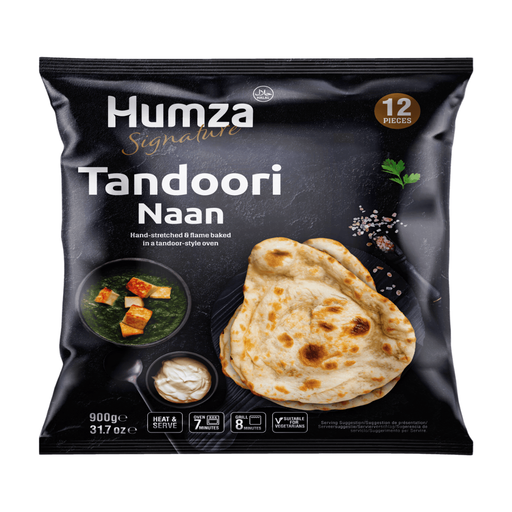
Joybuy describes this as four plain tandoori naan breads. Count the pieces against your serving plan, particularly if you intend to cut each bread for sharing.
 No image available
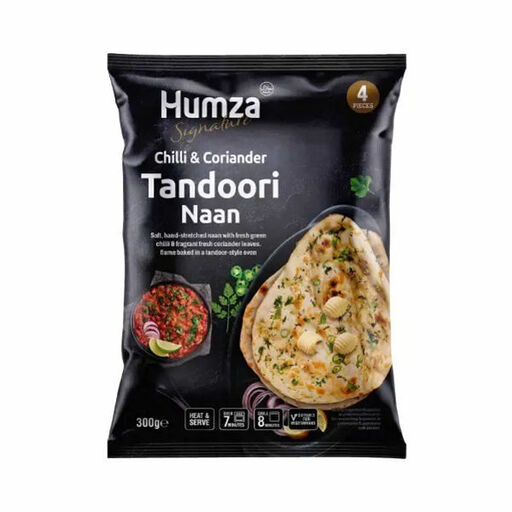
This four-bread pack offers a garlic-and-coriander flavour for a menu that calls for it. Plan how to portion the breads and check the current allergen and heating instructions.
Not reliably for the naan compared here: pack weight and descriptions such as mini or restaurant-size do not establish a comparable thickness. Choose by the number of breads and how you will portion them, then check the current product description if thickness matters to your plan.
Choose mini naan for individual pieces guests can pick up with dips; Tesco describes its six mini plain naans as suitable for dipping, tearing and sharing. Choose larger naan if you can warm and cut or tear it before serving, while checking its flavour and bread count.
Follow the specific pack’s heating and reheating instructions, and plan batches around serving time. If caterer hot-holding guidance applies to your event, the Food Standards Agency says hot food should be held at 63°C or above; where that is not possible, its guidance permits display out of hot holding for up to two hours, once only.
Read the current label for every naan you serve. The standard Tesco, Sainsbury’s, M&S and Waitrose examples identify wheat or gluten-containing cereals; Tesco labels the BFree example gluten-free and wheat-free, but it may contain mustard and sesame. Plan separate handling where cross-contact is a concern.
Check the individual pack’s freezing date, thawing and refreezing instructions before planning ahead. For example, Tesco states that its mini naan can be heated from frozen; instructions for other products may differ.