Families seeking both flour types
If the flour blend matters more than convenience, Elephant Atta’s published naan recipe provides a way to use self-raising flour alongside self-raising wholemeal flour. Allow time to prepare and cook it.


Make naan if having both white and wholemeal flour is the deciding factor: Elephant Atta publishes a recipe using both, but it requires dough preparation, a 30-minute rest and pan-cooking. Buy ready-made naan if preparation time matters more, checking pieces per pack, storage directions and ingredients rather than assuming a brown or seeded bread contains wholemeal flour. If a diner must avoid an allergen, assess the particular recipe or current pack against their requirements.
If the flour blend matters more than convenience, Elephant Atta’s published naan recipe provides a way to use self-raising flour alongside self-raising wholemeal flour. Allow time to prepare and cook it.
Ready-made naan avoids making dough. Check how many pieces you need and whether the chosen pack belongs in a cupboard or fridge before planning when to serve it.
Assess the ingredients of the specific recipe or product for each diner. A white-and-wholemeal blend is not an allergen alternative: Elephant Atta’s recipe includes wheat flour and milk.
Decide whether the flour blend, preparation time or a diner’s ingredient requirements come first; then compare pack size and handling instructions for the option that fits.
Choose when: You specifically want both flour types in the naan; Elephant Atta’s recipe uses them together.
Allow for: Mixing, a 30-minute dough rest and pan-cooking, as well as milk in that recipe.
Choose when: Heating bread alongside dinner matters more than making a specified flour blend.
Check: The selected bread’s ingredients and storage directions; a plain or seeded appearance does not establish wholemeal content.
Choose when: A diner needs ingredients assessed against particular allergen requirements.
Bear in mind: Asda’s Free From plain naan has a different formulation, not a white-and-wholemeal wheat blend; check its current pack.
| Priority | What to check | Your needs |
|---|---|---|
| Flour blend | Read the flour ingredients. Elephant Atta’s naan recipe specifies 175 g self-raising flour and 50 g self-raising wholemeal flour; a separate flour blend intended primarily for chapattis is not the finished naan. | If I want both flour types in the bread, I need a recipe or pack that actually specifies them, not a colour or name that suggests them. |
| Pieces and portions | Count pieces before comparing packs. Check whether declared nutrition is per piece, per serving or per 100 g before comparing figures. | There should be enough naan for the people at dinner without choosing a pack solely because it has more pieces. |
| Preparation and storage | Allow for dough preparation if cooking from a recipe. For ready-made naan, follow that pack’s heating and storage directions: the cited Waitrose ambient naan and Sainsbury’s chilled naan require different handling. | I need to know whether I have time to make the bread and where to keep a ready-made pack until dinner. |
| Nutrition information | Compare finished products using the same label basis, such as fibre per 100 g, and consider the amount served. Do not infer a naan’s nutrition from its colour or one flour ingredient. | If fibre matters to my comparison, I want to read the finished product’s figures rather than guess from its appearance. |
| Ingredients and allergens | Check the current ingredient list, allergen information and any relevant precautionary wording for the particular product. Check recipe ingredients too: Elephant Atta’s blended-flour naan includes wheat and milk. | For a diner avoiding an ingredient, I need to assess the exact naan I plan to serve; a flour blend or a vegan description cannot answer every allergen question. |
| Flavour | Distinguish plain naan from garlic-and-coriander or peshwari varieties, and check the ingredients of the chosen flavour. | If people at the table prefer different flavours, I may want plain naan rather than assuming one flavoured pack suits everyone. |
The documented white-and-wholemeal naan is a specific recipe; the appearance of another bread does not establish which flours it contains.
Read the purchased naan’s flour ingredients, or follow a recipe that states both flour types.
A two-piece pack and a four-piece pack cover different serving plans. Per-piece nutrition figures also cannot be compared directly with per-100-g figures.
Plan the number of pieces for dinner, then compare any nutrition figures on the same stated basis.
Elephant Atta’s blended-flour recipe contains wheat and milk, while Asda’s labelled Free From naan uses different ingredients. Neither description replaces a check for the particular diner.
Read the current pack or complete recipe against every relevant ingredient and allergen requirement.
These references show how particular naan products and ranges differ; they do not imply that every product from a retailer has the same ingredients or storage instructions.
Asda lists a two-pack of Free From plain naans with a formulation distinct from a white-and-wholemeal wheat naan.
Tesco lists plain, mini and peshwari naan in different pack formats.
Sainsbury’s lists a chilled two-piece Indian Plain Naan pack.
M&S lists mini plain, tandoori, garlic-and-coriander and peshwari naan formats.
Waitrose & Partners lists both an ambient plain naan and a separate chilled plain-naan product.
These Humza options cover ready-made plain and garlic-and-coriander naan in four-piece and 12-piece packs. They serve the ready-made route, not the documented homemade white-and-wholemeal recipe; check each pack’s ingredients if the flour blend or allergens matter.
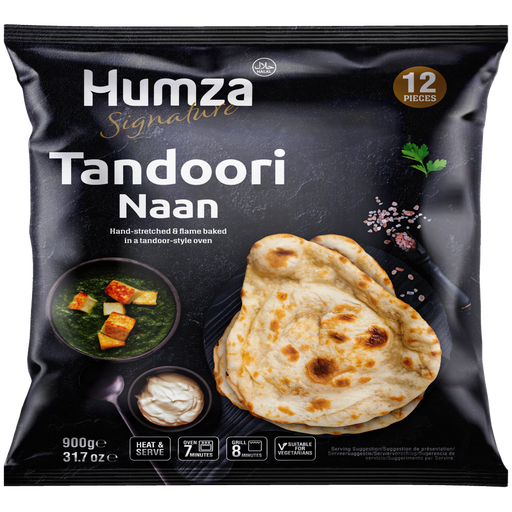 No image available
The 12-piece plain pack is an option when several diners want naan with the meal. Check its current flour ingredients and storage directions before relying on it for a particular blend or dietary requirement.
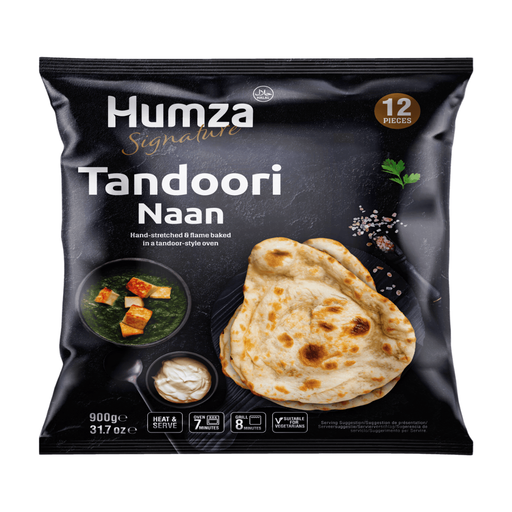 No image available
This four-piece plain pack is a ready-made choice when that count fits dinner. Joybuy lists wheat flour in its ingredients and says to store the pack somewhere cool and dry; do not assume it contains the specified white-and-wholemeal blend.
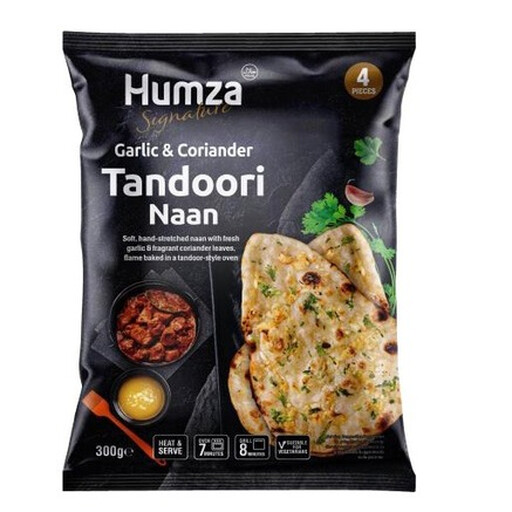 No image available
The 12-piece pack offers a garlic-and-coriander flavour for a group that wants it. Check the ingredients for flour and allergens rather than treating the flavour or pack size as evidence of a white-and-wholemeal blend.
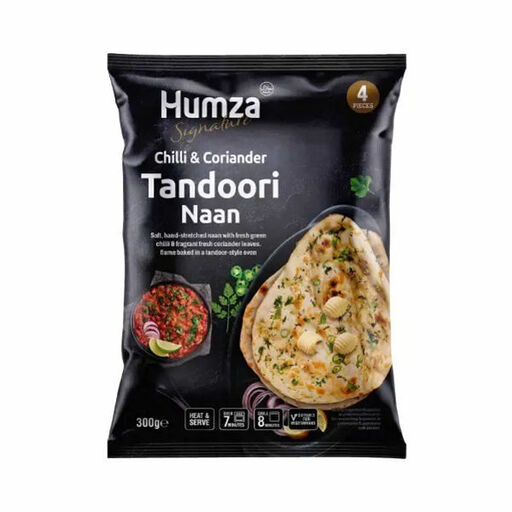 No image available
This four-piece garlic-and-coriander pack suits a meal where that flavour and piece count fit the diners. Read the current ingredients and heating directions before serving.
No: the phrase alone does not establish its ingredients. Check the particular pack for both flour types. Elephant Atta’s published homemade naan recipe specifies them, while the cited plain ready-made ingredient lists do not establish that blend.
Elephant Atta’s plain-naan recipe uses 175 g self-raising flour and 50 g self-raising wholemeal flour, includes milk, rests the dough for 30 minutes and cooks it in a pan. Follow the recipe’s full directions rather than assuming the brand’s separate Medium Atta flour is a like-for-like substitute.
No. Waitrose & Partners gives cool, dry storage directions for its ambient Plain Naan, whereas Sainsbury’s says to refrigerate its Indian Plain Naan. Follow the storage, opening and heating instructions on the pack you buy.
Check the specific naan’s current ingredient list, declared allergens and any relevant precautionary wording against that diner’s requirements. Elephant Atta’s blended-flour recipe includes wheat and milk; a different product’s Free From or vegan description should not be treated as an answer to every allergen question.