What should you check?
Choose a format you can portion, then compare the labels of the particular naans you are considering rather than treating “mini” or “thick-cut” as a nutritional description.
| Priority |
What to check |
Your needs |
| Portion and format |
Check the weight, number of pieces and stated serving. Sainsbury’s labels half of one plain naan as a serving; Waitrose lists 130g for its standard tandoori naan and 75g for its mini naan. A labelled serving is not a toddler-specific portion. |
I may want to cut a larger naan to share, or start with a smaller piece and decide how much to serve. |
| Salt |
Compare salt per 100g between products, then look at the amount in the piece or portion you intend to serve. Waitrose lists 0.87g per standard tandoori naan and 0.50g per mini tandoori naan; the pieces are different weights. |
A smaller piece might help me portion breakfast, but I do not want to assume its salt content is lower per 100g. |
| Ingredients and allergens |
Read the current pack’s ingredients and precautionary statements. Sainsbury’s plain naan lists wheat and carries a milk-allergy manufacturing warning; Waitrose identifies wheat and gluten in its plain-naan information. |
If an allergy or intolerance affects what I can serve, I need the details for the exact product, not just the word “plain”. |
| Storage and heating |
Check freezing, defrosting and heating directions on the pack. Waitrose labels its standard and mini tandoori naans suitable for home freezing and instructs customers to serve them warm without reheating. |
I want a breakfast option that fits the time I have and a clear plan for any remaining naan. |
| Nursery packing |
Confirm the setting’s current food policy and check any accompaniment as well as the naan. The NHS notes that nursery policies can include nut- or peanut-free rules and advises telling staff about a child’s food allergy. |
Before I pack breakfast or a snack, I need to know whether the naan and anything served with it meet the setting’s rules. |
Joybuy naan options
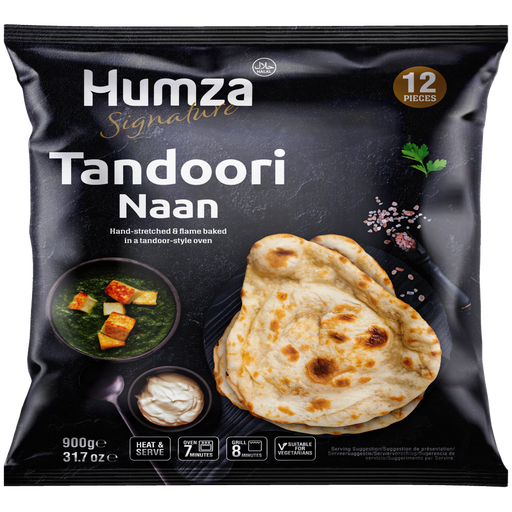
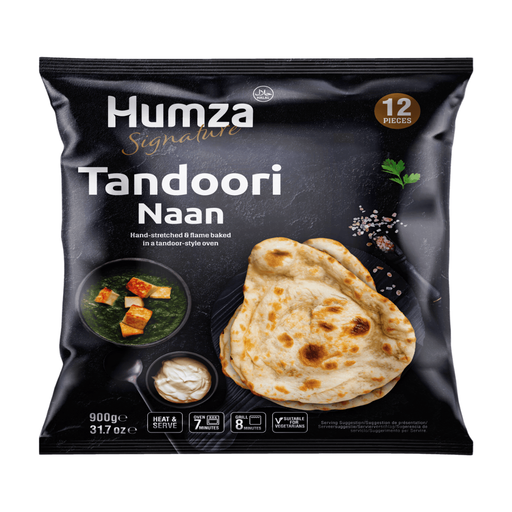
These Humza plain-naan multipacks are options to portion for breakfast. Their pack sizes differ; check the current product label for ingredients, salt and preparation directions before choosing.
 No image available
Humza Plain Naan Family Pack, 900g, 12 pieces
This plain-naan multipack gives you pieces to portion for breakfast. The pack is labelled 900g and contains 12 pieces; consider how you will store the remainder.
View on Joybuy
 No image available
Humza Plain Tandoori Naan, 300g, 4 pieces
This plain tandoori naan comes in a four-piece, 300g pack for portioning at breakfast. Compare its current label with other options if allergens, salt or storage directions affect your choice.
View on Joybuy
Questions about naan for toddler breakfast
Is thick-cut naan automatically a better choice for toddler breakfast?
No: thickness does not establish a nutritional or portioning advantage for a toddler. A larger naan gives you the option to cut a piece, while a mini naan starts with a smaller piece; check the particular pack’s allergens, salt and serving information either way.
Does plain naan contain gluten?
Plain naan can contain gluten: Sainsbury’s plain naan lists wheat flour, and Waitrose identifies gluten-containing wheat in its plain-naan information. Check the current pack rather than assuming all products have identical ingredients or precautionary statements.
Should I check nursery rules before packing naan?
Yes. The NHS advises checking nursery food policies, which may include nut- or peanut-free rules, and telling the nursery or childminder if your child has a food allergy. Check any spread or other accompaniment as well as the naan.
Can I freeze naan for another breakfast?
Some packaged naans can be frozen, but follow the directions on the exact pack. Waitrose labels its standard and mini tandoori naans suitable for home freezing and gives instructions on when to freeze them and not refreezing after defrosting; M&S labels its four-pack of mini plain naans freezable.
Can I reheat leftover naan?
Follow the product’s own heating and leftover instructions rather than assuming it can be reheated repeatedly. The Sainsbury’s and Waitrose examples instruct customers to serve the naan warm and not reheat it once cooled; let a heated portion cool to a suitable eating temperature before serving.


