Families serving a familiar curry side
If naan is already accepted, you can serve a small piece alongside the meal rather than making a large portion the focus. The NHS advises offering small portions and not forcing a child to eat.


Choose a plain full-size naan if the eater already accepts it and you want to tear off pieces for sharing or dipping. A mini naan offers a smaller individual portion; keep unfamiliar flavours separate if predictability matters. Neither pack weight nor words such as “flame-baked” establish how thick a naan is, so check the actual product if thickness is essential.
If naan is already accepted, you can serve a small piece alongside the meal rather than making a large portion the focus. The NHS advises offering small portions and not forcing a child to eat.
Consider whether the eater prefers a piece to tear and share or an individual naan for dipping. Pack count and weight help distinguish formats, but do not establish thickness.
Check the ingredients and allergen information on the exact pack before serving, particularly where wheat or another ingredient must be avoided. Do not assume that plain and flavoured variants have the same ingredients.
Start with the portion and flavour the eater recognises, then check the exact pack for thickness, ingredients and preparation instructions.
| Priority | What to check | Your needs |
|---|---|---|
| Portion format | Compare the number of naans and the stated pack or per-piece weight. Decide whether a whole mini naan or a piece torn from a larger naan is easier to serve. | For a small serving, I would rather offer one mini naan or tear off a little from a larger one than put down a portion that feels too big. |
| Thickness and texture | Inspect the naan if thickness matters. A heavier pack and descriptions such as “flame-baked” or “pillowy” are not thickness measurements. | If the eater has a particular preference for how bread feels or tears, I need to check the actual naan rather than rely on its size or description. |
| Familiar flavour | Compare plain varieties with garlic-and-coriander or filled naan. Check the ingredients of the exact variant, including any toppings. | When unfamiliar flavours could put the eater off, I want to keep the usual plain side and offer any new variety separately, without pressure. |
| Ingredients and handling | Read the current allergen label. Check whether the pack needs refrigeration and follow its own opening, freezing and heating instructions. | I need a naan I can prepare and store as directed, with ingredient information suitable for everyone who will eat it. |
Weight describes the pack, not the physical thickness of each piece. Baking and texture descriptions do not settle that question either.
Use count and weight to compare portion formats; inspect the naan or ask the manufacturer if a particular thickness is essential.
Garlic, coriander or a sweet filling changes what the eater will taste. M&S describes its Peshwari naan as containing coconut and sultanas.
If those flavours are unfamiliar, keep a plain option available and offer a small amount of the new one without pressure, in line with NHS advice.
Ingredients can differ between variants and change over time, so an earlier online listing may not describe the pack in hand.
Read the current ingredients and allergen statement on the exact product before serving it.
Chilled and cupboard-stored products can carry different instructions, including what to do after opening or defrosting.
Follow the storage, freezing and heating directions on the pack you buy.
These retailer examples show formats and flavours to compare; they do not establish which naan is thickest.
Tesco Groceries lists a 260 g two-pack of plain naan, a useful reference when comparing pack count with smaller-format options.
Waitrose & Partners lists plain naan, two tandoori-style plain naans labelled 2 x 130 g, and a two-pack of mini tandoori naan.
M&S Food lists plain naan alongside garlic-and-coriander and Peshwari varieties; it describes its plain naans as soft and pillowy.
These Humza packs offer plain and garlic-and-coriander naan in four-piece and family-pack formats. Choose by familiar flavour and useful pack size; none of these names specifies a thick-cut measurement.
 No image available
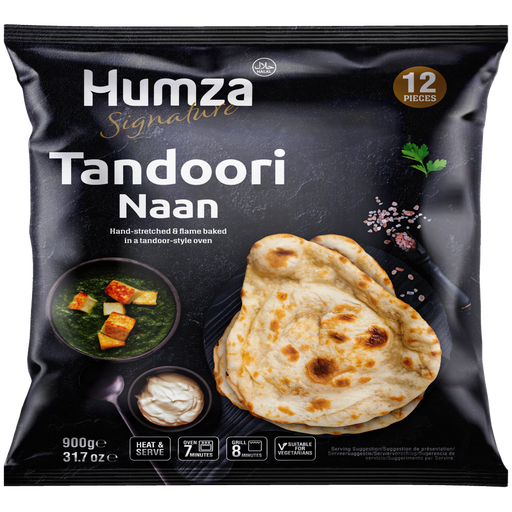
The plain variety may suit a meal where familiar flavour matters and several small servings are needed.
The pack contains 12 naans and weighs 900g. Check the current allergen label before serving, particularly if wheat must be avoided.
 No image available
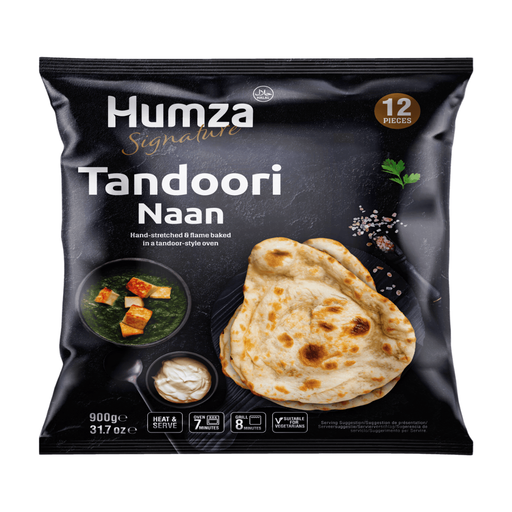
This plain four-piece pack is an alternative when a family pack would be more than you need.
It weighs 300g in total. “Tandoori” does not specify thickness; check the current ingredients and allergen label for the exact pack.
 No image available
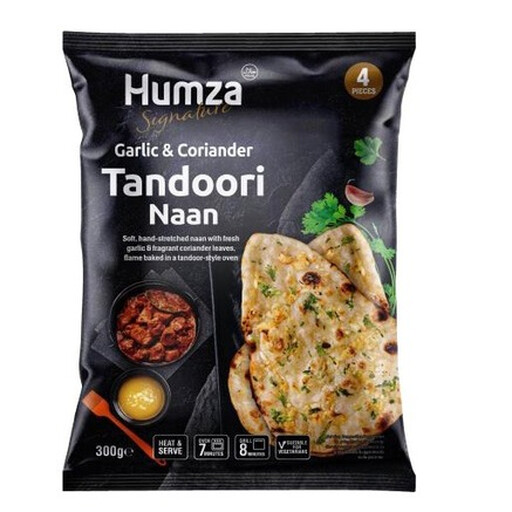
Consider this variety when garlic and coriander are already familiar flavours to the eater.
The family pack contains 12 naans and is labelled 900gm. Its flavour differs from plain naan; check the current ingredient and allergen label before serving.
 No image available
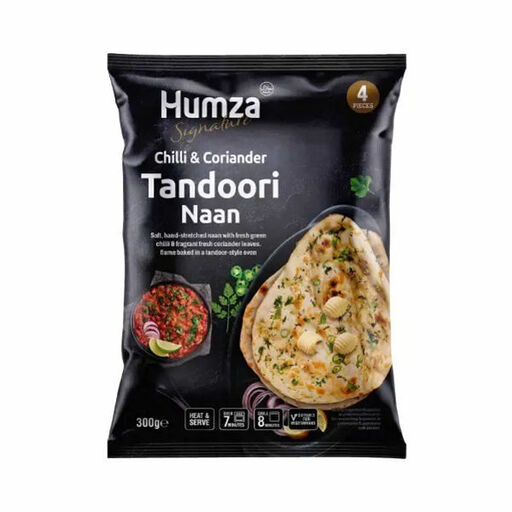
This four-piece option suits a meal where garlic and coriander are already accepted, without choosing a family pack.
The pack weighs 300g. The name does not establish thickness, and the current ingredients and allergen information should be checked before serving.
No. Pack weight can help you compare quantities, but it does not measure the thickness of each naan. If a particular thickness matters, inspect the product or seek confirmation from its manufacturer.
Plain is a sensible starting point when familiar flavour is the priority. Garlic-and-coriander and filled varieties introduce different ingredients; if you offer a new flavour, the NHS advises against pressuring a child to eat a rejected food.
Do not assume that any naan is suitable without checking its exact, current pack. Ingredient lists for the reviewed Waitrose and M&S plain naan examples identify wheat or wheat gluten; check each different product and variant before serving.
Some naan products provide freezing instructions, but they differ by product. Check the exact pack for whether it can be frozen and follow its directions for storage, defrosting and reheating.