Parents packing nursery lunches
Think about how much bread the child will eat alongside the other lunch foods. The number of usable portions and the pack’s storage directions matter when planning lunches across several days.


A mini naan makes sense when one small bread matches the planned lunch; a larger naan can work if you will serve a suitable portion and use or store the rest as its pack directs. Check the exact pack’s ingredients and salt information, along with the nursery’s food and allergy arrangements, before packing it.
Think about how much bread the child will eat alongside the other lunch foods. The number of usable portions and the pack’s storage directions matter when planning lunches across several days.
Check the ingredients on the exact pack and the nursery’s arrangements for the child. The plain Tesco and Asda naans described here contain wheat; Leeds Teaching Hospitals NHS Trust advises checking labels again before use because recipes can change.
Start with the portion you intend to pack, then check what will happen to the rest of the bread and whether that particular product fits the child’s and nursery’s requirements.
| Priority | What to check | Your needs |
|---|---|---|
| Usable portions | Compare breads per pack and the amount you plan to serve. Check the directions for using or storing bread after opening. | One small bread may fit the lunch, or I may be able to use part of a larger naan and keep the rest as directed. |
| Portion and salt | Read the salt figure for the amount actually packed, not just the label’s serving size. Tesco lists 0.34 g per 47 g mini naan and 0.48 g per half of its full-size naan; these are different portions. The NHS lists daily salt maxima of 2 g for ages 1–3 and 3 g for ages 4–6, across all foods. | I want the bread portion to fit alongside the other lunch foods, rather than treating a whole naan as the automatic serving. |
| Ingredients and nursery arrangements | Read the exact pack’s ingredients and allergen statement each time. Check the nursery’s food arrangements and any plan for the child; the Tesco and Asda plain naans described here contain wheat. | Before packing naan, I need to know whether that product fits the child’s dietary requirements and the nursery’s arrangements. |
Mini and full-size packs provide different portions, and their instructions for opened bread can differ.
Decide how much will go into each lunch, then read the exact pack’s storage and freezing directions before planning to use the remainder.
Bread left after opening may go unused if it cannot be kept according to the pack’s directions.
The plain Tesco and Asda products described here contain wheat. Leeds Teaching Hospitals NHS Trust advises checking ingredients again before use because recipes can change.
Read the pack when buying and packing it, and check the nursery’s arrangements and the child’s allergy plan where applicable.
Tesco’s figures are 0.34 g per 47 g mini naan and 0.48 g per half of its full-size naan. A whole bread and a half-bread are not equivalent servings.
Compare the salt in the amount you intend to pack and consider it alongside the other food served that day.
These listed formats illustrate what to compare on an individual pack; a brand name alone does not establish the right portion or ingredients for a child.
Tesco lists both mini plain naans and a full-size plain naan two-pack.
Asda lists a two-pack of plain naans for shoppers planning to serve part of a larger bread.
Sainsbury’s lists a 188 g mini plain naan four-pack and a 260 g full-size plain naan two-pack.
Ocado lists an M&S pack of four mini plain naans.
Waitrose lists a 220 g two-pack of plain naans.
These Humza packs offer plain and garlic-and-coriander naan to consider when planning portions across nursery lunches. Check the individual pack and the nursery’s arrangements before choosing.
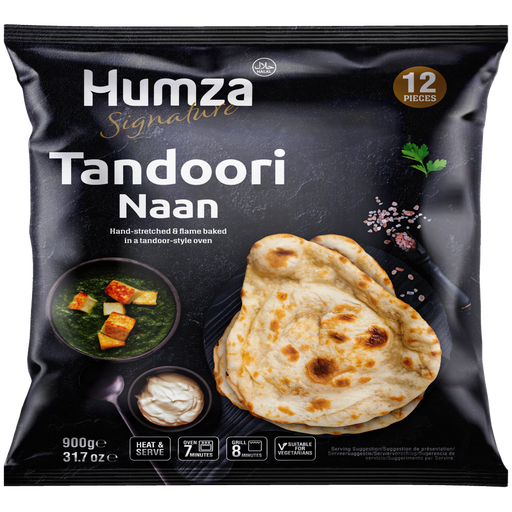 Image unavailable
The 12-piece pack is an option when several lunches are being planned. Check how much of each naan will be served, follow the pack’s storage directions for the remainder, and check its wheat and salt information against the child’s requirements.
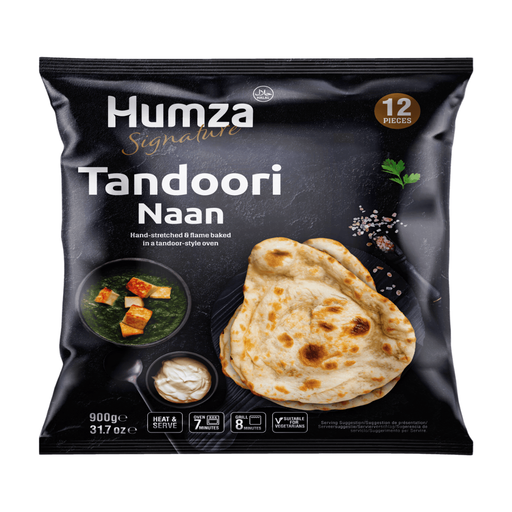 Image unavailable
This four-piece plain naan pack is worth considering if that number of breads fits the lunches being planned. Decide on the portion before packing it, and read the current pack’s wheat, salt and storage information.
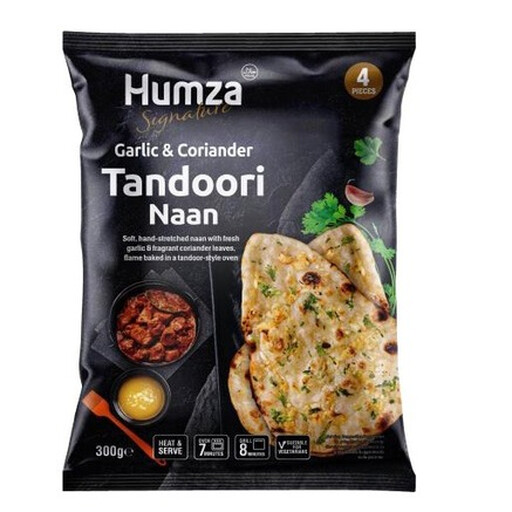 Image unavailable
This 12-piece pack is flavoured with garlic and coriander rather than plain. Check that the flavour fits the child’s preferences and nursery arrangements, then read the pack’s ingredients, salt information and storage directions before dividing it across lunches.
A naan is one part of a lunch, not the whole meal. Plan the other foods around the child’s needs; First Steps Nutrition Trust’s packed-lunch guidance covers lunches for children aged 1 to under 5.
Follow the directions on the exact pack, particularly once it is open. Asda’s plain naan listing, for example, says to consume it within 24 hours of opening or freeze it as directed; do not assume another product has the same instructions.
Check the particular nursery’s food arrangements and the child’s dietary requirements before packing it. England’s Department for Education guidance addresses allergy and safer-eating considerations for early-years providers; it does not establish one answer for every nursery. Read the ingredients on the exact pack each time.