Families cutting their own pieces
A whole naan lets you choose the width and shape of strips or triangles for a lunchbox. If the bread itself needs to be particularly thick, check it in person rather than relying on its pack weight.


For substantial packed-lunch pieces, start with a whole naan large enough to cut into the shapes your child prefers; choose mini naan when an intact smaller portion is easier. Pack weight does not establish the bread’s thickness, so inspect the naan itself if thickness matters. Check the purchased pack’s ingredients and storage directions, along with the school’s allergy arrangements, before packing it.
A whole naan lets you choose the width and shape of strips or triangles for a lunchbox. If the bread itself needs to be particularly thick, check it in person rather than relying on its pack weight.
Mini naan avoids cutting a larger bread into pieces. Its smaller format is a portioning choice, not evidence that the naan is thicker.
Check the ingredients on the pack being bought against the child’s needs, then check the school’s arrangements for food brought from home. In England, the Department for Education says schools must publish an allergy safety policy.
Choose the portion format first, then check the current pack and the practicalities of storing it for lunch.
| Priority | What to check | Your needs |
|---|---|---|
| Piece size | Compare whole and mini formats, the number of naans in the pack and the size of each bread. Inspect the bread itself if thickness is important; pack weight measures something different. | I want pieces I can cut to fit the lunchbox, rather than assuming a heavier pack contains thicker naan. |
| Ingredients and school rules | Read the purchased pack’s ingredient and allergen information, including any wheat declaration. Check the school’s current allergy and packed-lunch arrangements. | The bread needs to suit my child’s requirements and the school’s arrangements for food brought from home. |
| Storage | Check whether the product is sold chilled or for ambient storage, its directions after opening and any freezing instructions. Match the pack size to when you plan to use it. | I may prepare more than one lunch, so I need a pack I can store and use according to its own directions. |
A pack’s weight and number of naans do not tell you how thick an individual bread is or what its cut pieces will look like.
Use the format and number of naans to narrow the choice, then inspect the bread if its physical thickness is essential.
The pack being used is the relevant place to check ingredients and allergen information. Naan examples in the retailer information include wheat.
Read the current label and check the school’s allergy arrangements before putting the bread in a lunchbox.
Garlic-and-coriander naan has a different flavour and ingredient list from plain naan, which may matter to the child or under the school’s arrangements.
Choose by the child’s known preferences and the purchased pack’s ingredients, rather than by size alone.
Storage directions vary between naan products, particularly between chilled and ambient formats. A larger pack also leaves more bread to use after opening.
Check the specific pack’s storage and freezing directions before choosing a size for several lunches.
Tesco Groceries lists naan as a category, giving shoppers a place to compare the formats shown in its range.
Waitrose & Partners lists plain naan and a two-pack of tandoori plain naans, providing examples of whole-bread formats.
Marks & Spencer describes a garlic-and-coriander naan as restaurant-size, a format to consider when planning cut pieces.
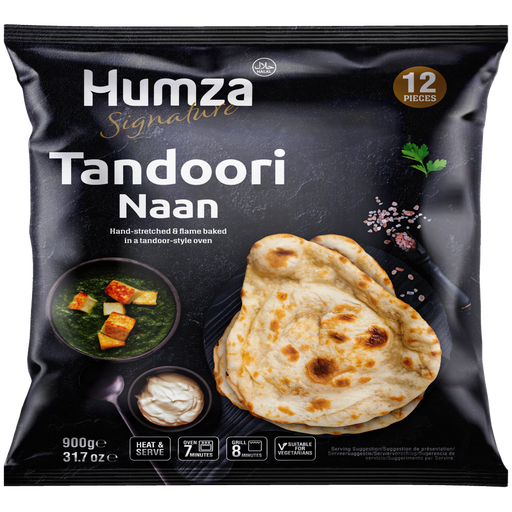
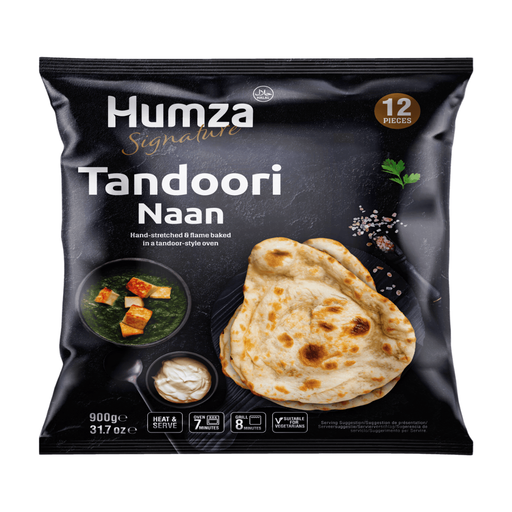
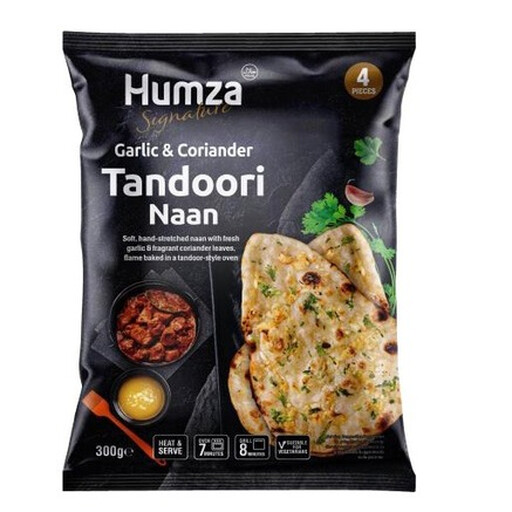
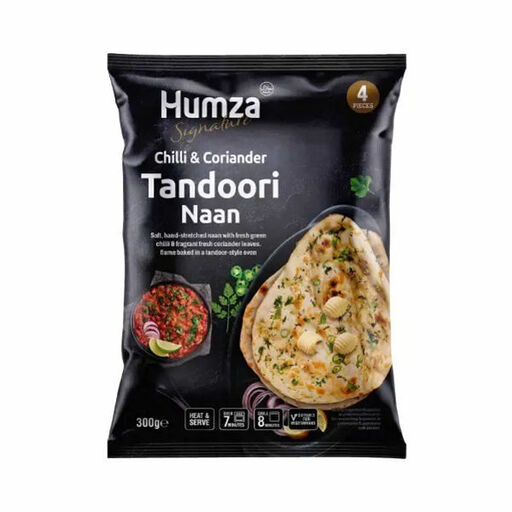
These Humza packs contain whole plain or garlic-and-coriander naans that can be cut into lunchbox pieces. Compare the number of breads per pack, then check the purchased label and school arrangements before packing.
 No image available
A plain whole-naan option for cutting into lunchbox pieces. The pack contains 12 pieces; consider how you will store and use them, and check the label for allergens and storage directions.
 No image available
A four-piece plain tandoori-naan pack to consider when you want to cut whole breads without buying a 12-piece pack. Its 300g pack weight does not specify the thickness of each naan; check the pack’s allergens and storage directions.
 No image available
A whole-naan option for cutting pieces when garlic and coriander suit the child’s preferences. The pack contains 12 pieces; check its ingredients, school suitability and storage directions before choosing it for lunches.
 No image available
A four-piece flavoured tandoori-naan pack for cutting into lunchbox portions. Check that the garlic-and-coriander flavour suits the child, and read the purchased pack for ingredients and storage directions.
Look at the size and shape of the individual whole naan, not just the pack weight. You can cut a suitable bread into wider strips or triangles, but cutting does not change its thickness; inspect it before buying if thickness is essential.
Choose a larger whole naan when you want to cut pieces to a particular shape, or mini naan when an intact smaller portion is easier to pack. Mini describes the format, not the thickness of the bread.
The Waitrose and M&S examples described here include wheat, but recipes differ. Check the ingredient and allergen information on the specific pack you intend to use rather than applying one product’s list to every naan.
Check the individual school’s packed-lunch and allergy arrangements before packing it. England’s Department for Education says schools must publish an allergy safety policy, while the Department of Education in Northern Ireland advises families to ask their school which foods should be avoided.
Freeze it only where the specific pack says it is suitable for home freezing. Follow that product’s directions for when to freeze it, how to defrost it and how to store it after opening.