Buyers serving curry meals
For a shared accompaniment, compare standard plain and tandoori-style naans by piece count and pack weight. Mini naans offer smaller separate pieces when that better suits the way the meal will be served.


Choose standard plain or tandoori-style naan if diners will tear and share it with a meal, or mini naans if separate, smaller pieces are easier to serve. Retail listings describe these formats but do not give a common thickness measurement for “thick cut”, so compare pieces per pack and pack weight instead. Check the exact product’s allergens, salt and preparation instructions; a description such as “soft” does not establish suitability for someone on a prescribed texture-modified diet.
For a shared accompaniment, compare standard plain and tandoori-style naans by piece count and pack weight. Mini naans offer smaller separate pieces when that better suits the way the meal will be served.
Check the number of naans in a pack, the intended portion and the salt and allergen labels. A retailer’s description of a soft or fluffy naan describes that product, not a clinical texture category.
Read the ingredients and allergen declaration on the exact pack. For anyone with swallowing difficulties or a prescribed texture-modified diet, follow their individual advice rather than choosing ordinary naan because it is described as soft.
Start with how the naan will be served, then check the exact pack for ingredients, nutrition and preparation instructions.
| Priority | What to check | Your needs |
|---|---|---|
| Portion format | Compare the number of naans, total pack weight and any stated piece size. Decide whether whole mini naans or pieces torn from larger naans suit service. | I’m serving a curry and want portions that are straightforward to set out for the number of diners. |
| Allergens | Read the current ingredients and allergen declaration for each product and flavour. The Humza plain tandoori naan listed by Joybuy contains wheat/gluten; do not assume another naan has the same ingredients. | If I’m catering for someone with an allergy, I need the information for the exact naan being served. |
| Salt | Compare salt per 100g with the amount you intend to serve, and consider the curry and other sides. The NHS advises adults to have no more than 6g of salt a day. | I want to understand how the naan contributes to the salt in the whole meal, especially if a diner has been advised to limit it. |
| Swallowing texture | Check any prescribed texture requirements against the prepared food. Kent Community Health NHS Foundation Trust advises that some foods and textures can be harder to swallow and that a speech and language therapist should advise on individual restrictions. | For a diner with swallowing difficulties, I cannot use “soft” on a pack as confirmation that ordinary naan meets their plan. |
Listings from Waitrose & Partners and M&S use descriptions such as plain, tandoori-style and mini, without a common thickness measurement. The phrase alone will not tell you how many pieces you can serve.
Compare piece count and pack weight, then check the description for the way the naan is intended to be served.
A product texture description does not show that prepared naan meets an individual’s prescribed diet. Royal Berkshire NHS Foundation Trust notes that dysphagia management can involve specialist assessment and changes to food or fluids.
Follow the person’s prescribed requirements and seek advice from their speech and language therapy or dietetic team rather than substituting standard naan.
Ingredients can differ between products. Joybuy’s Humza plain tandoori naan declares wheat/gluten, which does not establish the allergen profile of another pack.
Check each current label and keep the packaging available when allergen information may be needed during service.
The naan is one part of a meal that may also include curry, sauces and sides. The NHS advises adults to have no more than 6g of salt a day.
Use the pack’s salt declaration and the portion served when considering the complete meal.
Tesco Groceries lists standard and mini naan formats alongside flavoured options.
Waitrose & Partners lists plain and tandoori-style naans with stated pack sizes.
M&S lists mini plain naans, including a 188g four-pack.
These plain Humza naan packs offer different stated piece counts for planning a retirement-shop meal service. Check the portion you intend to serve and the current pack label before buying.
 No image available
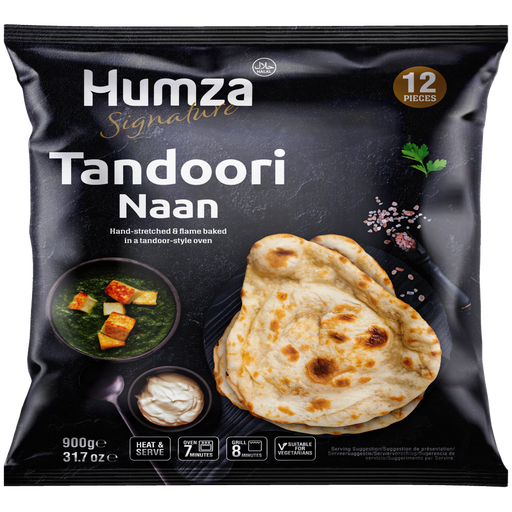
The 12-piece, 900g pack gives a stated count for planning service across several diners. Check its current ingredients, salt declaration and heating instructions, and do not assume its texture meets a prescribed swallowing diet.
 No image available
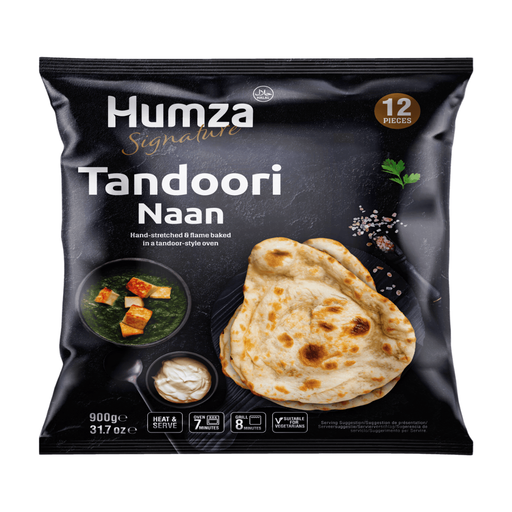
This 300g pack contains four naans, so the stated count can help with serving plans. Joybuy’s product information declares wheat/gluten and 1.4g salt per 100g; compare the portion served with the rest of the meal. Its texture description does not establish suitability for a prescribed texture-modified diet.
Use the pack format rather than assuming “thick cut” is a comparable thickness specification. Waitrose & Partners and M&S listings identify plain, tandoori-style and mini naans by descriptions, weights and piece counts; compare those details for the portions you plan to serve.
Choose standard plain or tandoori-style naan for a meal where diners will tear and share bread, or mini naans when separate, smaller pieces suit service. Check the actual piece count and weight: these formats do not establish that one naan is nutritionally or medically more suitable for older diners.
Do not rely on that description to decide. Royal Berkshire NHS Foundation Trust describes specialist assessment and possible food-texture modification as part of dysphagia management; follow the person’s prescribed plan and advice from their care team.
Read the ingredients and allergen declaration on the exact product and flavour being served. Joybuy’s Humza plain tandoori naan declares wheat/gluten, but another naan may have a different ingredient list. Keep the packaging available if diners need to check it.
Compare each pack’s salt per 100g, then consider how much naan will be served with the curry and sides. The NHS advises adults to have no more than 6g of salt a day; Joybuy lists 1.4g per 100g for Humza Plain Tandoori Naan. That figure does not describe the salt in every naan or the complete meal.