What matters when choosing naan?
If “half a loaf” means a smaller amount for breakfast, start with the portion you will serve, then work out whether the remaining naan fits your household’s plans.
| Priority |
What to check |
Your needs |
| Portions and leftovers |
Compare pieces per pack and total weight; check storage and freezing directions for the remainder. Tesco Groceries lists both four mini naans at 188 g and two plain naans at 260 g, so “mini” does not necessarily mean the smaller pack. |
I’m making breakfast for one child and want to know how many pieces the household will use after opening the pack. |
| Serving method |
Consider the child’s eating skills, not just the naan’s size. Department for Education early-years guidance advises cutting all types of bread into strips for very young children and supervising them while they eat. |
A mini naan may be easier to portion, but I still need to prepare it in pieces my child can manage. |
| Allergens and setting rules |
Read the current pack for wheat, cereals containing gluten and any other relevant allergens. Check nursery or school food rules separately; “plain” does not establish allergen suitability. |
Before serving or packing naan, I need to check both my child’s known allergens and the receiving setting’s rules. |
| Nutrition label |
Compare salt per 100 g and the amount you intend to serve. Joybuy lists 1.4 g salt per 100 g for Humza Plain Tandoori Naan 300 g (4 pieces); NHS guidance says toddlers do not need salt added to their food. |
I’m choosing the bread component of breakfast and want to compare its label with other products, rather than treating the whole pack as one serving. |
Joybuy naan options for planned portions
These Humza multipacks are options for households planning several naan servings. A four-piece pack leaves fewer pieces to account for than a 12-piece family pack; neither is a single-breakfast portion pack.
 No image available
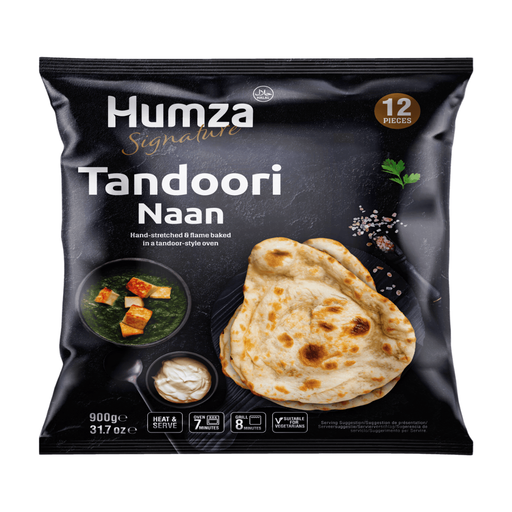
Humza Plain Tandoori Naan 300 g (4 pieces)
For a household expecting several servings, this four-piece pack is stated as suitable for home freezing. Joybuy lists 1.4 g salt per 100 g and declares cereals containing gluten (wheat); check the current pack’s label and storage directions before serving it.
View on Joybuy
 No image available
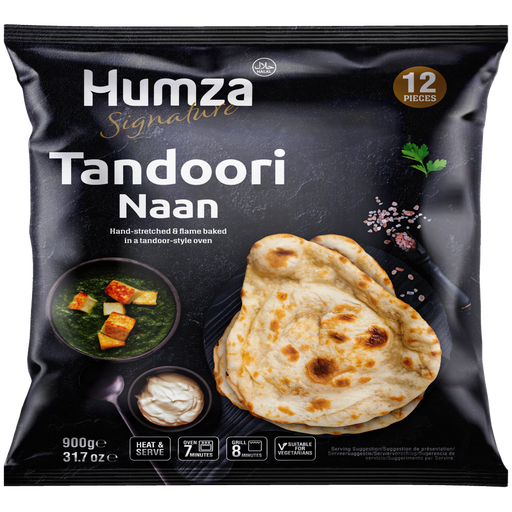
Humza Plain Naan Family Pack 900 g (12 pieces)
A 12-piece pack calls for a plan beyond one toddler breakfast. Check its current freezing, storage, nutrition and allergen information before deciding whether the household can use the remaining naan as directed.
View on Joybuy
Questions about serving and storing naan
Can naan be part of a toddler breakfast?
For a toddler aged over 12 months who can eat the product’s ingredients, naan can be served as part of breakfast in a manageable portion. NHS guidance describes smaller portions of family food at this age; Department for Education early-years guidance advises cutting bread into strips for very young children and supervising them while they eat.
Should I buy mini naans or split a standard naan?
Choose by how many pieces your household will use and how you will store the remainder. Mini naans give you smaller individual pieces, while a standard naan can be divided for serving; either may still need cutting into strips for a very young child.
Can I freeze naan for later breakfasts?
Freeze a particular naan only when its pack says it is suitable, and follow its date and storage instructions. Waitrose & Partners lists its two tandoori mini naans as suitable for freezing, as does Joybuy for the Humza Plain Tandoori Naan 300 g pack.
Does “plain naan” mean it is free from gluten?
No: “plain” describes the variety, not its allergen status. Joybuy’s Humza Plain Tandoori Naan 300 g listing declares cereals containing gluten (wheat). If your child has a relevant allergy, read the current physical pack and do not serve a product whose suitability is uncertain.
Can I pack naan for nursery or school?
Ask the individual nursery or school about its food rules before packing it. Check the naan’s current allergen label against your child’s needs as well; the label alone does not tell you what a particular setting permits.


