Students making one folded lunch
If the naan will hold a filling, compare full-size formats and the stated weight of each naan. A size description alone does not tell you how thick or sturdy it is.


For a naan that forms the bread portion of lunch, start by comparing pack count and the stated weight per naan, rather than treating “thick-cut” or “restaurant-size” as a thickness measurement. A full-size naan may suit one folded lunch, while mini naans are easier to portion alongside separately packed food; check the exact pack’s ingredients and allergen wording before buying.
If the naan will hold a filling, compare full-size formats and the stated weight of each naan. A size description alone does not tell you how thick or sturdy it is.
Mini naans can be divided between portions or packed alongside a dip or filling. Check how many are in the pack so you can plan what to bring for one lunch.
Read the ingredients and precautionary statements on the exact pack. Patak’s lists wheat flour in its Mini Plain Naans and warns that they may also contain peanuts, nuts and milk; other products need their own label check.
Decide whether the naan is the main bread portion or something to eat alongside other packed food, then compare the pack details for that use.
| Priority | What to check | Your needs |
|---|---|---|
| Portion size | Compare the number of naans and any stated per-naan weight. Sharwood’s lists 130 g per full plain naan and 65 g per mini plain naan as prepared; those weights do not establish thickness. | I want one naan to form a substantial bread portion, rather than judging its size by the total weight of a multipack. |
| Packing format | Check whether the pack contains full-size or mini naans, and whether your filling will travel separately. | A smaller naan may be easier to fit beside a separate dip or filling; for a folded lunch, I would check the size of an individual naan. |
| Flavour | Choose between plain and flavoured varieties by reading the exact product name and ingredients. | I want plain naan when I would rather let my own filling provide the flavour, or a flavoured naan when that flavour suits what I am packing. |
| Allergens | Read the current ingredients and any “may contain” statement on the pack. Do not transfer allergen information from one brand or flavour to another. | If I need to avoid an ingredient, I need the label for the naan I will actually eat. |
| Chilled fillings | Check the filling’s storage instructions and how you will keep it cold until lunch. Pack it separately if assembling the naan later is more practical. | My lunch may sit in a bag through morning lectures, so I need a way to keep a chilled filling cold. |
M&S uses “restaurant-size” to describe its Garlic & Coriander Naan Breads, but the term does not specify their thickness or how they will hold a filling.
Use the description to identify a size format, then check pack count and individual weight where stated.
A heavier pack can contain more naans rather than a larger naan. Sharwood’s stated portions, for example, are 130 g per full plain naan and 65 g per mini plain naan as prepared.
Compare the stated per-naan weight, or divide the total pack weight by the count for an average when both figures are clear.
A lunch prepared before lectures may have a long journey before it is eaten, which matters when its filling requires chilling.
Follow the filling’s storage instructions and use an insulated bag with a cold source when it needs to stay cold.
Ingredients and precautionary statements can differ between products. Patak’s Mini Plain Naans contain wheat flour and carry a warning for possible peanuts, nuts and milk.
Check the ingredients and precautionary wording on the exact pack each time.
Tesco Groceries lists plain full-size and mini naans alongside flavoured options in its naan and chapatti category.
M&S lists both mini plain naans and Garlic & Coriander Naan Breads described by the retailer as restaurant-size.
Asda Groceries lists Original Recipe 3 Plain Naan Bread.
Lidl directs shoppers to select a store for local offers and provides bakery allergen information.
These Humza packs offer plain or garlic-and-coriander naan for a packed lunch. Their pack weights and counts help you compare an average portion, but do not tell you whether one naan is thicker than another.
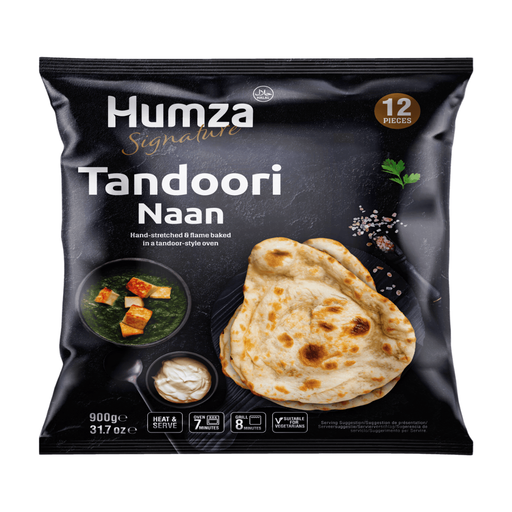 Image unavailable
A plain option if you plan to add your own filling. The 300 g four-piece pack averages 75 g per naan by weight; check the individual naan’s size and the pack label for ingredients and allergens.
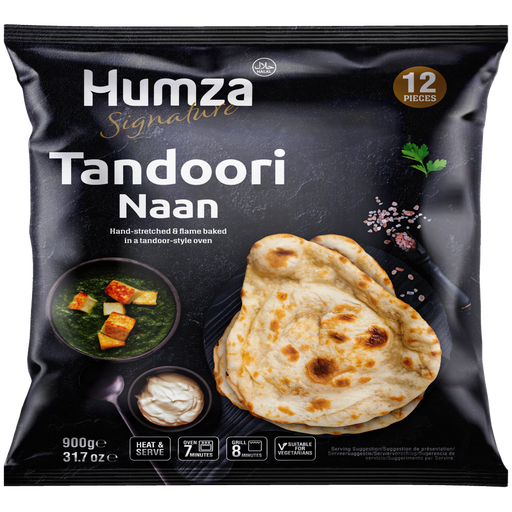 Image unavailable
The plain 12-piece pack may suit several packed lunches if you have space to store it according to the label. Its 900 g total averages 75 g per naan; that is not an individual thickness measurement. Check the ingredients and allergens on the pack.
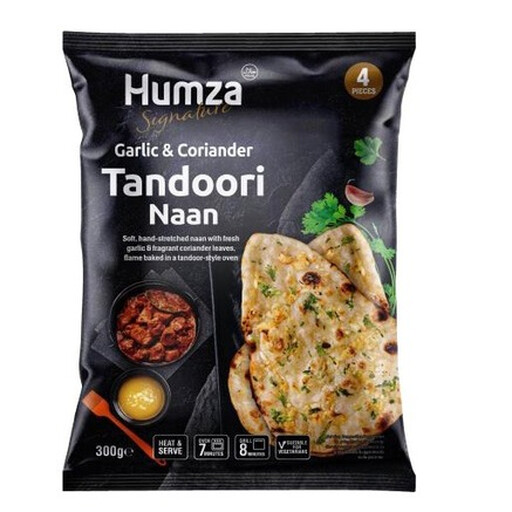 Image unavailable
Choose this flavour if garlic and coriander suit the food you are packing. The 900 g pack contains 12 pieces, averaging 75 g each by pack weight; allow for storage of the remaining naans and check the current allergen label.
Not from the pack descriptions compared here. Tesco, M&S and Sharwood’s describe formats, pack counts or weights rather than a shared thickness measurement. Check the individual naan’s size and stated weight, but do not treat either as proof of thickness.
A full-size naan is a starting point if you want one folded bread portion; mini naans work when you want smaller portions alongside separately packed food. Sharwood’s lists 130 g per full plain naan and 65 g per mini plain naan as prepared, illustrating a portion difference between those two products, not a thickness rule for all naan.
Keep a filling that requires refrigeration cold until you eat it, following its label’s storage instructions. If lunch will be in your bag through lectures, consider packing the filling separately in an insulated bag with a cold source.
No. Read the ingredients and any precautionary statement on the exact pack. Patak’s Mini Plain Naans, for example, list wheat flour and warn that they may also contain peanuts, nuts and milk; that wording cannot be assumed for another product.
No. Naan can be the bread component alongside other foods you choose to pack. The NHS Eatwell Guide considers dietary balance over a day or week rather than requiring it at every individual meal.