Choose a mini naan if a smaller starting portion is convenient, or portion a larger naan if the household can use the rest; neither format makes a thick piece safer for a young child. For very young children, England’s Department for Education advises cutting bread into strips, while the NHS advises considering food’s size, shape and texture. Check the child’s dietary needs, the pack’s allergen and storage information, and the nursery’s arrangements before packing it.
Who is this choice for?
Carers packing lunch for under-fives
A mini bread can be a convenient starting portion, but its size does not determine how to serve it. England’s Department for Education advises cutting bread into strips for very young children; the NHS also highlights size, shape and texture when preparing food.
Carers managing dietary requirements
Check the child’s requirements, the physical pack and the nursery’s arrangements. The Tesco, Sainsbury’s, M&S and Waitrose naans described here list wheat; Sainsbury’s also warns that its mini plain naan is unsuitable for customers with a milk allergy because of manufacturing methods.
Carers planning several lunches
Pack size, freezing directions and how soon an opened pack must be used can affect the choice. Tesco’s reviewed six-pack says to use it within one day of opening, while Ocado’s M&S mini-naan listing says the product is suitable for home freezing.
What should you check?
Start with how the bread will be prepared for the child, then choose a portion and pack format that fits the lunch routine.
| Priority |
What to check |
Your needs |
| Shape and texture |
Consider the prepared bread’s size, shape and texture, not a ‘thick-cut’ description. England’s Department for Education advises cutting all types of bread into strips for very young children and notes that white bread can form a doughy ball. |
I want a portion I can prepare appropriately for the child, whether it starts as a mini naan or part of a larger one. |
| Allergens |
Read the physical pack for ingredients and product-specific warnings. The reviewed plain naans list wheat; Sainsbury’s mini plain naan also carries a milk-allergy warning related to manufacturing methods. |
The lunch must fit the child’s dietary requirements and the nursery’s allergen arrangements. |
| Portion and lunch |
Use the individual bread weight to plan the portion. Tesco and Sainsbury’s each list 47 g for their reviewed mini naans; their stated salt figures use different preparation bases, so do not treat them as a like-for-like comparison. |
I’d like to decide how much naan to pack alongside the other lunch foods, rather than rely on the word ‘mini’ as a serving instruction. |
| Storage |
Check opening, refrigeration and freezing instructions on the chosen pack. Tesco says to use its reviewed six-pack within one day of opening; Waitrose says to keep its reviewed tandoori mini naans below 5°C. |
A pack that fits my lunch-making routine matters more than a larger pack I cannot use as directed. |
Common buying pitfalls
-
Treating ‘thick cut’ as a safety feature
A thick or doughy piece may be difficult for a very young child to manage. England’s Department for Education focuses on bread preparation rather than thickness as a selling point.
Choose a useful pack format, then cut the bread into strips where that guidance applies instead of packing thick chunks.
-
Assuming plain naans have the same allergens
The reviewed products list wheat, and Sainsbury’s mini plain naan carries an additional warning for customers with a milk allergy.
Read the physical pack for the product you intend to use and check the nursery’s arrangements for that child.
-
Choosing a multipack without checking storage
Tesco directs customers to use its reviewed six-pack within one day of opening; Waitrose’s reviewed tandoori mini naans require refrigeration below 5°C.
Check the chosen pack’s opening, refrigeration and freezing directions against when you plan to make the lunches.
Bread left over after opening may be difficult to use within the pack’s stated period.
Relevant brand references
These details describe specific mini-naan listings, not every naan sold under each brand.
Tesco
Tesco Mini Plain Naan Breads are listed as a six-pack of 47 g breads.
- Tesco declares 0.21 g salt per naan as sold and lists wheat in the ingredients.
- The listing directs customers to use the pack within one day of opening.
Sainsbury’s
Sainsbury’s Mini Plain Naan is listed as a four-pack of 47 g breads.
- Its listing declares 0.43 g salt per naan after oven heating; that is a different stated basis from Tesco’s as-sold figure.
- Sainsbury’s says this product is unsuitable for customers with a milk allergy due to manufacturing methods.
M&S
Ocado lists M&S Mini Plain Naans as a four-pack made with kalonji seeds.
- The Ocado listing says the product is suitable for home freezing.
- The listing identifies wheat and cereals containing gluten as allergens.
Waitrose
Waitrose lists its Tandoori Mini Naans as two 75 g breads.
- Waitrose declares 0.50 g salt per naan and lists wheat.
- This chilled product must be kept below 5°C; check the current pack label, as Waitrose notes that recipes can change.
Joybuy naan options
These Humza packs offer plain or garlic-and-coriander naan that can be portioned for a nursery lunch. Choose the pack size and flavour that fit the household, then check the label and prepare the bread for the child.
 No image available
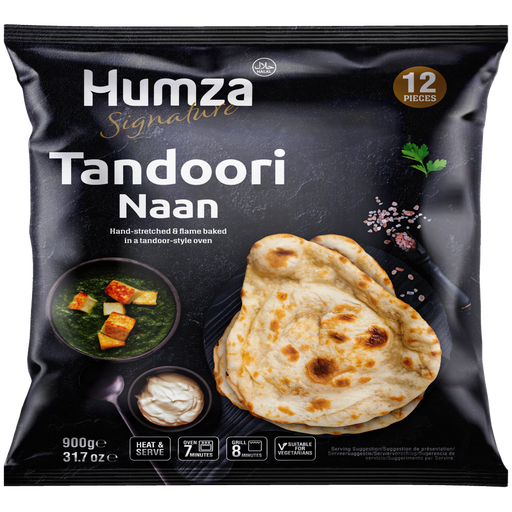
Humza Plain Naan Family Pack 900g (12pcs)
The 12-piece pack gives a household several naans to portion. For a nursery lunch, prepare the bread for the child and check the pack’s allergen and storage directions.
View on Joybuy
 No image available
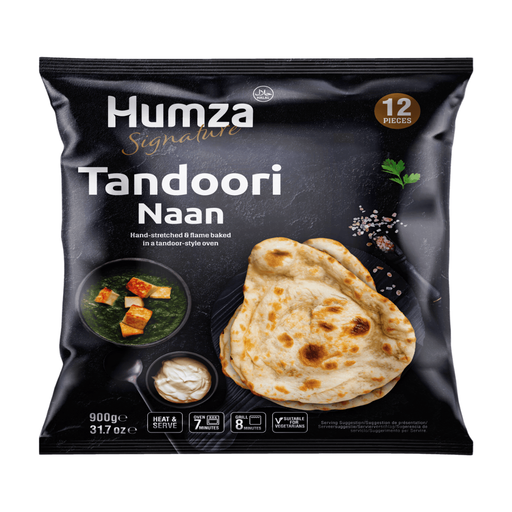
Humza Plain Tandoori Naan 300g (4pcs)
This four-piece plain-naan pack offers fewer breads to plan around than the 12-piece pack. Portion a bread for the child and follow its own pack directions.
View on Joybuy
 No image available
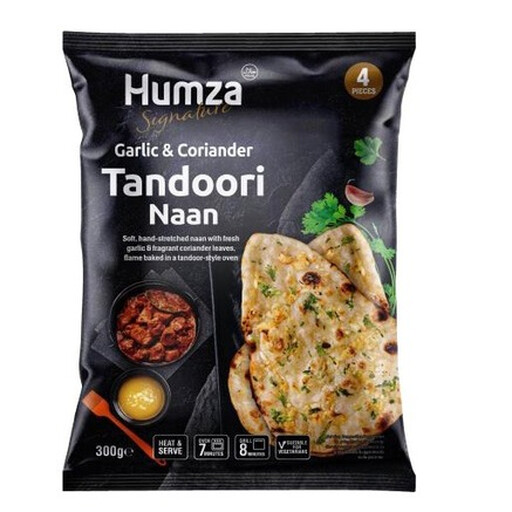
Humza Garlic and Coriander Naan Family Pack 900gm (12pcs)
This 12-piece pack is the garlic-and-coriander option. Check that the flavour fits the child’s preferences and the nursery’s arrangements, then portion and prepare the bread appropriately.
View on Joybuy
Frequently asked questions
Is a mini or thick-cut naan ready to serve to a nursery-age child?
Not on the strength of that description alone. For very young children, England’s Department for Education advises cutting all types of bread into strips and notes that white bread can form a doughy ball; consider the child’s ability to manage the prepared bread and supervise them while eating.
Are the reviewed wheat-containing naans suitable for a child with coeliac disease?
No. NHS guidance says managing coeliac disease requires excluding gluten, and the reviewed naans list wheat. Check the label of any proposed alternative and the child’s dietary arrangements.
Can naan make up the whole nursery lunch?
Plan the other lunch foods as well as the bread. Just One Norfolk’s NHS-affiliated lunchbox guidance recommends variety across food groups rather than relying on one food.
Can an opened pack be used for later lunches?
Follow that pack’s instructions. Tesco says to use its reviewed six-pack within one day of opening; Waitrose says to keep its reviewed tandoori mini naans below 5°C and consume them within one day of opening. Check freezing directions separately for the product you choose.
How do I check whether naan can go in a particular nursery lunch?
Ask the nursery about its packed-lunch and allergen arrangements, then check the physical pack against the child’s dietary requirements. A plain-naan description does not establish that a product meets those requirements.


