
24/7 Customer Support

Free returns

Same-day & Next-day Delivery

Quality Guaranteed

Unlock Your Welcome Offers: FREE Delivery | Up to 80% OFF | Free 30-day JoyPlus trial
Download the APP
Nappy pants can simplify changes, support potty training and provide discreet overnight protection. However, packaging often gives more attention to phrases such as “maximum protection” than to the details that determine whether a product actually suits your household.
The main buying mistakes are usually straightforward:
A practical purchase starts with the intended use, followed by the size guide and construction details.
Treat the printed weight range as the starting point, not a guarantee of fit. For babies and toddlers, check the product packaging for the current recommended weight range. Available options include size 4 nappy pants, size 6 nappy pants, size 7 nappy pants and size 8 nappy pants, but size numbering is not identical across every manufacturer.
A suitable pair should sit securely around the waist and thighs without leaving deep marks. Gaps at the back or legs may cause leaks, while excessive tightness can make movement and changes uncomfortable. If a child is between sizes, compare the waist and leg fit rather than automatically choosing the larger pack.
For daytime use, a fast-absorbing core and flexible fit may be the priority. For longer periods, look for features such as anti-leak leg cuffs, a protective pocket or an additional absorbent layer. These details are particularly relevant for overnight nappy pants, night-time potty training and bedwetting pants.
Do not treat a stated duration, such as “up to 12 hours”, as a reason to delay changes. It describes the product’s stated design capacity under specified conditions, not a replacement schedule. Change baby pants promptly when wet or soiled, and follow the instructions on the pack.
Breathable non-woven materials, elastic waistbands and flexible side panels can improve comfort during crawling, walking or sleeping. Some products include cellulose or wood-pulp materials, superabsorbent polymer and synthetic elastics. Check the packaging if your child has known sensitivities.
For adults, compare the absorbency level and cut carefully. Adult incontinence pants are intended for bladder leakage, while women’s period pants are designed around menstrual flow. Postpartum underwear may be selected for convenience after birth, but product suitability depends on the level of fluid protection required.
All disposable pants should be placed in household waste unless local packaging instructions state otherwise. Do not flush them, as absorbent materials can block drains.
The following recommendations focus on distinct shopping needs rather than one universal choice.
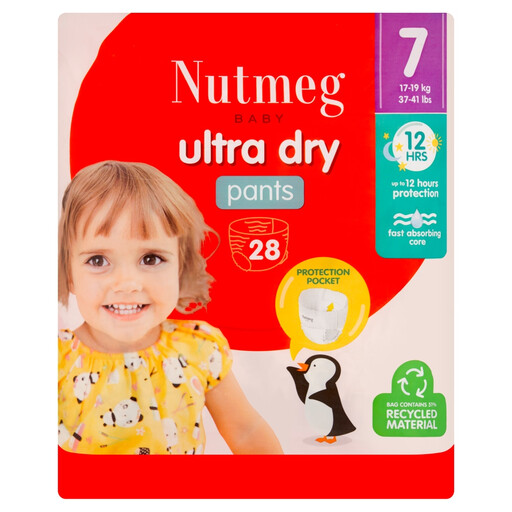
Why This Fits Their Persona: A 28-pack offers a practical starting quantity for families comparing toddler training pants for regular daytime use and occasional nights.
The listed 17 kg+ suitability and Size 7 format make weight checking clearer than relying on age alone.
Features a 360° stretchy waist, tearable sides, channel technology and anti-leak leg cuffs.

Why This Fits Their Persona: Suitable for families wanting an easy pull-on design and a larger household supply for active babies.
The 360° waistband, absorbent core and Stop & Protect Pocket address common back and side leakage points.
Pull-on application, tearable sides and a stated dermatological testing and OEKO-TEX Standard 100 certification.
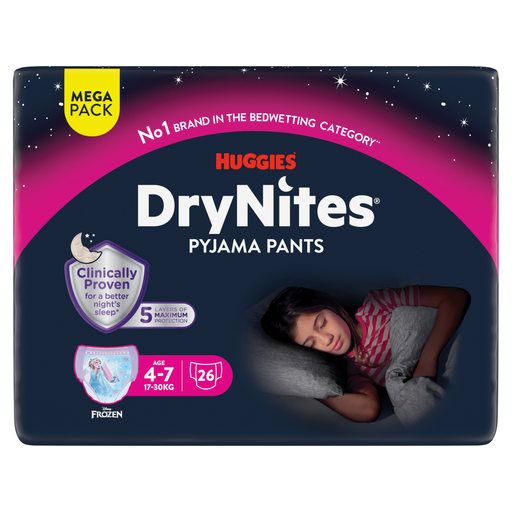
Why This Fits Their Persona: Designed specifically for children aged 4+ who need discreet overnight support during bedwetting management.
It is categorised for night-time use rather than being a general daytime pull-up nappy, with an underwear-like design for sleepwear.
The listed design includes five protective layers, a flexible waistband and breathable materials.
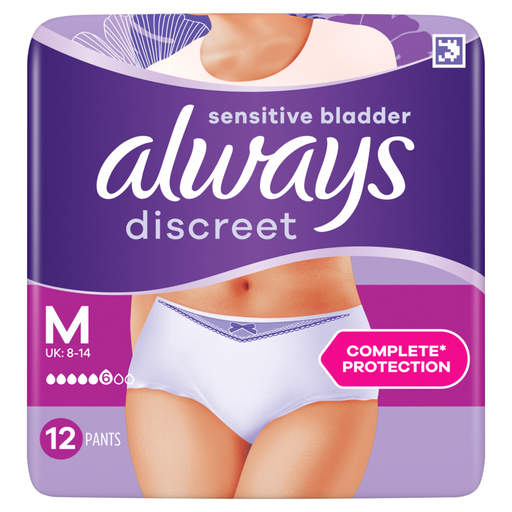
Why This Fits Their Persona: A discreet option for women seeking disposable protection for daily activities, travel or postpartum routines.
The product is clearly positioned as women’s incontinence underwear, helping shoppers avoid substituting period pants for bladder-leak protection.
The listed features include a stretch fabric, absorbent core, LeakGuard side barriers and OdourLock technology.
We have compiled a complete, real-time list of products that fully satisfy these strict selection criteria and UK safety regulations.
The usable duration depends on the child’s size, fluid intake, movement and whether the pants are intended for daytime or overnight use. Check regularly and change baby nappy pants when wet or soiled. Do not use a stated “up to” duration as a fixed timetable.
Yes, many pull-up nappies and toddler training pants are designed to be put on like underwear, helping children practise pulling them up and down. Look for stretchy waistbands and tearable sides. They should still provide enough absorbency for your routine, particularly if used during naps or overnight.
Adults should choose the category designed for their needs. Adult incontinence pants are intended for bladder leakage, while women’s period pants are designed for menstrual flow. Disposable postpartum underwear may be useful after birth, but check the stated absorbency, size and care instructions before purchasing.