
24/7 Customer Support

Free returns

Same-day & Next-day Delivery

Quality Guaranteed

Unlock Your Welcome Offers: FREE Delivery | Up to 80% OFF | Free 30-day JoyPlus trial
Download the APP
For busy UK families, nappy pants can make changes easier, support potty training and provide extra overnight protection. However, choosing between pull-up nappies, baby nappy pants and pyjama pants is not simply a matter of selecting the most familiar brand or largest pack.
Marketing language can hide practical differences. A pant designed for daytime movement may not provide the absorbency needed overnight, while a size selected by age rather than weight may cause leaks or uncomfortable gaps. The following guide explains what to check before buying, followed by our top recommendations for different household needs.
Age ranges are useful as a starting point, but children of the same age can have very different body shapes. Weight range, waist fit and leg seal are more useful indicators when choosing nappy pants size 4, size 5, size 6, size 7 or size 8.
A pant that is too small may leave red marks and restrict movement. One that is too large can gape around the legs, increasing the chance of leaks. Always compare your child’s weight with the size information on the pack.
Daytime potty training pants are usually designed around convenience, movement and wetness awareness. Overnight nappy pants may have a deeper absorbent core, additional layers or a design intended for longer periods of wear.
Look for specific information about overnight use, absorbent construction and change guidance rather than relying on phrases such as “all-day protection”. No disposable product can guarantee a leak-free result for every child, particularly if the fit is wrong or the pant is heavily saturated.
A jumbo pack may reduce the cost per pant, but it is poor value if the size, materials or absorbency do not suit your child. For a new product, a smaller pack can be a sensible way to check fit and skin tolerance before buying more.
Also compare the number of pants per pack, not just the shelf price. A 54-pack may offer a lower cost per change than a 24-pack, but only if the product meets your daily needs.
Check three areas after putting on the pants:
For example, the available BC Babycare Royal Pants include weight-based options such as size 4 for 9–14 kg, size 5 for 12–17 kg, size 6 for 15–25 kg and size 7 for 17 kg and above. These ranges overlap, so body shape and fit remain important when moving between sizes.
For daytime use, a breathable pull-up with easy tear-away sides may be sufficient. For sleep, consider the absorbent core, wetness distribution and whether the product is specifically described for night-time use.
Features such as a superabsorbent polymer core, wider leg cuffs, a back pocket or zoned absorbency can affect how moisture is managed. Treat stated duration claims, such as “up to 12 hours”, as product guidance rather than a guarantee. Change promptly when soiled and follow the packaging instructions.
Families seeking sensitive skin nappies may wish to compare fragrance, lotion, latex and chlorine information. Some products use plant-based components or a skin-contact layer with a mildly acidic pH. These features may be relevant, but they do not guarantee that irritation will never occur.
Pura Eco Nappy Pants, for example, are described as free from fragrance, lotion, chlorine and parabens, and the product information states that they are Allergy UK certified. Other products list dermatological testing or OEKO-TEX certification. Check the pack and manufacturer information for the precise scope of any certification rather than treating it as a medical endorsement.
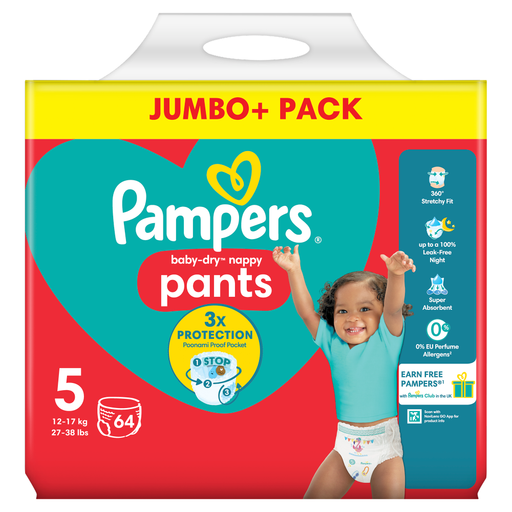
Why This Fits Their Persona: The 64-pack format may suit families seeking a regular supply for active babies, with a pull-on design for frequent daytime changes.
The product specifies a size 5 fit, tear-away sides and a back protection pocket, making its intended use clearer than a general-purpose pull-up.
64 pants per pack; flexible waistband; wetness management features and tear-away sides.

Why This Fits Their Persona: Suitable for families prioritising a soft, flexible fit and clearly specified skin-related product certifications.
The product lists a 360° waistband, absorbent core and Stop & Protect Pocket, allowing buyers to assess construction rather than rely only on comfort wording.
54-pack; tear-away sides and disposal tapes; listed as dermatologically tested and OEKO-TEX certified.

Why This Fits Their Persona: Designed for children beginning potty training, including a wetness indicator and underwear-style construction.
It is specifically positioned as daytime training underwear, so it is less likely to be confused with a dedicated overnight product.
Size 7 for 17 kg+; wetness indicator; tearable waistband and Disney designs.
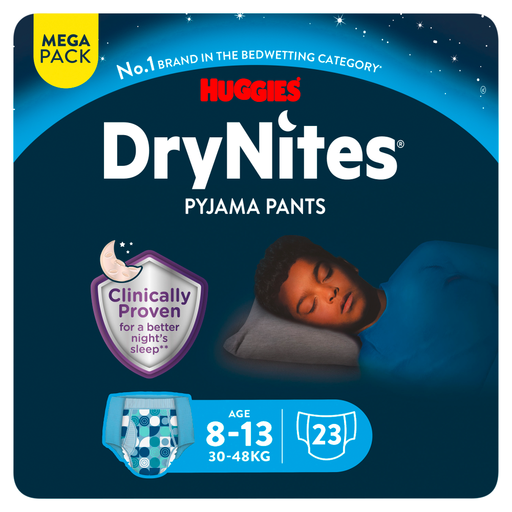
Why This Fits Their Persona: Intended for older children who need discreet overnight bedwetting protection rather than daytime potty training support.
The product is clearly labelled for ages 8–13 and describes quiet materials, stretchy sides and overnight absorbency, separating it from standard baby nappy pants.
Five-layer protection design; underwear-like fit; quiet, breathable materials and 23 pants per pack.
We have compiled a complete, real-time list of products that fully satisfy these strict selection criteria and UK safety regulations.
Yes. Pull-up nappies can help children practise pulling underwear up and down, while features such as wetness indicators may support conversations about staying dry. They should complement, not replace, regular toilet routines and encouragement.
Follow the product instructions and change the pant when it is wet or soiled. Some products describe protection for up to 12 hours, but actual performance depends on fit, fluid volume and movement during sleep. Check the skin regularly and change promptly after an accident.
The answer depends on the pack price, number of pants and how often changes are needed. Divide the pack price by the number of pants to compare cost per change. Pull-up designs may also reduce changing time for active toddlers, although taped nappies can be more practical for some younger babies. Always bin used nappies and never flush them.