Protecting the archive during move week
You need a second copy you can open or restore before the NAS and its drives are transported. Keeping that copy apart from the enclosure matters if the equipment is lost or damaged in transit.


Choose a two-bay NAS if the recording archive is modest and a smaller enclosure meets your planned capacity; consider four bays if growth or drive-layout flexibility is the deciding need. Neither choice protects the archive on its own during a house move: make and test a separate backup before transporting the NAS, and plan access controls and retention if recordings contain personal information.
You need a second copy you can open or restore before the NAS and its drives are transported. Keeping that copy apart from the enclosure matters if the equipment is lost or damaged in transit.
You need colleagues to find the right meeting later without giving everyone access to every file. Folder names, permissions and a workable restore process matter alongside storage space.
You expect recordings to accumulate and need to decide whether two drive bays leave enough room for your intended storage layout or whether four bays better fit the plan.
Consider it when: Your archive is relatively contained and a smaller enclosure suits the move.
Trade-off: Two drive slots leave fewer options for changing the storage layout as the archive grows.
Consider it when: Expected archive growth makes additional drive slots useful.
Trade-off: Plan for a larger enclosure and more drive and configuration decisions; its advertised raw capacity is not the space available for recordings.
| Concern | What to check | Who this matters to |
|---|---|---|
| A separate recoverable copy | Choose a backup destination apart from the NAS, then test opening or restoring recordings before packing it. | If my NAS is damaged or misplaced in the move, I need the recordings somewhere else. Around 36% of consumers put a recoverable second copy first. |
| Capacity and drive layout | Allow for archive growth and retention; compare usable space under your chosen drives and storage configuration, not raw capacity alone. | When I expect years of recordings to accumulate, I need a drive layout that can accommodate them. For around 29% of consumers, capacity planning is the primary concern. |
| Retrieval and access | Check user permissions and set a consistent naming and retention plan for the recordings. | If colleagues will need files after the move, I want to find each meeting without opening the whole archive to everyone. Around 21% of consumers prioritise retrieval and controlled access. |
| Transfer and shared access | Match NAS ports to the switch or router and computers you will use; check the external-drive connection if copying locally. | With a short window to copy a large archive, I care whether my whole setup can move the files quickly enough. Faster transfer is the main concern for around 14% of consumers. |
If the NAS and its installed drives travel together, loss or damage can affect them together. Snapshots do not create a separate copy outside the device.
Complete a separate backup before packing, keep it apart from the NAS in transit and test a selection of recordings.
Allow time to complete the copy and check that it can be restored.
Synology says usable capacity varies with the drives and storage configuration. QNAP specifies that its TS-264 and TS-464 are supplied without HDDs.
Check what the exact enclosure includes, choose compatible drives and calculate usable space for the intended layout.
Files become harder to locate when meeting references and dates are inconsistent. For organisational records containing personal information, retention also needs a purpose and review process.
Set folder names and permissions before importing files. The Information Commissioner’s Office advises organisations to use a retention schedule reflecting business needs and legal requirements.
Encryption can help protect information on lost equipment, but the archive also needs to remain accessible to authorised people who have the recovery information.
Keep keys or passwords securely apart from the NAS and test an authorised restore before the move.
A reference point for comparing a two-bay DS223 with a four-bay DS423 when planning archive space and file access.
Its TS-264 and TS-464 provide two-bay and four-bay models to compare for this decision.
Another NAS ecosystem to compare if the intended archive depends on a particular backup destination.
These enclosures span compact two-bay storage, four-bay options and larger models aimed at broader media-storage needs. Choose the drive count for your archive plan, then arrange a separate copy before the move.
 No image available
Consider this smaller enclosure if two drive slots meet your recording-archive plan.
It is listed as diskless, so select compatible drives and calculate usable space for your intended layout. Plan and test a separate backup before the move.
 No image available
Consider four drive slots if archive growth makes the intended storage layout difficult to fit in a two-bay enclosure.
Check whether drives are included and which models are compatible. Arrange an off-device backup rather than relying on the enclosure’s internal storage alone.
 No image available
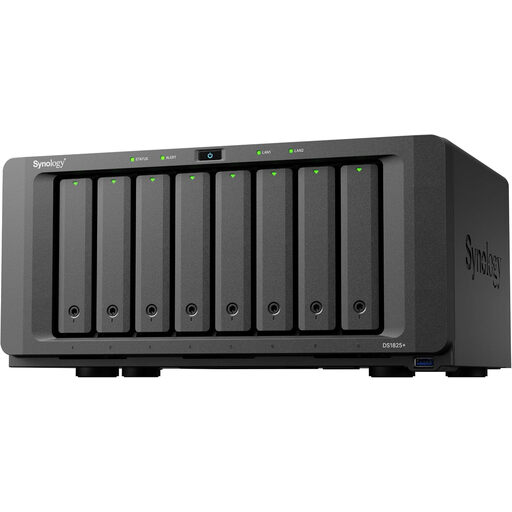
Eight drive slots make this a model to assess only if the planned archive calls for a substantially larger enclosure.
It is listed as diskless. Check compatible drives, usable capacity and whether its physical setup suits the move; keep a recoverable copy elsewhere.
 No image available
This four-bay option is relevant if extra drive slots fit your archive-growth plan.
Confirm supported drives and any intended expansion unit against the exact model before ordering. Make a separate, tested backup for the move.
 No image available
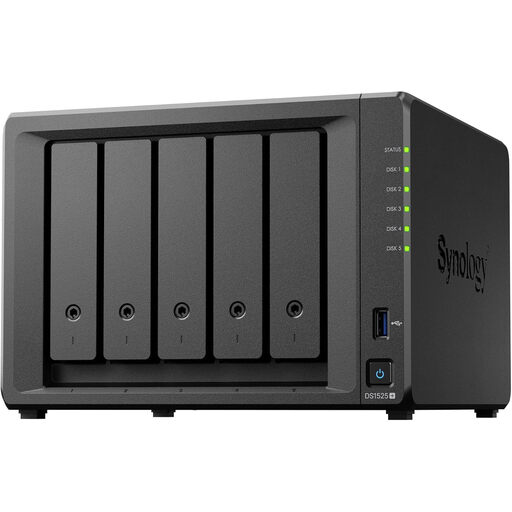
Consider five drive slots if the recording archive forms part of a larger media-storage plan, rather than assuming this production-focused model is needed for meetings alone.
It is listed as diskless. Check compatible drives, usable capacity and the separate backup you will use before transport.
No: if the NAS holds the only copy, losing or damaging it could also mean losing the archive. Make a separate copy before moving it and test that recordings open or restore. QNAP documents external-device, remote-NAS and cloud backup destinations; choose one you can keep apart from the enclosure.
Consider encryption as part of protecting recordings that contain personal information or confidential material, while keeping recovery information accessible to authorised people. For organisations processing personal information, the Information Commissioner’s Office describes encryption as particularly useful against unauthorised access if a storage device is lost or stolen; the appropriate measures depend on the risks.
Set a retention period for the type and purpose of recording rather than keeping everything indefinitely. For organisational records, the Information Commissioner’s Office advises a retention schedule reflecting business needs and legal requirements, with a process for reviewing what is kept.
Some are sold without drives: QNAP specifies that its TS-264 and TS-464 ship without HDDs. Check what the exact listing includes and which drives are compatible before choosing an enclosure and calculating usable archive space.