What matters when choosing a NAS?
Set the restore plan and user permissions first, then size storage for retained versions and assess whether the existing network suits the shared workload. A NAS with faster ports will not deliver faster end-to-end transfers unless the network path and connected computers can use them.
| Concern | What to check | Who this matters to |
|---|
| Recoverable backups |
Check scheduled backups, retained versions and a separate isolated destination; plan a test restore. |
If an archive file is deleted or corrupted, I need an earlier copy I can actually restore. For around 36% of consumers, recovery is the primary concern. |
| Controlled access |
Check named accounts, revocable permissions and separate administrator access; consider multifactor authentication where available. |
When volunteers change, I need to remove their access without disrupting everyone else. Access control comes first for roughly 29% of consumers. |
| Usable capacity |
Measure the archive and expected growth, then allow for the chosen RAID layout and retained backup versions. |
I want to keep older records and recovery versions as the archive grows, rather than clear them out early. Around 21% of consumers put capacity and retention first. |
| Shared workflow |
Count concurrent users and backup endpoints; check the switch and client connections alongside NAS network ports. |
If several people transfer large files or back up computers during studio sessions, I need the setup to fit that workload. For about 14% of consumers, shared-workflow needs take priority. |
NAS brands to consider
These examples show different hardware and backup approaches; compare the exact model and its supported software before choosing for the club's records.
Synology
Relevant when the studio wants centrally managed backups as well as shared storage.
- Synology lists a built-in 2.5GbE port for the DS225+. Its Active Backup for Business documentation describes central management for supported computers, servers, file servers and virtual machines.
- Check that the exact NAS model supports the required backup package and drives; raw capacity is not the usable space available after the chosen storage configuration.
QNAP
Relevant when file restoration through snapshots is part of the recovery plan.
- QNAP describes snapshot restoration for selected files and folders or a volume, depending on the setup.
- The TS-233 is a two-bay model with one Gigabit Ethernet port and fixed 2 GB memory; assess its fit if several people will use large files concurrently.
ASUSTOR
Relevant when a two-bay archive also needs options for faster local networking and additional storage hardware.
- ASUSTOR specifies two 2.5GbE ports, two SATA bays and four M.2 slots for the AS5402T.
- Two SATA bays still require a usable-capacity calculation, and the club needs a separate backup copy.
TerraMaster
Relevant to a studio considering a two-bay system with more specified memory and networking capability.
- TerraMaster specifies 8 GB DDR5 memory, two 2.5GbE ports, two SATA bays and RAID 1 support for the F2-424.
- Confirm the required backup software, drive compatibility and room for future growth before treating its hardware specifications as a fit for the archive.
Joybuy NAS options for club records
These NAS options range from two-bay storage for a smaller archive to multi-bay systems worth considering if the club expects substantial growth or large shared media files. Choose a configuration only after working out usable capacity, access requirements and how the NAS itself will be backed up.
 No image available
Synology DS425+ 4-Bay NAS
Consider its four-bay layout if the club expects its shared archive to grow beyond a smaller two-bay plan.
Confirm the supplied drive configuration and compatible drives, then calculate capacity for the intended backup retention.
Joybuy
 No image available
Synology DS225+ 2-Bay Diskless NAS
A two-bay option to assess for club records when the planned archive and retained versions fit the usable capacity.
Drives are not included in this diskless configuration. Check drive compatibility and support for the endpoint-backup software and access controls the club needs.
Joybuy
 No image available
Synology DiskStation DS925+ 4-Bay NAS
Its four bays make it an option to examine when archive growth calls for a larger internal drive layout.
Check the exact supported drives and calculate usable capacity; also confirm the backup and access features needed for shared records.
Joybuy
 No image available
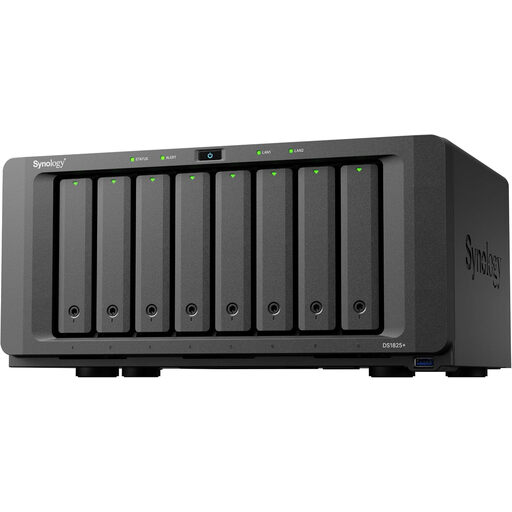
Synology DS1825+ 8-Bay Diskless NAS
Assess this eight-bay model if a substantial or growing media archive warrants a larger drive layout; bay count alone does not establish what this club needs.
Drives are not included in the diskless configuration. Check compatible drives, usable capacity and the backup and restore workflow before choosing it.
Joybuy
 No image available
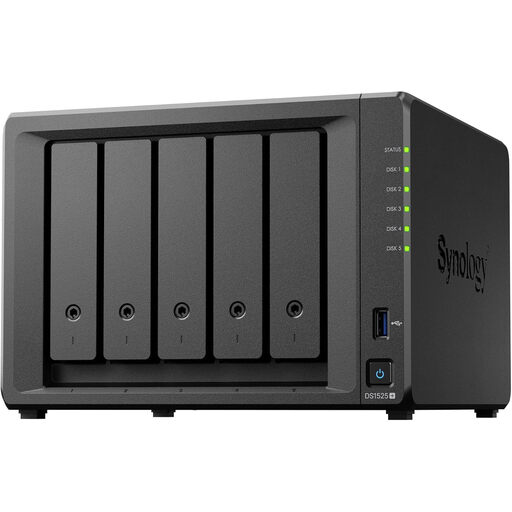
Synology DS1525+ 5-Bay Diskless NAS
A five-bay option to consider if the club has enough growing media records to justify more internal drives than a two-bay system offers.
Drives are not included in the diskless configuration. Confirm compatible drives, usable capacity and the scheduled backup and restore process required for club records.
Joybuy
Frequently asked questions
Is RAID 1 enough to back up club records?
No: RAID 1 can help a NAS remain available after one drive fails, but it does not create an isolated copy against incidents such as ransomware or loss of the studio equipment. The National Cyber Security Centre advises keeping isolated backups of important data, so arrange a separate copy and test a restore.
Should every studio member use the same NAS login?
Use individual accounts rather than a shared administrator login where the NAS supports them. Give members the access their roles require, remove it when roles change, and use separate administrator credentials and multifactor authentication for relevant privileged accounts where available, in line with National Cyber Security Centre account-security guidance.
Do UK data-protection rules affect club records stored on a NAS?
If the records contain personal data, the organisation must apply security measures appropriate to the processing risk under UK GDPR. The Information Commissioner's Office explains that technical and organisational measures should address confidentiality, integrity, availability and restoration; the right controls depend on what the club holds and who needs access. Its published guidance notes that it is under review following the Data (Use and Access) Act.
How much NAS capacity should the club plan for?
Start with the current archive, expected growth and the backup versions the club intends to keep, then calculate usable space for the chosen drives and RAID layout. Synology and TerraMaster note that capacity varies with the installed drives and configuration; an enclosure's raw-capacity figure is not a suitable substitute for that calculation.


