What matters when choosing?
Start with the size and expected growth of the recording archive, then decide how the group will back it up and control access. Treat networking upgrades as a separate question if file transfers are a regular bottleneck.
| Concern |
What to check |
Who this matters to |
| Recovery beyond drive failure |
Check for scheduled backups to a separate destination and a way to restore an earlier recording. Plan a trial restore. |
If an event cannot be recorded again, I need to recover its files even if the NAS or its contents are lost; around 42% of consumers put independent recovery first. |
| Controlled sharing |
Check individual accounts, folder permissions and who can change or delete backups. Arrange software updates and assess whether recordings identify people. |
When volunteers need different levels of access, I want to share recordings without giving everyone administrative control; roughly 33% of consumers prioritise controlled access and privacy. |
| Capacity and file access |
Measure representative files and check usable capacity for the intended drives and RAID setup. Confirm the model's expansion path and whether existing network equipment can use faster connections. |
If the programme grows each season, I need room for more recordings without planning around raw-capacity figures alone; about 25% of consumers make future capacity their primary concern. |
Joybuy NAS choices
These enclosures cover a compact two-bay setup and larger four- and eight-bay options for a growing recording archive. Whichever size you consider, plan the drives, usable capacity and separate backup around your group's recordings.
 No image available
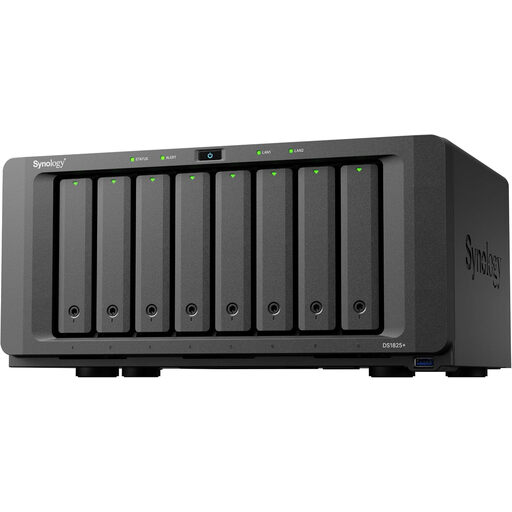
Synology DS1825+ eight-bay diskless NAS
Consider this eight-bay enclosure if the group expects substantial archive growth and wants to plan for more installed drives.
It is listed as diskless. Check compatible drives, the intended RAID setup and resulting usable capacity, and arrange an independent backup.
View on Joybuy
 No image available
Synology DS225+ two-bay diskless NAS
This two-bay model is an option for a modest shared recording archive with a separate backup plan.
It is listed as diskless. Synology documents external, remote NAS and cloud destinations for Hyper Backup; confirm the drives, usable capacity and backup destination for the group's setup.
View on Joybuy
 No image available
Synology DiskStation DS925+ four-bay NAS
Consider this four-bay enclosure if the group expects its recording library to grow beyond a compact two-bay setup.
Confirm compatible drives, usable capacity and the supported expansion accessory before relying on a future upgrade. Plan a separately recoverable backup as well.
View on Joybuy
Frequently asked questions
Does RAID mean our lecture recordings are backed up?
No. RAID may keep a NAS operating after a supported drive failure, but it is not a separately recoverable copy. Back up the recordings to another destination and test a restore; the National Cyber Security Centre advises keeping disconnected backup media separately where practical.
Could our lecture recordings contain personal data?
Yes, if a recording relates to an identified or identifiable person, such as a speaker or attendee. That follows the Information Commissioner's Office definition of personal data. If the group's processing falls within UK GDPR scope, assess its circumstances and use security measures appropriate to the risk rather than assuming every recording needs the same access settings.
How much NAS capacity should we plan for?
Start with the file size of a representative recording in each format, then account for the group's planned recording hours and retention period. Check usable space with the proposed drives and RAID configuration; Synology notes that usable capacity can differ from a stated raw-capacity figure. Plan space for working copies and a separate backup destination too.
Who should administer a volunteer-run NAS?
Assign responsibility to named administrators rather than sharing one administrator password, and give other volunteers only the folder access they need. Keep software and firmware updated; the National Cyber Security Centre advises prompt security updates and separate administrative credentials for backup systems.


