What matters when buying?
Start with the archive's usable capacity and recovery plan; assess faster networking against the way you will actually transfer files.
| Concern |
What to check |
Who this matters to |
| Recovery |
Confirm that the chosen setup can retain versions, back up to a separate destination and restore a handover folder. |
If I need to retrieve a client's earlier final or source file after an error, I cannot rely on a mirrored drive alone. Around 46% of consumers put recovery first. |
| Usable capacity |
Allow for retained versions and growth, then calculate capacity using the planned drives and RAID layout rather than raw drive totals. |
When several projects and revisions must remain accessible, I need space beyond the current handover. For around 27% of consumers, capacity growth is the primary concern. |
| File transfers |
Check the workstation connection and network equipment before choosing 2.5GbE ports or SSD expansion. |
If I routinely move large artwork folders, waiting for transfers affects my workflow. Faster working access comes first for around 27% of consumers. |
Joybuy NAS options
These NAS enclosures span two-bay storage for a smaller handover archive and larger systems for a growing or shared artwork library. Choose drives, usable capacity and an independent backup around the particular handover workflow.
 No image available
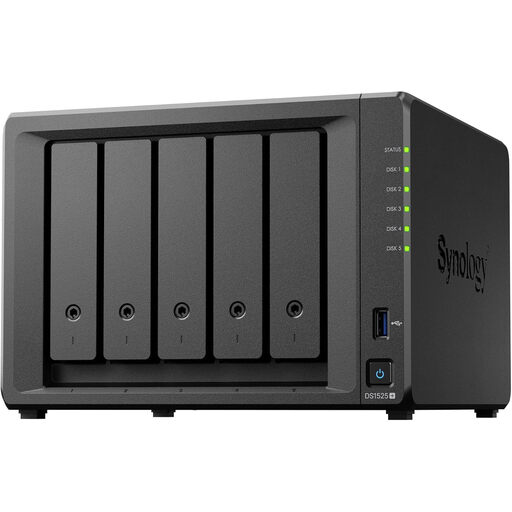
Synology DS1525+ five-bay diskless NAS
Consider this five-bay enclosure if several artwork projects or retained versions call for more room to plan a drive configuration. Compatible drives are needed; calculate usable capacity for the RAID layout and check how a separate backup will be restored.
View on Joybuy
 No image available
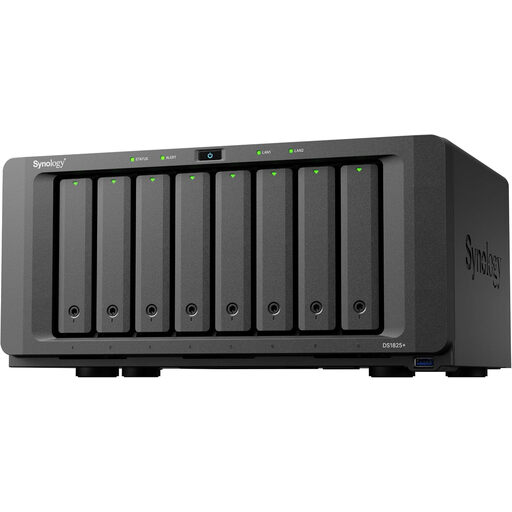
Synology DS1825+ eight-bay diskless NAS
This eight-bay enclosure is relevant when the archive must accommodate many retained projects or a larger shared library. It is diskless, so check exact drive compatibility, usable capacity under the intended RAID layout and the separate-backup workflow.
View on Joybuy
 No image available
Synology DS425+ four-bay NAS
A four-bay configuration is worth assessing if a two-drive mirror would constrain the retained artwork library. Check whether drives are included, which exact models are compatible and how the chosen setup backs up and restores client files.
View on Joybuy
 No image available
Synology DS225+ two-bay diskless NAS
This two-bay enclosure suits consideration when a mirrored archive has sufficient usable space and another copy will be kept elsewhere. It is diskless; confirm drive compatibility, version retention and the restore steps before using it for a client handover.
View on Joybuy
 No image available
Synology DiskStation DS925+ four-bay NAS
This four-bay model is an option to assess for an artwork archive that is expected to grow. Check exact supported drives and usable capacity with the intended RAID layout, then establish the backup destination and restoration process separately.
View on Joybuy
Common questions
Is RAID 1 enough to protect artwork after a client handover?
No: RAID 1 provides drive redundancy, not an independent archive copy. Synology recommends backing up to another destination; retain versions and test a restore so that an older handover file can be recovered when needed.
When should I choose a four-bay NAS instead of two bays?
Consider four bays when the usable space in a two-drive mirror would be too restrictive for retained projects, source assets and expected growth. Calculate capacity using the actual drives and RAID layout, and keep a separate backup whichever enclosure you choose.
Can I use any hard drive in a NAS enclosure?
Check the exact drive model against the enclosure maker's compatibility guidance and your intended RAID setup. Seagate describes IronWolf as a NAS-oriented drive line, but that alone does not confirm that a particular drive fits a particular enclosure.
What changes if client artwork folders contain personal data?
Set access and retention practices appropriate to those folders rather than treating indefinite storage as the default. The UK Information Commissioner's Office says personal data must not be kept longer than necessary and that security measures should be appropriate to the risk.
What should I do with a retired archive drive?
If it holds personal information, use and document an appropriate secure disposal method. The UK Information Commissioner's Office gives device wiping, degaussing and hardware shredding as examples and advises keeping equipment awaiting destruction secure.


