What matters when choosing?
Start with recording volume and retention, decide how the archive will be backed up, then check whether the studio’s network and access arrangements suit the people using it.
| Concern | What to check | Who this matters to |
|---|
| Usable capacity |
Measure typical meeting-file sizes and expected monthly growth; calculate usable space for the chosen drives, redundant layout and retention period. |
If recordings keep accumulating, I need room for the period we actually plan to retain them, not just a large raw-capacity figure. Around 34% of consumers put capacity and retention first. |
| Recovery |
Choose a suitable redundant layout and arrange a separate protected backup that can be restored and tested. |
When a recording is deleted or the NAS is damaged, I need another recoverable copy. For around 33% of consumers, independent recovery is the primary concern. |
| Shared access |
Check the NAS ports alongside the studio’s computers, switch and cabling; consider how many people transfer files at once. |
Several colleagues may upload or retrieve large files during the same session, so I care about how our whole network handles that work. Shared access comes first for around 20% of consumers. |
| Privacy and retention |
Plan user permissions, a documented deletion schedule and whether storage encryption is appropriate for identifiable recordings. |
If participants can be identified, I need to control who can open their recordings and when those files are removed. Around 13% of consumers make privacy and governance their primary concern. |
Joybuy NAS choices
These enclosures cover smaller archives, four-bay storage and larger shared-media workflows. Choose drives, usable capacity and a separate backup arrangement for the studio’s own recording volume; a larger or faster enclosure is not automatically necessary for archiving meetings.
 No image available
Synology DS425+ four-bay NAS
A four-bay choice for a shared recording library that may grow.
The listing describes central file sharing, RAID redundancy and automated backups. Check the installed drives and usable capacity, and arrange a backup copy protected separately from the NAS.
View on Joybuy
 No image available
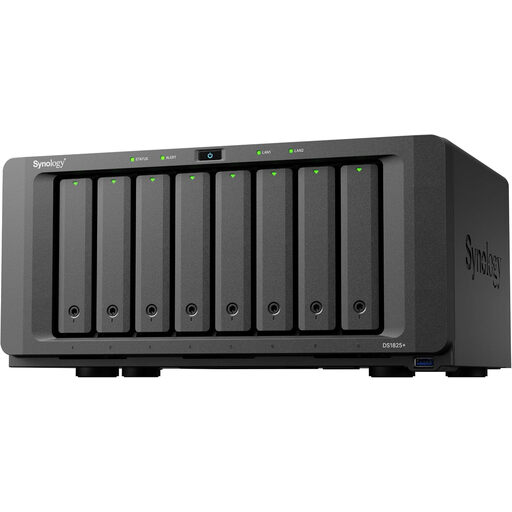
Synology DS1825+ eight-bay diskless NAS
Consider this larger enclosure when the studio also needs substantial shared-production storage, rather than only a modest meeting archive.
The listing describes an eight-bay design and 10GbE or 25GbE networking options. Check the required network configuration, compatible drives, usable storage layout and independent backup destination.
View on Joybuy
 No image available
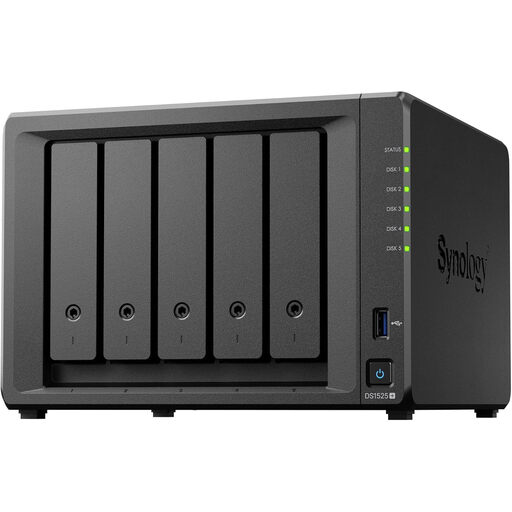
Synology DS1525+ five-bay diskless NAS
This five-bay model is more relevant if the meeting archive sits alongside a growing shared-media workflow.
The listing describes 10-Gigabit networking and a diskless enclosure, so select drives separately and check the networking configuration. Plan the redundant layout, usable capacity and backup destination before purchase.
View on Joybuy
 No image available
Synology DiskStation DS925+ four-bay NAS
Four bays give a growing studio more storage-layout choices than a fixed two-drive arrangement.
The listing specifies dual 2.5GbE ports. Check the exact supported drives and software conditions, calculate usable capacity, and confirm which expansion unit is compatible before relying on an expansion plan.
View on Joybuy
 No image available
Synology DS225+ two-bay diskless NAS
A two-bay enclosure may suit a modest archive with fairly stable recording volume.
The listing describes RAID redundancy and backup options using cloud services, external drives or a remote NAS. Drives must be selected separately; check compatibility and usable capacity, then configure a genuinely separate protected copy.
View on Joybuy
Frequently asked questions
Is RAID enough to protect meeting recordings?
No. RAID or Synology Hybrid RAID can provide fault tolerance for some drive failures, but neither is an independent backup. The National Cyber Security Centre advises regular, protected backups for recovery from destructive ransomware; test that the studio can restore its files.
Will a two-bay NAS be enough for a shared studio?
A two-bay NAS can suit a modest, stable recording archive if its usable capacity meets the planned retention period and the team has a separate backup. If growth is uncertain, compare the storage-layout and expansion choices of a four-bay enclosure before committing to drives.
Can I install any SATA hard drive in a NAS?
Do not assume that any SATA drive is suitable for the exact enclosure. Check the NAS maker’s compatibility guidance and the drive model number; Western Digital also advises confirming suitable drives with the third-party NAS manufacturer.
Do identifiable meeting recordings need data-protection planning?
Yes, if the recordings contain personal information. For UK processing, the Information Commissioner’s Office says the organisation must identify an appropriate lawful basis and keep personal data no longer than needed; the right arrangements depend on the recording purpose and circumstances, not on a NAS feature alone.
Should the studio encrypt its recording archive?
Assess encryption when recordings contain personal information, alongside permissions and physical security. The Information Commissioner’s Office says encryption can protect stored personal information against unauthorised or unlawful processing; the studio still needs to configure access and manage its recordings appropriately.


