Choose a two-bay NAS for a modest, predictable photo archive if its usable capacity leaves enough room for retained backups; consider four bays when the archive, retention period or number of contributors is likely to grow. Whichever enclosure you choose, plan a separate recovery copy, restrict access by user and check that the studio network can support the transfers you expect.
Who needs this setup?
Shared-studio archive custodians
If you are responsible for restoring photos after deletion, device failure or ransomware, choose a NAS as part of a backup workflow, not as the only recovery copy. The National Cyber Security Centre advises keeping important backups offline or isolated.
Small teams moving large photo batches
When several photographers or editors transfer substantial batches, check the NAS network ports alongside the studio switch and workstation connections. A faster NAS port alone does not make every transfer faster.
Studios handling identifiable images
If photos contain personal data, decide who needs access to each folder and who can administer backups. The Information Commissioner's Office calls for technical and organisational security measures appropriate to the processing risk.
What matters when choosing?
Work out how you will recover a separate copy before settling on bay count. Then size the storage for retained versions and check network connections and permissions against the way the studio works.
| Concern |
What to check |
Who this matters to |
| Reliable recovery |
Check backup-version support, a separate offline or isolated destination, and how to test a restore. |
If a folder is deleted or the NAS is compromised, I need an earlier copy I can restore. Around 36% of consumers put recoverability first. |
| Capacity for growth |
Calculate usable space after the chosen drive layout and retained versions; compare bay count and supported expansion. |
My RAW files, exports and older backup versions will keep adding to the archive, so I want room to expand. Capacity is the primary concern for around 29% of consumers. |
| Shared transfer speed |
Check NAS port speeds against workstation adapters, the switch and cabling before choosing 2.5GbE or 10GbE. |
When colleagues move photo batches at the same time, I want transfers to fit our working day. Around 21% of consumers prioritise shared transfer speed. |
| Manageable access |
Check user and folder permissions, separate administrator credentials, and the routine backup-monitoring workflow. |
I need to give contributors appropriate access without making everyone a backup administrator. Straightforward administration comes first for around 14% of consumers. |
Mistakes to avoid
-
Treating RAID as the whole backup plan
Drive redundancy does not provide an isolated copy if network-accessible files or backups are deleted or attacked. The National Cyber Security Centre recommends isolating backups, limiting privileges and keeping a recent offline copy of important data.
Arrange a separate recovery destination, restrict backup administration and schedule test restores before relying on the setup.
A separate copy also needs storage, administration and time for restoration tests.
-
Choosing capacity from the enclosure headline
Raw drive capacity is not the space available for protected backups after the selected drive layout and retained versions. QNAP says drives and SSDs for its TS-264 are sold separately.
Size the archive using current files, expected growth and the versions you intend to keep; check which drives are included with the enclosure you choose.
-
Upgrading the NAS port but not the network
A 2.5GbE or 10GbE interface cannot deliver that connection speed through equipment limited to 1GbE. Manufacturer port specifications are not a promise of transfer speed in your studio.
Check workstation adapters, the switch and cabling before choosing faster NAS networking.
Using the faster connection may also require changes to the switch, adapters or cabling.
-
Giving every contributor administrator access
Shared administrator credentials make it harder to limit who can change backup settings. The National Cyber Security Centre advises least privilege and separate backup credentials; where photos contain personal data, the Information Commissioner's Office calls for security measures appropriate to the risk.
Create individual accounts, reserve administrator access for those who need it and review permissions when contributors change.
Brands to consider for this setup
Synology
Synology positions the four-bay DiskStation DS923+ for home offices and small businesses seeking storage expansion and backup software.
- For the DS923+, Synology specifies expansion to nine drives with a DX517 and an optional 10GbE networking upgrade.
- Check the starting network ports, upgrade requirements and backup-software support for the exact model you intend to buy.
QNAP
QNAP's TS-264 is a two-bay option for a smaller studio that wants built-in faster-capable networking.
- QNAP specifies two built-in 2.5GbE ports for the TS-264.
- Its two bays leave fewer drive positions for expansion than a four-bay enclosure, and QNAP says drives and SSDs are sold separately.
ASUSTOR
ASUSTOR's Lockerstor 4 Gen2 AS6704T combines a four-bay format with built-in 2.5GbE connections.
- ASUSTOR specifies four drive bays and two 2.5GbE ports for this model, with an optional 10GbE expansion card.
- Plan capacity using the selected drives, redundancy layout and backup retention rather than a published raw-capacity figure.
Joybuy NAS choices
These multi-bay Synology NAS enclosures are relevant when a shared studio expects its photo archive to grow. Check the recovery workflow, usable capacity and access controls for the configuration you plan to use.
 No image available
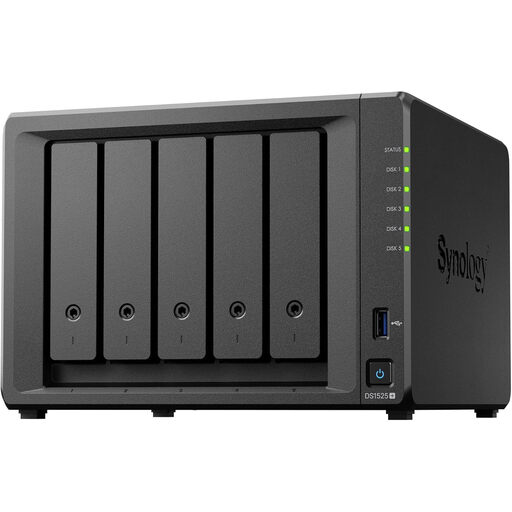
Synology DS1525+ 5-bay diskless NAS
Consider this model for a growing shared photo archive where several editors move large files. The listing identifies five drive bays, expansion with DX525 units and 10-Gigabit networking; network benefits depend on compatible studio equipment.
This enclosure is diskless, so obtain suitable drives separately. Before choosing it as a backup destination, check usable capacity, retained-version support, permissions and how the studio will maintain a separate recovery copy.
View on Joybuy
 No image available
Synology DiskStation DS925+ 4-bay NAS
Consider this four-bay model when the photo archive needs room to grow. Its listing describes expansion with a DX525 and two 2.5GbE ports; check the exact expansion configuration and whether the studio network can use those ports.
The listing specifies Synology-branded drives. Check drive compatibility and what is included, then plan usable capacity, backup versions, permissions and a separate recovery copy for the intended setup.
View on Joybuy
Common questions
Is RAID enough to protect a shared studio's photo backups?
No. RAID can help keep storage available after a drive failure, but it does not create an isolated recovery copy against deletion, ransomware or damage to the site. The National Cyber Security Centre advises protecting backup access and keeping a recent offline copy of important data; test that you can restore files from it.
Should a small studio choose a two-bay or four-bay NAS?
A two-bay NAS can suit a modest, predictable archive if the planned drive layout leaves sufficient usable space. Choose four bays when growth or longer backup retention calls for more capacity options; calculate space after redundancy and retained versions rather than using raw drive capacity.
Will 2.5GbE or 10GbE make photo backups faster?
A faster NAS connection may help when transfers are constrained by the existing network and the workstations, switch and cabling support the higher speed. Check those connections and the studio's simultaneous workload before choosing a 2.5GbE or 10GbE configuration.
What if the studio's backed-up photos contain personal data?
If the studio processes personal data within the scope of UK data-protection law, the Information Commissioner's Office says it must use technical and organisational security measures appropriate to the risk. Plan access restrictions and recoverability around the images you handle, and assess the studio's specific obligations.


