What matters when choosing a NAS?
Start with the archive and backup plan, then match the network to the studio’s copying workflow. Recording volume and retention needs determine the drive capacity to plan for; a faster NAS connection helps only when the rest of the path can use it.
| Concern | What to check | Who this matters to |
|---|
| Recoverable archive |
Choose a suitable redundant drive layout, then plan a separate backup destination and regular restore tests. The Department for Education’s 3-2-1 guidance calls for three copies on two forms of storage, with one off-site. |
If a recording is deleted or the studio suffers a wider incident, I need a copy I can restore independently of the NAS. Around 31% of consumers choosing for this shared-studio scenario would put recovery first. |
| Concurrent copying |
Check the NAS Ethernet ports against workstation adapters, switch ports and cabling. Confirm whether any planned network upgrade can be used end to end. |
When several of us copy sessions, I want to avoid choosing a NAS connection that the rest of our wired setup cannot use. For around 25% of consumers, copy workflow would be the primary concern. |
| Controlled sharing |
Plan individual accounts and folder permissions; confirm copying and sharing rights. If personal data is shared, the Information Commissioner’s Office says to identify a lawful basis before sharing and apply appropriate security measures. |
Before giving collaborators access, I need to know who may receive each recording and what they may do with it. Controlled sharing would come first for around 19% of consumers. |
| Capacity and growth |
Estimate recording hours, formats, retention and growth before choosing drive sizes. Check the exact enclosure’s bays and supported expansion options. |
If the archive keeps growing, I need enough usable space without confusing installed drive capacity with capacity after redundancy. Around 25% of consumers would make room to grow their leading concern. |
Joybuy product choices
These NAS enclosures span two, four, five and eight bays. Compare each against the studio’s capacity and wired-network plan rather than treating a larger enclosure as necessary for every shared archive.
 No image available
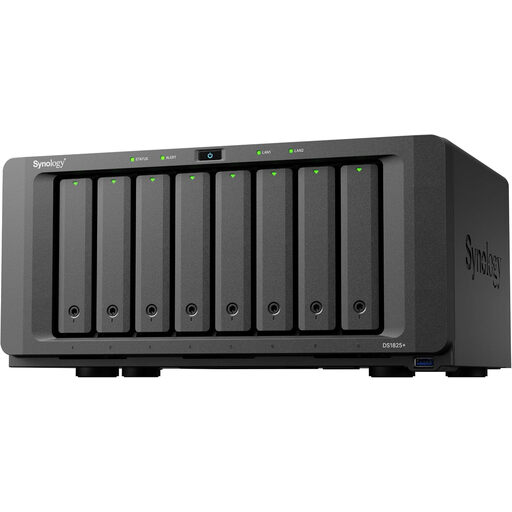
Synology DS1825+ 8-Bay Diskless NAS
Consider this eight-bay enclosure if the archive plan calls for more drive bays than a four-bay model. Drives must be selected separately; check the required network hardware and arrange an independent backup.
Joybuy
 No image available
Synology DS425+ 4-Bay NAS
A four-bay option to assess for the studio’s shared recording archive. Check its network connections against the workstations and switch, confirm the drive configuration, and plan a separate backup.
Joybuy
 No image available
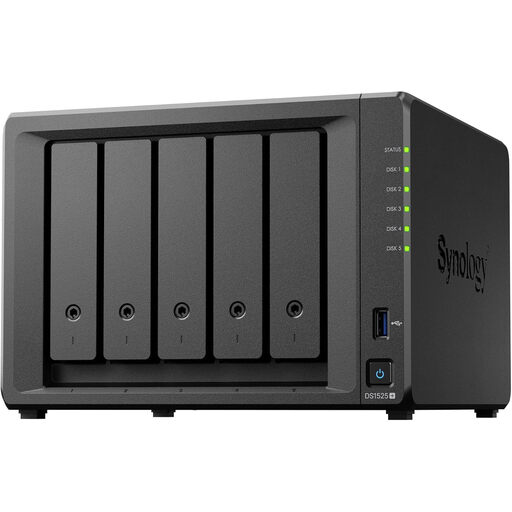
Synology DS1525+ 5-Bay Diskless NAS
The five-bay format is worth considering if the studio’s capacity plan calls for another bay beyond a four-bay enclosure. Select compatible drives separately, check the exact wired-network configuration and maintain an independent backup.
Joybuy
 No image available
Synology DiskStation DS925+ 4-Bay NAS
Consider this four-bay model for a studio assessing regular shared-file copying and future storage needs. Confirm the applicable drive-compatibility requirements and whether its network configuration suits the complete studio setup; keep backups separate.
Joybuy
 No image available
Synology DS225+ 2-Bay Diskless NAS
Consider this two-bay enclosure only if the studio’s usable-capacity and growth plan fits that limit. Choose drives separately, check the wired connection against the copying workflow and test a separate backup.
Joybuy
Frequently asked questions
Can RAID replace a separate backup of concert recordings?
No. Drive redundancy is not an independent recovery copy. The Department for Education’s 3-2-1 guidance calls for three copies across two forms of storage, with one off-site; the National Cyber Security Centre advises keeping at least one backup offline or digitally disconnected when not in use. Test that recordings can be restored.
Does a shared studio need 2.5GbE or 10GbE?
Built-in 2.5GbE is worth considering when repeated multi-user copies are central to the workflow and compatible connections exist across the wired path. Consider an optional 10GbE upgrade only alongside the workstations, switch, cabling and storage configuration it would require; a faster NAS port alone does not establish faster copies.
Are drives included with a NAS enclosure?
Check the exact model and listing rather than assuming they are included. QNAP specifies that the TS-464 ships without HDDs, while the diskless product variants shown here also require drives to be selected separately. Plan usable capacity after the chosen redundant layout, as well as backup storage.
Can a UK studio copy and share any concert recording on its NAS?
No, storing a recording on a NAS does not itself grant copying or distribution rights. GOV.UK explains that copyright restricts copying and distributing protected work; confirm the relevant recording and music rights, agreements and intended use before sharing.
When does UK GDPR affect a shared recording NAS?
UK GDPR requirements matter when the studio processes personal data, and sharing that data requires a lawful basis. The Information Commissioner’s Office advises identifying that basis before sharing and applying security measures appropriate to the processing. Use individual accounts and permissions that reflect who needs access.


