Notes-first archive teams
Studios bringing research notes, PDFs and reference images into one shared location need orderly access and a way to recover earlier files after accidental changes or deletion.


For a notes-first shared studio, start by comparing two-bay NAS models for user permissions, scheduled backups and recovery of earlier file versions. Plan a separate backup even if you configure drive redundancy. Consider faster networking or SSD expansion for regular large-file work only if the studio's computers and network can use it; an archive containing personal data also needs security measures appropriate to the processing risk.
Studios bringing research notes, PDFs and reference images into one shared location need orderly access and a way to recover earlier files after accidental changes or deletion.
Teams storing high-resolution scans, image sets, audio or video alongside notes may have greater capacity and transfer needs. Faster NAS ports are useful only where the surrounding network and computers can take advantage of them.
Where notes identify participants, clients or contributors, the studio needs to decide who can access them, how they will be recovered and how long they should be kept. The UK Information Commissioner's Office advises security measures appropriate to the processing risk.
Work out how the studio will recover and share its notes before choosing a storage layout. Give faster networking and expansion more weight if large research files are a regular part of the archive.
| Concern | What to check | Who this matters to |
|---|---|---|
| Archive recovery | Check version-recovery options and how a separate, protected backup will be made and restored. | If a collaborator deletes or changes an important note, I need a usable earlier copy; around 31% of consumers put archive recovery first. |
| Shared access | Check user and group permissions, the studio's file-sharing workflow and who will manage accounts. | When several collaborators use the archive, I need them to find files without giving everyone the same access; roughly 25% of consumers prioritise controlled collaboration. |
| Personal-data protection | If notes contain personal data, assess access, encryption, retention and recovery against the processing risk. | If interview notes identify people, I need a clear decision about who can see and keep them; about 25% of consumers make privacy and administration their primary concern. |
| Capacity and transfers | Calculate usable capacity for the intended drive layout; check whether computers and switches can use faster NAS networking. | With scans or media arriving regularly, I need room for archive growth and transfers that fit our workflow; around 19% of consumers put capacity and throughput first. |
Drive redundancy addresses a different problem from restoring deleted files, while snapshots remain on the primary system. The National Cyber Security Centre warns that on-premises and cloud backups are not ransomware-resistant by default.
Plan a separate backup destination, limit access to its management settings and test a restore before relying on the archive.
A separate destination and regular restore tests add storage and administrative work.
Using two bays for drive redundancy does not leave the same usable capacity as using both drives for storage. File versions and separate backup copies also need space.
Estimate archive growth, then calculate usable capacity for the exact drive arrangement before choosing drives.
QNAP's stated high transfer figure for the TS-264 depends on port trunking. Dual 2.5GbE ports and M.2 slots on other models are hardware options, not a guarantee of faster transfers for every computer.
Check the switch and the computers used to add or retrieve large files before making network speed or SSD expansion a priority.
Making use of faster networking may also require changes to switches, adapters or client devices.
For UK personal-data processing, the Information Commissioner's Office calls for security measures appropriate to the risk; it does not require every item of personal information to be encrypted.
Assign responsibility for accounts, assess whether encryption is appropriate, set justified retention periods and practise recovery.
Synology positions the DS224+ for small-to-moderate-sized teams needing centralised file management.
The TS-264 is a two-bay option for studios that regularly handle larger files and can use faster networking.
The AS5402T offers a two-bay archive layout with additional SSD slots and network ports for workflows that can use them.
These Synology NAS models span a compact two-bay archive and larger enclosures that may suit a growing collection of research files. Compare the exact model's sharing and recovery options with the studio's needs, and plan an independent backup whichever enclosure you choose.
 No image available
Consider this four-bay model if the shared archive needs more drive-layout room than a two-bay unit.
Check compatible drives and bundle contents for this exact unit before planning its usable capacity. Confirm the permissions and recovery options needed for the studio's files.
 No image available
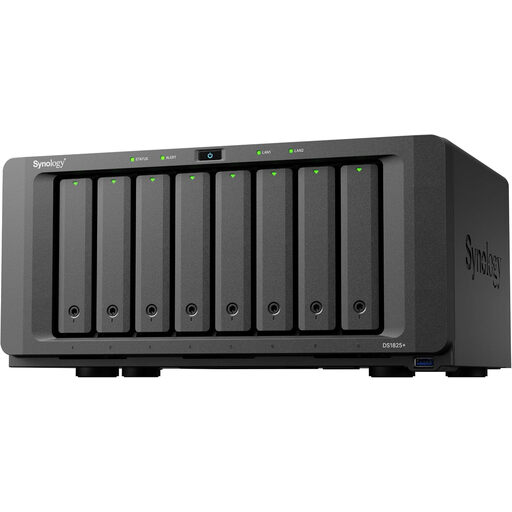
Consider this larger enclosure only if the archive's planned drive layout calls for substantially more bays than a notes-focused setup.
The title identifies an eight-bay, diskless unit, so plan the drives separately. Check shared-folder permissions and recovery options for the exact model, and keep a separate, tested backup.
 No image available
This four-bay model is worth comparing if the studio expects its archive to outgrow a two-bay layout.
Confirm compatible drives and what comes with the unit before calculating usable storage. Check the exact model's permissions, backup scheduling and version-recovery options.
 No image available
For a notes-first shared archive, this two-bay model provides a compact layout to assess against the studio's capacity needs.
The title identifies a diskless unit, so plan drives separately. Check user permissions, backup setup and version recovery for this exact model; drive redundancy would not replace an independent backup.
 No image available
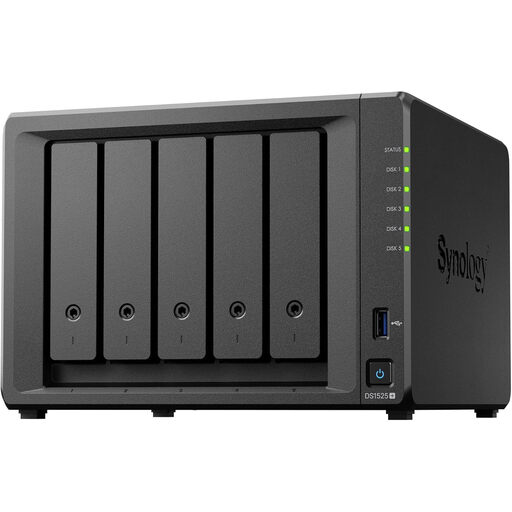
Consider the five-bay layout if the studio's research archive includes enough growing media or source files to justify additional drive bays.
The title identifies a diskless unit, so plan and check drive selection. Confirm permissions and recovery options for the exact model rather than treating project version control as a separate backup.
No. Drive redundancy can help when a drive fails, but it is not an independent backup of the shared archive. The National Cyber Security Centre warns that backups are not ransomware-resistant by default, so keep a separate backup and test that the studio can restore from it.
Text-heavy notes alone do not establish a need for 2.5GbE. Consider it if collaborators regularly move large scans, image sets, audio or video and their computers and network can use the faster connection. QNAP specifies dual 2.5GbE ports for the TS-264, and ASUSTOR specifies them for the AS5402T; neither specification guarantees a particular end-to-end transfer speed.
No blanket encryption requirement applies to every item of personal information under UK GDPR, according to the Information Commissioner's Office. The studio must use security measures appropriate to its processing risk, assessing the sensitivity of its notes alongside access controls and recovery arrangements.
Keep personal data only for as long as the studio needs it for a justified purpose, as the Information Commissioner's Office advises. Set and document a retention period suited to the research rather than assuming that available NAS capacity determines how long the notes should remain.