For a small school-project recording archive, start with a two-bay NAS that supports the team’s sharing workflow, but plan capacity around how long the recordings need to be kept. Use individual access permissions and a separate, recent backup rather than treating the NAS as the only copy. Faster networking and more drive bays become relevant when the project also involves frequent large-file transfers or a substantially larger media collection.
Who needs this setup?
Project archivists handling sensitive recordings
If a recording identifies pupils or staff, you need to decide who may access it, how long it is needed and how it can be recovered. Department for Education record-keeping guidance and Information Commissioner’s Office guidance on retaining personal data make those decisions particularly important.
Small teams sharing one recording library
You need a consistent place to upload, name and retrieve meetings across the devices used by the project. Synology and QNAP describe central storage and file-sharing functions for their respective two-bay models; the team still needs someone to maintain the folder structure and access settings.
Collaborators moving large files regularly
If several people frequently transfer video recordings or other large media files, check the speed of the whole network before choosing hardware for its ports. ASUSTOR lists two 2.5GbE ports on the LOCKERSTOR 2 Gen2 (AS6702T), but those ports alone do not establish the transfer speed your project will achieve.
What matters when choosing?
Decide who needs the recordings and how long they must remain available, then plan usable storage and a separate recovery copy. Assess faster networking only against the files and simultaneous transfers the team expects.
| Concern |
What to check |
Who this matters to |
| Retention and access |
Confirm the school’s retention decision for these recordings, then check individual permissions and whether remote access is necessary. |
If a meeting recording identifies pupils or staff, I need to know who can open it and when it should be deleted; around 36% of consumers put retention and controlled access first. |
| Recovery and capacity |
Estimate storage for the intended retention period and arrange a separate, recent offline backup that can be restored. |
When recordings must remain available throughout the project, I want enough usable space and a way to recover a lost file. Roughly 29% of consumers make recovery and capacity their primary concern. |
| Shared filing |
Check access from the team’s computers and whether folders and permissions will make meetings easy to find. |
With several people contributing recordings, I want a shared library where the right meeting is easy to retrieve; around 21% of consumers prioritise straightforward filing and sharing. |
| Transfers and growth |
Check simultaneous transfer needs and whether switches and computers can use faster ports before planning expansion. |
If teammates regularly move large recordings, I need to know whether our network can handle the workload; roughly 14% of consumers chiefly seek transfer capacity and room to grow. |
Mistakes to avoid
-
Treating the NAS as the only backup
A network-connected archive can be affected by ransomware. The National Cyber Security Centre advises keeping a recent offline backup of important files and data.
Keep a separate offline copy of important recordings and test that you can restore a selected file before relying on the archive.
-
Buying drives before deciding what to keep
Capacity is difficult to plan without a retention period. Where recordings contain personal data, Information Commissioner’s Office guidance says it must not be kept longer than needed; Department for Education guidance says schools should review what data they hold each year.
Agree the purpose and intended retention period for each category of recording before estimating storage, and review whether the files are still needed.
-
Enabling remote sharing without an access plan
Meeting recordings may identify people, so an open shared account can give access beyond the project team. The National Cyber Security Centre advises authenticating and authorising connections that access data or services.
Decide whether remote access is needed, use individual accounts and limit permissions to people who need the recordings.
Allow staff time to manage accounts and review access as the team changes.
-
Installing a reused drive without copying its files
Drive installation can erase existing contents: Synology’s DS224+ setup guidance warns that a drive containing data will be formatted during installation.
Make and check a separate copy of any files on a reused drive before installing it in a NAS.
Relevant brands to consider
Synology
Synology positions the two-bay DiskStation DS224+ for small organisations and teams that need central storage.
- Synology describes sharing, syncing and backup tools that could form part of a managed recording workflow.
- Those tools do not decide the school’s retention rules or replace a separate offline recovery copy.
QNAP
QNAP positions the two-bay TS-233 as a straightforward shared-storage option.
- QNAP lists snapshots, account-protection features and one 1GbE port for the TS-233.
- Check whether one 1GbE connection suits simultaneous transfers, and configure access and backups for the project rather than relying on device features alone.
ASUSTOR
The ASUSTOR LOCKERSTOR 2 Gen2 (AS6702T) is a two-bay option to assess when the project regularly moves larger files.
- ASUSTOR lists two 2.5GbE ports and four M.2 slots for this model.
- The networking benefit depends on compatible equipment; additional hardware options do not replace access decisions or an offline backup.
Joybuy product choices
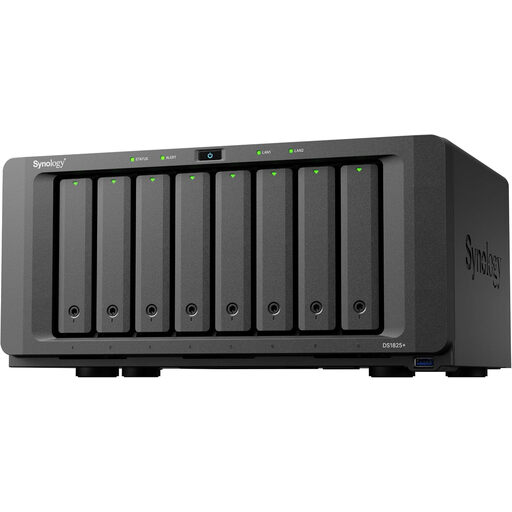
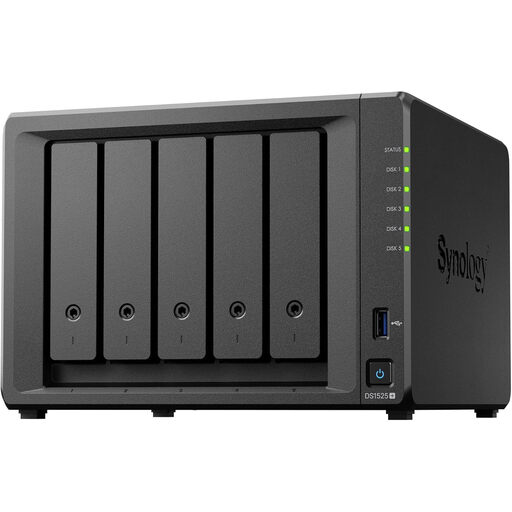
These four-, five- and eight-bay Synology NAS models are choices to assess if the school project needs a larger archive or also involves media work. For a modest meeting-recording library, establish the required capacity and access arrangements before choosing additional drive bays.
 No image available
Synology DS1825+ 8-bay diskless NAS
Consider this model if meeting recordings form part of a substantially larger media archive; check that the project needs an eight-bay system rather than choosing by bay count alone.
Diskless means storage drives must be selected separately. Confirm the planned access controls and arrange a separate offline copy of important recordings.
View on Joybuy
 No image available
Synology DS1525+ 5-bay diskless NAS
Consider this five-bay model if the project also involves video-production files and has a defined need for more storage bays than a compact archive.
Storage drives are selected separately. Check how individual access and a separate offline backup will work before placing school recordings on it.
View on Joybuy
 No image available
Synology DiskStation DS925+ 4-bay NAS
Consider this four-bay model when the recording archive has a defined need for more drive bays than a two-bay setup.
Check drive and expansion-unit compatibility before planning upgrades. Set individual access permissions and keep a separate offline backup of important recordings.
View on Joybuy
Common questions
Does buying a NAS make school meeting recordings UK GDPR compliant?
No. Where recordings contain personal data, the school still needs to decide why they are kept, who may access them and when they should be deleted or anonymised. The Information Commissioner’s Office says personal data must not be kept longer than needed, and Department for Education guidance advises schools to review what data they hold each year.
Can the NAS be the only copy of important recordings?
No: keep a recent offline backup as well as the NAS archive. The National Cyber Security Centre recommends an offline copy of important files and data because ransomware can affect network-connected storage.
What should be in place before enabling remote access?
Decide whether the project needs remote access, then restrict it to authorised individual accounts with appropriate authentication. The National Cyber Security Centre advises authenticating and authorising connections to data and services; protect administrator access particularly carefully.
Can I reuse a drive that already contains files?
Copy and check those files elsewhere before installing the drive. Synology’s DS224+ setup guidance warns that installing a drive containing data will format it and erase its contents; also confirm that the drive is compatible with the NAS you choose.


