
24/7 Customer Support

Free returns

Same-day & Next-day Delivery

Quality Guaranteed

Unlock Your Welcome Offers: FREE Delivery | Up to 80% OFF | Free 30-day JoyPlus trial
Download the APP
As a pet owner in the UK, you want to provide the very best for your dog. Navigating the world of pet food can be a challenge, especially with terms like "natural" appearing on so many packages. What does it truly mean, and how can you be sure you are making a sound choice for your companion's health and your wallet?
My role as Joybuy's Product Recommendation Officer is to help you cut through the marketing clutter. Let's look at some common pitfalls when shopping for natural dog food and what to focus on instead.
Many well-intentioned owners are caught out by clever marketing. Here are a few things to be wary of:
grain free dog food is essential for dogs with specific allergies or sensitivities, it is not automatically superior for every dog. Some brands replace grains with other starches like potato or pea flour, which may not offer a significant nutritional upgrade. The focus should be on the overall quality and digestibility of all ingredients, not just the absence of grain.To ensure you are choosing a genuinely beneficial food, focus on these core parameters.
This is the single most important factor for your dog's main meals. A complete dog food is formulated to provide all the essential nutrients your dog needs to thrive, including proteins, fats, vitamins and minerals, in the correct balance. "Complementary" foods, such as some mixers or treats, are not nutritionally balanced and should only be given as part of a balanced diet, not as the sole meal. Always check the packaging for the term "complete."
The first few ingredients on the list make up the bulk of the food. Look for clearly named meat or fish sources (e.g., "Freshly Prepared Turkey," "British & Irish Farmed Beef"). This transparency is a good indicator of quality. For dogs with potential intolerances, a hypoallergenic dog food will often feature a single, novel protein source to minimise the risk of a reaction. This principle of clear, quality ingredients also applies when selecting a sensitive cat food.
A high-quality natural food avoids artificial colours, flavours and preservatives. Instead, it may include beneficial additions like omega oils for skin and coat health, prebiotics for digestion, or vegetables for fibre and vitamins. If you are looking for a low fat dog food, check that it still contains quality protein and uses wholesome sources of energy, like wholegrain rice, rather than just being stripped of nutrients. Many options are also proudly UK made dog food, using locally sourced ingredients.
To help you find a food that matches your dog's needs, here are a few options that align with our selection criteria.
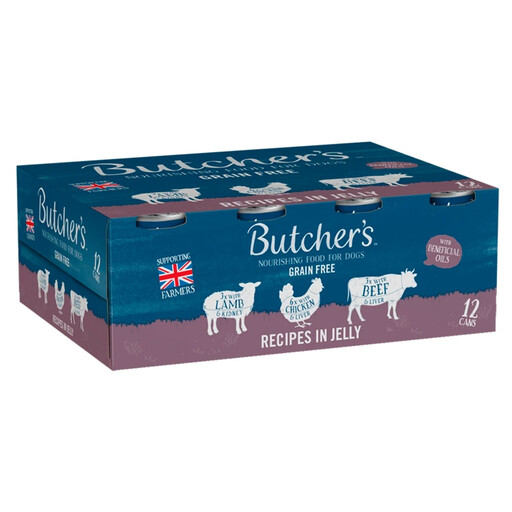
Why This Fits Their Persona: This wet dog food multipack offers excellent value for money without compromising on core quality. It's a practical choice for households wanting to feed a natural, grain-free diet sourced from British and Irish farms.
It sidesteps the "natural illusion" by being free from artificial colours, flavours and preservatives, and clearly states its use of British & Irish farmed meats.
Provides 100% complete and nutritious meals in a convenient, bulk-buy format. The grain-free formula is naturally gluten-free.
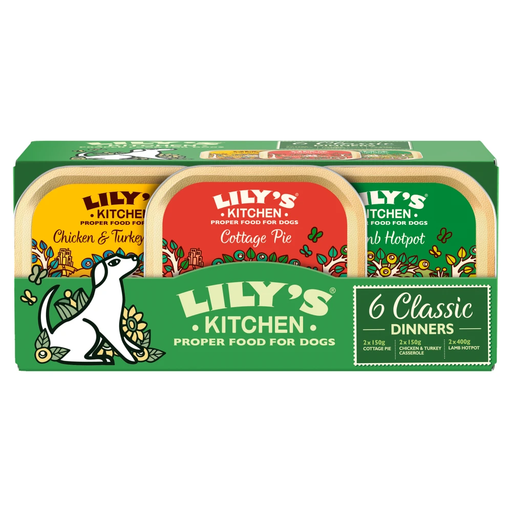
Why This Fits Their Persona: For the owner who prioritises premium, gentle ingredients for a sensitive stomach dog food. These vet-approved recipes are made with freshly prepared meat and wholesome vegetables, with no common fillers like wheat, corn, or soya.
It directly counters the "ambiguous ingredients" trap by providing a highly detailed list, specifying "Fresh Beef (60%)" and naming every botanical herb included.
Uses freshly prepared meat and offal, not lower-quality meat meal or bone meal. The recipes are nutritionally complete and crafted with veterinary guidance.

Why This Fits Their Persona: This is an ideal choice for owners actively managing their dog's weight. It is a specifically formulated low fat dog food that is still complete and balanced, ensuring your dog gets all its nutrients while on a calorie-controlled diet.
Instead of just removing fat, it includes functional ingredients like L-Carnitine to help convert fat to energy and wholegrain rice for fibre and slow-release energy.
Contains 20% less fat than standard recipes and is enriched with L-Carnitine to support lean muscle mass. It is vet-recommended for weight management.
We have compiled a complete, real-time list of products that fully satisfy these strict selection criteria and UK safety regulations.
To avoid digestive upset, it is important to transition your dog to a new food gradually. Start by mixing a small amount of the new food (around 25%) with their old food (75%). Over the next 7 to 10 days, slowly increase the proportion of the new food while decreasing the old, until you are feeding 100% of the new diet.
Not necessarily. A grain free dog food is an excellent choice for dogs with a diagnosed grain allergy or sensitivity. However, for many dogs, high-quality, digestible whole grains can be a valuable source of energy and fibre. The most important factor is the overall quality of the recipe and whether it suits your individual dog's needs. If you have concerns, a discussion with your vet is always a good idea.
Both can be excellent choices. Wet food, often found in a wet dog food multipack, has a high moisture content which helps with hydration and is often more palatable for fussy eaters. Dry food (kibble) is convenient to store, can be more cost-effective and the crunchy texture can help with dental hygiene. Many owners find that a combination of both wet and dry food works well for their dogs.