
24/7 Customer Support

Free returns

Same-day & Next-day Delivery

Quality Guaranteed

Unlock Your Welcome Offers: FREE Delivery | Up to 80% OFF | Free 30-day JoyPlus trial
Download the APP
Finding the right rug can completely transform a room, grounding the space and adding a layer of warmth and texture. If you are drawn to interiors that feel authentic, calm and connected to nature, then natural fibre rugs are an excellent starting point. Materials like jute, wool and seagrass bring an organic, tactile quality that synthetic alternatives often lack.
However, with so many options available, choosing the right one can feel overwhelming. This guide is designed to help you understand the key differences between these materials and identify a rug that not only suits your style but also fits your lifestyle. We will explore what to look for and share some of our top recommendations to help you make a confident choice.
Before you start browsing, keeping a few practical points in mind will help narrow down your search and ensure you find a rug you will be happy with for years to come.
The material of your rug determines its texture, durability and overall feel.
The way a rug is constructed contributes significantly to its character. A thick, braided hand-woven rug introduces a rustic, artisanal dimension, with visible knots and textural variations that add depth. These are ideal for adding character to minimalist or Scandinavian-inspired rooms.
Conversely, a flatter, more tightly woven rug offers a sleeker profile that works well under furniture and in busier spaces. Consider how much texture you want to introduce. A highly textured rug for living room floors can become a focal point, while a subtler weave can provide a neutral foundation for your furniture and decor.
The size of your rug is crucial for creating a balanced and cohesive look. A rug that is too small can make a room feel disjointed, while a large natural rug can unify a seating area and make the space feel bigger.
As a general rule, in a living room, the rug should be large enough for at least the front legs of your sofas and chairs to rest on it. In a dining room, ensure the rug extends far enough so that the chairs remain on it even when pulled out. For a unique accent, a round jute rug can create a soft, defined zone in a reading nook, entryway or a child's bedroom.
Here are a few standout pieces from our collection that showcase the beauty and versatility of natural fibres.
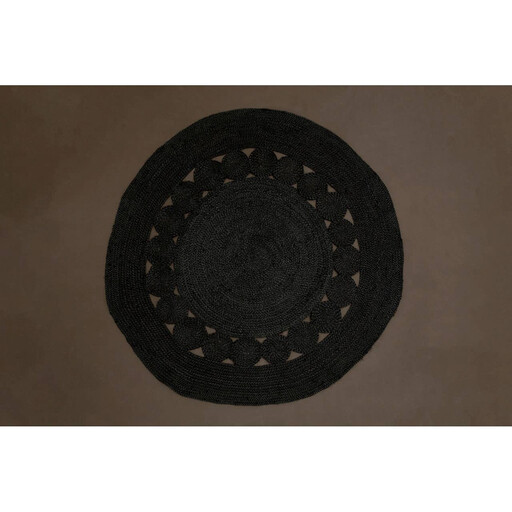
Why It Stands Out: This rug takes the humble jute fibre and gives it a dramatic, contemporary twist. The bold black finish and striking concentric circular pattern create a sculptural focal point. It is a hand-woven rug that blends traditional braiding techniques with a modern, graphic sensibility.
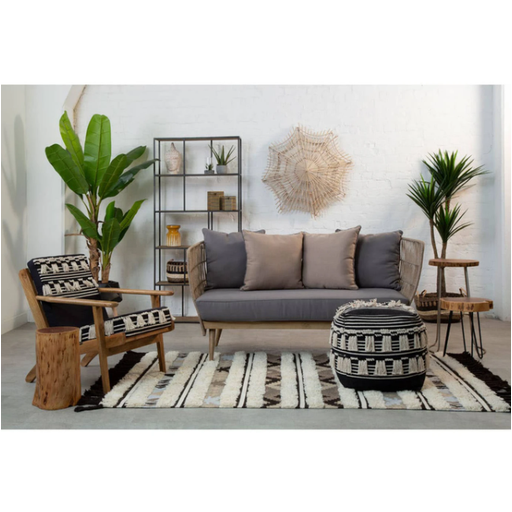
Why It Stands Out: The Jango rug exudes artisanal charm. Made from a soft and durable 80% wool and 20% cotton blend, it feels wonderfully tactile underfoot. The earthy, geometric pattern and black fringing give it the authentic character of a tribal wool rug, with each piece having unique variations due to its handcrafted nature.
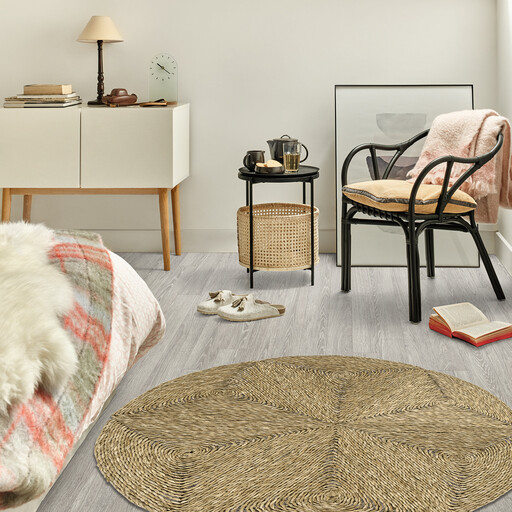
Why It Stands Out: This seagrass rug combines exceptional durability with a beautiful, subtle design. The central star motif is woven directly into the rug, creating a captivating geometric detail that highlights the natural texture of the fibres. Its robust construction makes it a highly practical choice for busy areas of the home.
These selections represent just a glimpse of what is possible with natural fibres. If you are inspired to explore further and discover more patterns, textures and styles, we invite you to browse our complete collection.
For more designs, from intricate patterns to minimalist textures, explore our full range of Ethnic style area rugs.
Are natural fibre rugs difficult to clean? Most natural fibre rugs require straightforward care. Regular vacuuming (without a beater bar) is the most important step. For plant-based fibres like jute and seagrass, it is crucial to blot spills immediately with a dry, absorbent cloth, as they are highly absorbent. Wool contains natural oils that provide some initial liquid repellence, but spills should still be addressed promptly. Always avoid harsh chemical cleaners.
Can you use a natural fibre rug in a high-traffic area? It depends on the material. Seagrass is exceptionally durable and well-suited for high-traffic areas like hallways and family rooms. Wool is also very resilient and can handle significant use. Jute is the softest of the common plant fibres and is better placed in medium-traffic spaces, such as bedrooms or under a coffee table, to preserve its texture.
Are natural fibre rugs a good choice for allergy sufferers? Many people find them to be a suitable option. Natural fibres like jute and seagrass are typically low-pile and tightly woven, which means they trap less dust, dander and allergens than deep-pile synthetic rugs. Wool is also naturally hypoallergenic. As they are derived from plants and animals, these eco-friendly rug choices do not release the volatile organic compounds (VOCs) that some synthetic materials can, contributing to a healthier indoor environment.