
24/7 Customer Support

Free returns

Same-day & Next-day Delivery

Quality Guaranteed

Unlock Your Welcome Offers: FREE Delivery | Up to 80% OFF | Free 30-day JoyPlus trial
Download the APP
Natural small animal treats can add variety to a rabbit, guinea pig, hamster, chinchilla or degu’s routine, but attractive packaging does not always tell you what you need to know. A product labelled “natural” may still be high in starch, unsuitable for a particular species or too easy to overfeed.
This guide explains the practical checks to make before buying natural small animal treats, including rabbit treats, guinea pig treats, herbal salads and willow enrichment toys.
Natural ingredients can include fruit, cereals, vegetables and herbs. These are not automatically appropriate in large quantities. For rabbits and guinea pigs, grass hay should remain the foundation of the diet, with treats offered as complementary foods rather than replacements.
Check the crude fibre, fat and ingredient list. A high-fibre product may be more suitable for regular treat use than one dominated by grains, syrups or dried fruit.
Rabbits, guinea pigs, chinchillas, hamsters and degus have different dietary patterns and portion requirements. A packet that says “small animals” may not provide enough detail for your pet’s needs.
Look for:
If your pet has a diagnosed condition or a restricted diet, ask a vet before introducing new foods.
A chew toy can look appealing but offer little practical value if it is too small, heavily treated, difficult to access or quickly becomes soiled. For a willow chew toy, check the material, dimensions, construction and replacement advice.
Natural chew items should be removed when excessively damaged or dirty. Supervision is particularly sensible when introducing a new toy.
The analytical constituents panel gives useful comparison points. It commonly lists crude fibre, crude protein, fat, ash and moisture. These figures do not describe the entire diet, but they help you distinguish a high-fibre herbal treat from a sweeter, more energy-dense snack.
For example, the Rosewood Naturals Herbal Garden Salad lists 18% crude fibre, while the 100g Simply Nibbles Dandelion Salad lists 24.2% crude fibre. These products also have different ingredient blends, so compare both the fibre figure and the composition.
Treats should be portioned according to the label, your pet’s size and its normal diet. More is not necessarily better.
A short, recognisable ingredient list makes it easier to identify what your pet is eating. Herbal ingredients used in these products include dandelion leaves, nettle, plantain, raspberry leaves, chamomile, mint and parsley.
For herbal treats for rabbits, introduce one new blend at a time where possible. This makes it easier to notice changes in appetite, droppings or tolerance. Avoid assuming that every herb is suitable for every species or individual pet.
Choose the format according to how your pet eats and plays:
Check the stated weight and dimensions. A 100g pouch, a 400g multipack and a 200g interactive pack offer different value depending on how quickly your pet consumes treats and how well the contents can be resealed.
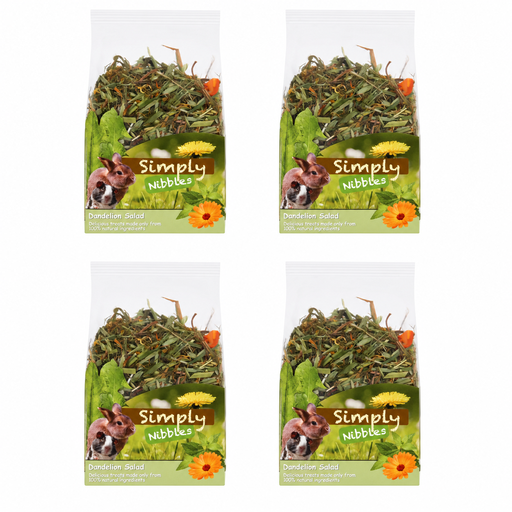
Why This Fits Their Persona: The four-pack format provides 400g in total, making it practical for households that offer small portions regularly or care for more than one small pet.
The pack size and listed ingredients are clear, while the product is described as a complementary treat rather than a replacement for hay or complete feed.
Four 100g packs; 18% listed crude fibre; made with dandelion leaves, herbs and other dried plant ingredients.
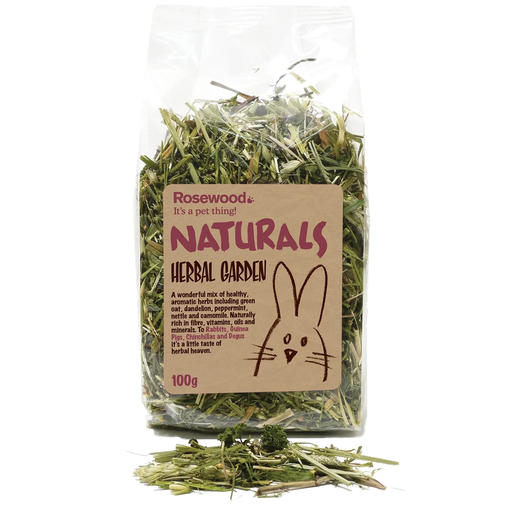
Why This Fits Their Persona: Suitable for adult rabbits, guinea pigs and hamsters, this blend suits owners seeking a varied botanical treat with a stated serving guide.
The composition names seven herbs and leaves, and the pack advises offering 1–2 tablespoons daily as a supplement, helping owners control portions.
18% crude fibre; dandelion, nettle, plantain, raspberry leaves, chamomile, mint and parsley listed in the composition.
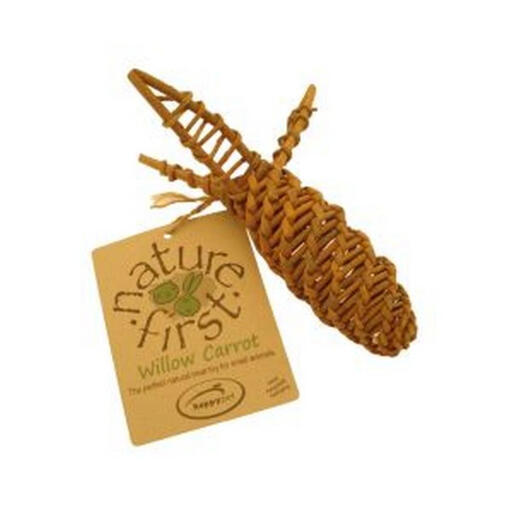
Why This Fits Their Persona: Owners of active rabbits, guinea pigs or chinchillas can use this 17 × 10 × 4.5cm willow toy as a separate chewing and boredom-breaker activity.
It identifies the material as 100% natural willow and provides instructions to supervise use, store it dry and replace it when worn or soiled.
Carrot-shaped 100% willow construction; designed for chewing, nibbling and enclosure enrichment.
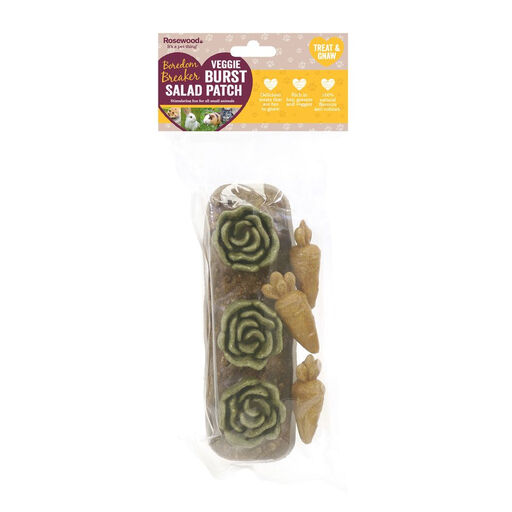
Why This Fits Their Persona: This format suits owners who want rabbit enrichment toys or healthy treats for rodents that require exploration as well as eating.
The 18cm, seven-piece design includes removable components and cavities for crushed herbs or suitable treat pastes, rather than relying only on visual appeal.
Made with over 50% hay and grasses; 13.6% crude fibre and 0.7% crude fat listed; seven interactive pieces.
Keep dried treats in a cool, dry place, away from condensation and direct sunlight. Reseal opened pouches and follow the best-before information on the packaging. Dampness can affect texture and freshness, particularly in kitchens, utility rooms and outdoor sheds.
Offer treats alongside unlimited suitable hay and the pet’s normal complete feed. Introduce new rabbit treats or guinea pig treats gradually, and reduce the portion if your pet leaves its regular food. For loose salads, scatter a small amount through hay or a forage box to encourage natural searching.
Inspect chew toys regularly. Remove any item that becomes excessively worn, mouldy, sharp or soiled, and supervise your pet during its first use.
We have compiled a complete, real-time list of products that fully satisfy these strict selection criteria and UK safety regulations.
Some high-fibre herbal treats can be offered in small, labelled portions, but they should complement—not replace—hay, fresh water and a complete diet. Follow the product instructions and adjust portions for your pet’s size and normal food intake.
Dried dandelion leaves, mixed herbal salads and hay-based interactive pieces can be scattered through hay or placed in a forage area. Start with a small quantity and monitor tolerance. Avoid adding several unfamiliar ingredients at once.
Lifespan depends on the pet’s chewing habits, the toy’s size and enclosure conditions. Check it frequently, keep it dry and replace it when it becomes excessively worn or soiled. A chew toy is an enrichment item, not a substitute for a balanced diet or routine dental care.