
24/7 Customer Support

Free returns

Same-day & Next-day Delivery

Quality Guaranteed

Unlock Your Welcome Offers: FREE Delivery | Up to 80% OFF | Free 30-day JoyPlus trial
Download the APP
A neck and shoulder massager can be a convenient way to unwind after desk work, commuting or exercise. However, product pages often highlight impressive-sounding features without explaining how they affect everyday use. A device may look powerful on paper yet prove uncomfortable, difficult to position or too inconvenient to use regularly.
Before choosing a Shiatsu neck massager or electric neck massager, watch for these common buying traps:
Different designs suit different types of tension. A Shiatsu neck massager uses rotating or kneading nodes to provide a more localised, repetitive movement. Wrap-around models generally rest around the neck and shoulders, while a massage gun for muscle tension uses percussive pulses through a small attachment.
Check the intended contact area rather than assuming that a larger number of massage heads is automatically better. The SKG H7 Ultra, for example, uses a wrap-around design with 6D massage heads and a larger stated massage area. A massage gun, by contrast, may be more versatile for shoulders, legs and larger muscle groups but requires you to hold and position it.
A useful adjustable intensity massager should offer settings that allow you to start gently and increase strength only if comfortable. Three levels can be sufficient for many home users, particularly when combined with bi-directional rotation.
Attachments also affect suitability. A broad ball attachment may be appropriate for larger muscle groups, while a softer or narrower attachment can offer more controlled contact. The Therabody Theragun Relief includes three attachments: Standard Ball, Dampener and Thumb. Its stated 10 mm amplitude describes the depth of the percussive movement, but it does not mean the device should be pressed forcefully against every area.
A shoulder massager with heat may be appealing during colder months, but warmth should be optional rather than permanently active. Never fall asleep while using heat, and avoid applying it to irritated, swollen or injured skin. Follow the supplied instructions and stop using the product if it causes pain, dizziness or unusual discomfort.
Also compare the power format:
For electrical products, check the supplied adapter, charging instructions and safety information. UK shoppers should also look for clear product documentation and avoid using a damaged cable or adapter.
The right choice depends on where you want to use the product, how much control you need and whether your priority is neck-focused comfort or wider muscle coverage.
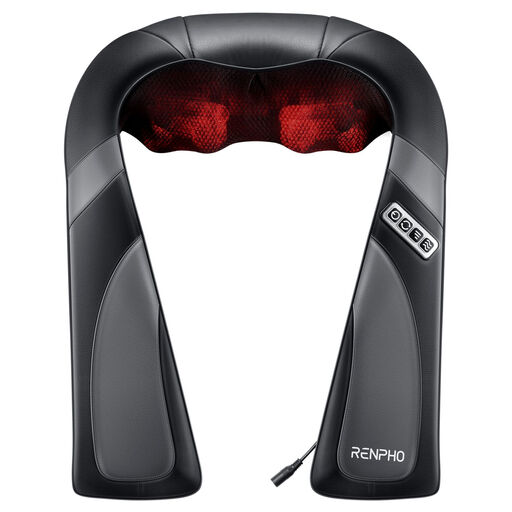
Why It Suits Them: A practical option for office workers or first-time buyers seeking a straightforward neck and shoulder routine at home. Its U-shape is designed for hands-free use while sitting or lying down.
Three intensity levels and optional heat provide more control than a device with one fixed setting. Automatic shut-off and overheat protection are also specified.
Eight kneading nodes, bi-directional rotation, optional heat and a carry bag. It is mains powered, so it suits a regular indoor location.
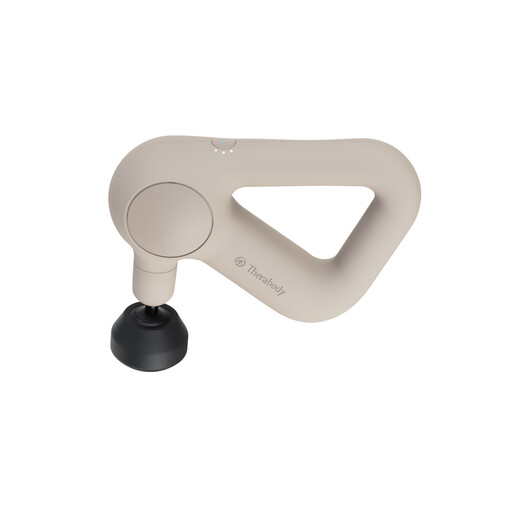
Why It Suits Them: Suitable for active adults who want a compact device that can move between the home, office and gym bag, with control over speed and the area being addressed.
Rather than relying on one strong setting, it offers three speeds and three attachments for different contact preferences.
The product information specifies a 10 mm amplitude, ergonomic triangle grip, rechargeable battery and up to 120 minutes of use per charge.
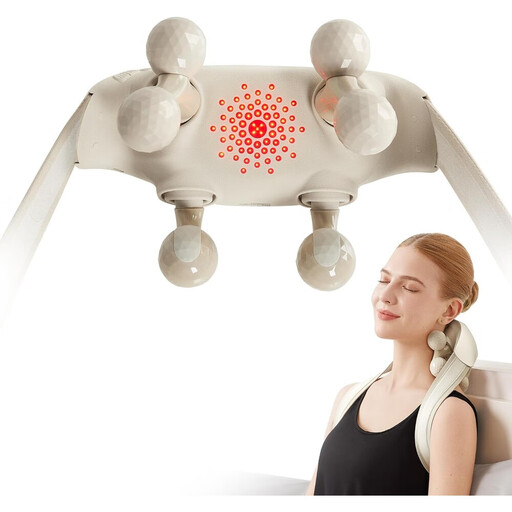
Why It Suits Them: Designed for users who want a rechargeable, hands-free neck massager with a broad contact area for regular use at home or in the office.
Its stated 1.2 kg weight, backpack-style construction and approximately 90-minute battery duration address common portability and hands-free-use concerns.
It includes 6D massage heads, heat, LED lighting and a 2,000 mAh battery. Follow the manual and do not use it more than the recommended frequency.
We have compiled a complete, real-time list of products that fully satisfy these strict selection criteria and UK safety regulations.
Read the instructions before using any neck pain relief massager, particularly if it includes heat or deep-kneading movement. Keep sessions within the recommended duration and allow the device to cool before storage. Wipe the surface with a soft, damp cloth rather than immersing an electrical product in water.
Do not use a massager over open wounds, rashes, swollen areas or recent injuries. People who are pregnant, have a pacemaker, circulatory problems, osteoporosis or an existing neck condition should seek medical advice before use. A device is intended for personal relaxation and comfort; persistent or severe neck and shoulder pain should be assessed by a qualified healthcare professional.
Many products are designed for short sessions, but the exact guidance varies. Follow the manufacturer’s instructions rather than using a device continuously. Start at a lower intensity and stop if you experience soreness, pain, dizziness or skin irritation.
Running cost depends on the device’s power consumption, session length and your electricity tariff. Rechargeable models do not need to remain plugged in during use, while mains-powered products draw electricity whenever switched on. The product listing may not provide enough information for an exact cost calculation, so check the manual or electrical specifications if this is a priority.
Lifespan depends on frequency of use, charging habits, storage and general build quality. Avoid overloading the device, keep cables dry and follow cleaning instructions. For rechargeable models, battery capacity may gradually reduce over time. Checking the warranty, replacement-part availability and retailer support before purchase can help avoid unexpected costs.