
24/7 Customer Support

Free returns

Same-day & Next-day Delivery

Quality Guaranteed

Unlock Your Welcome Offers: FREE Delivery | Up to 80% OFF | Free 30-day JoyPlus trial
Download the APP
A neck massager can be useful for relaxing tired muscles after desk work, commuting or a long journey. However, product listings often focus on impressive-sounding technologies without explaining how the device feels in everyday use. The right choice depends less on the number of modes and more on fit, control, safety and portability.
This guide from the Joybuy Product Recommendation Officer explains what to check before buying an electric neck massager, highlights common purchasing traps and matches several options to different UK lifestyles.
Terms such as “9D”, “6D”, “deep tissue” and “far-infrared” can describe the design or marketing position of a product, but they do not guarantee that the sensation will suit you. A powerful kneading or traction-style mechanism may feel too intense for someone who prefers gentle vibration.
Check whether the device offers:
A heated neck massager should not be judged only by its maximum temperature. The contact area, temperature adjustment and automatic shut-off are more important for regular use. Follow the manual, avoid direct prolonged contact with bare skin where instructed and do not use a heated device while sleeping.
Look for clearly stated temperature settings. For example, the SKG G7 Pro-Fold lists heat settings up to 42°C, while the Breo D5 lists a constant 43°C heating film. These figures describe the product specification, not a medical outcome.
A compact neck massager may be useful on trains, flights or in the office, but check the charging connection, battery information and folded dimensions before ordering. A device that is light but difficult to position or recharge may spend more time in a drawer than in your travel bag.
For UK travel, also check whether the charger is suitable for your setup or whether the product uses USB charging. Keep electrical products away from water and check the supplied manual before taking them abroad.
A shiatsu neck massager generally uses rotating or kneading heads, while vibration devices create a lighter, pulsing sensation. Traction-style designs may move across a defined track. An EMS and TENS neck massager uses electrical pulses through contact points, so it requires correct skin contact and may feel very different from mechanical massage.
Consider the area you want to use:
Do not assume that a larger massage area is automatically more comfortable. The device should sit evenly and allow you to maintain a natural posture.
A heated neck massager should provide enough adjustment for personal preference. Confirm:
Heat can make a massage feel more intense, so start on a lower setting. Stop using the product if you experience discomfort, unusual skin irritation or excessive warmth.
For an electric product sold in the UK, check the listing for appropriate conformity information, supplier details, operating instructions and warranty terms. A UK plug may be convenient, but it is not a substitute for checking the product documentation.
EMS or TENS models need additional care. Do not use such a device if the manual lists a contraindication relevant to you, including having a pacemaker or another implanted electronic device. The SKG G7 Pro-Fold product information also advises against use during pregnancy and on irritated, wounded or inflamed skin. If you are unsure whether a device is suitable, seek advice from a qualified healthcare professional before purchase.
The following options suit different usage patterns rather than one universal preference.
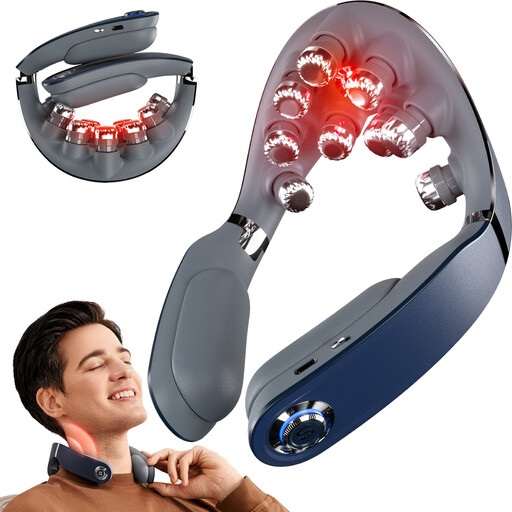
Why This Fits Their Persona: A practical starting point for shoppers comparing a foldable neck massager with mechanical vibration and pulse features for home or office use.
It states its operating methods, foldable construction, heat levels and session guidance instead of relying only on vague intensity claims.
EMS/TENS and physical vibration; six listed heat levels; 180-degree folding design; app connectivity.
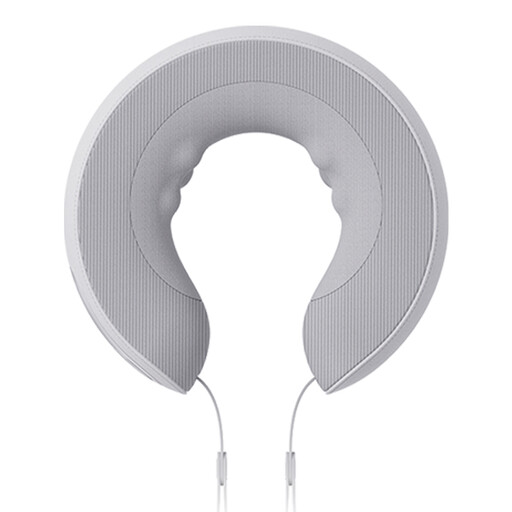
Why This Fits Their Persona: Suitable for shoppers seeking a more structured 3D massage experience for seated, reclining or post-work relaxation.
The product information specifies 42 contact points, a 270-degree massage path and a stated 43°C heating film, making the design easier to compare.
3D traction-style rollers; full-neck coverage specification; washable cover; designed for seated or reclined use.
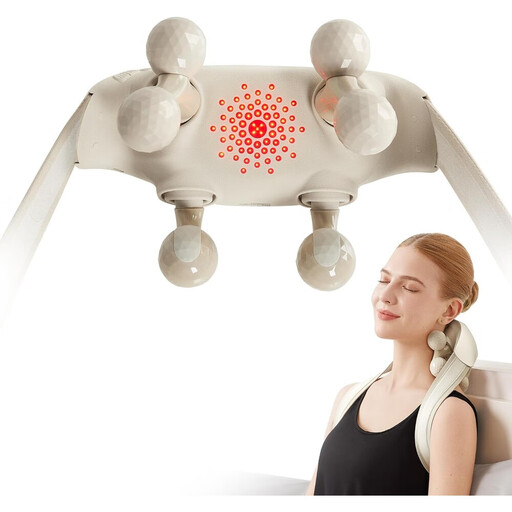
Why This Fits Their Persona: A wraparound option for users who want neck-and-shoulder coverage and hands-free operation at home or in an office chair.
Its listed dimensions, weight, battery capacity and massage-head format help users assess whether the larger design suits their shoulders.
6D ball massage heads; heat and LED lighting; 2,000mAh battery; hands-free backpack-style construction.
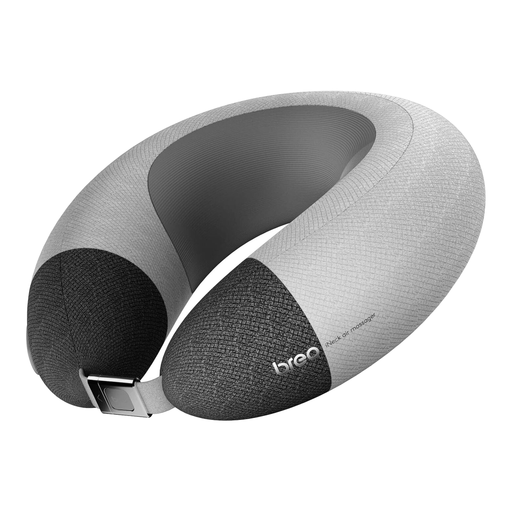
Why This Fits Their Persona: The portable format suits flights, car journeys, hotel rooms and office breaks where a full-size neck and shoulder massager is impractical.
It is designed to inflate and deflate, includes a storage bag and uses USB charging, addressing common travel-storage problems.
Inflatable, compact design; two rotating massage heads; three listed modes; heat function and low-noise operation.
Follow the specific manual rather than assuming longer use is more effective. The SKG G7 Pro-Fold information recommends no more than two 15-minute sessions per day. Begin with a short, low-intensity session and stop if the device causes discomfort, excessive heat or skin irritation.
A compact portable neck massager or quiet U-shaped pillow can work well during a break, provided workplace rules allow it. Consider noise, charging, posture and whether you can use the device without leaning your head forward. A hands-free model may be convenient, but it should not restrict movement or distract you from your surroundings.
Most battery-powered models use relatively little electricity per charge, but the exact running cost depends on battery capacity, charging frequency and the UK electricity tariff. USB charging makes the connection convenient, although you should use a compatible cable and charger. Check battery specifications and warranty details before buying, particularly if the device will be used every day.