
24/7 Customer Support

Free returns

Same-day & Next-day Delivery

Quality Guaranteed

Unlock Your Welcome Offers: FREE Delivery | Up to 80% OFF | Free 30-day JoyPlus trial
Download the APP
By Joybuy Product Recommendation Officer
A neck and shoulder massager can be useful for relaxing after desk work, commuting or travel. However, product pages often focus on impressive-sounding features while leaving out the practical details that affect everyday use. A device may offer heat, kneading nodes and several modes, yet still feel uncomfortable, run out of power quickly or be difficult to position correctly.
Before buying, focus on how the massager operates, how it is powered and whether its design suits your routine. The following guide covers common buying traps, essential specifications and three options for different types of UK shoppers.
A Shiatsu neck massager with multiple rotating nodes is not automatically suitable for everyone. More nodes or stronger movement can feel intense, particularly around the sides of the neck. Look for adjustable intensity, clear positioning instructions and the ability to switch heat off.
The massage action also matters. A kneading neck massager may use rotating nodes, rolling heads or vibration. These create different sensations, so product descriptions should be checked carefully rather than judged by terms such as “deep tissue” alone.
A rechargeable neck massager is more convenient than a mains-powered model when used in an office, hotel or during travel. However, battery life varies and a cordless design still needs regular charging. Check the stated operating time, charging method and whether the product can be used while charging.
Some products described as portable still require an AC adapter. That may be perfectly suitable for use at home but less convenient for commuters or frequent travellers.
A heated neck massager can add soothing warmth during a relaxation session, but it should not be treated as a cure for an injury or medical condition. Heat may feel uncomfortable on sensitive skin and users should not fall asleep while the heating function is active.
Likewise, features such as red light or “moxibustion” should be understood as product functions, not established medical outcomes. Stop using the device if it causes pain, dizziness, skin irritation or unusual discomfort.
For everyday neck and shoulder tension, prioritise a massager with a controllable action. Useful specifications include:
A hands-free neck massager should sit securely without pulling the head forwards. Adjustable straps or handles can help users control the pressure, but they should not be tightened so much that the device becomes uncomfortable.
When comparing a neck massager with heat, check whether warmth is optional and whether temperature settings are provided. A model with multiple heat levels offers more control than one with a single heat setting.
An automatic shut-off function is also valuable. It helps limit session length and reduces the risk of prolonged use. Follow the manufacturer’s instructions rather than assuming that longer sessions provide better results. For electrical products, check that the packaging includes suitable UK power information, clear instructions and relevant conformity markings such as UKCA or CE, where applicable.
A portable neck massager should be light enough to wear comfortably for the stated session time. Check:
Do not immerse an electric neck massager in water unless the instructions specifically permit it. Keep mains cables, adapters and charging ports away from moisture and inspect them regularly for damage.
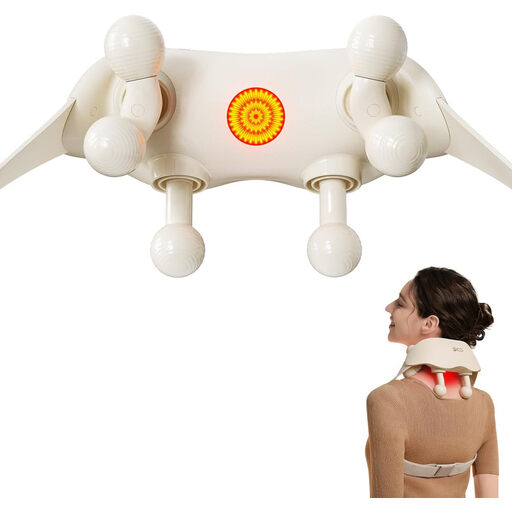
Why This Fits Their Persona: Its cordless format and stated 70-minute battery life suit first-time buyers who want to use a massager around the home without staying beside a socket. The hands-free strap is practical for relaxing while seated.
It states the battery life, hands-free strap and three temperature options, making the main convenience features easier to assess before purchase.
Wireless operation, six massage modes, heat with three temperature settings and an elastic neck support.
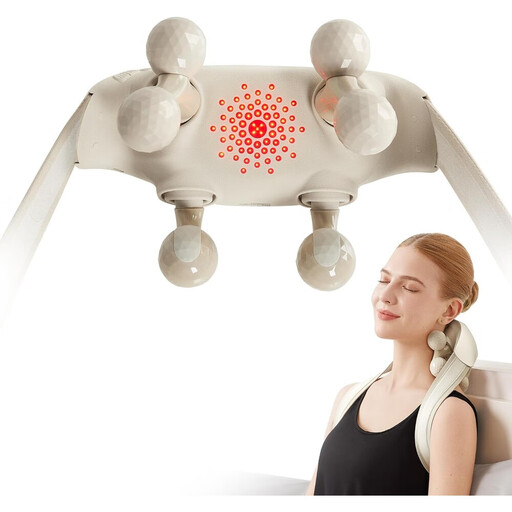
Why This Fits Their Persona: This rechargeable wraparound model is suited to shoppers who place greater value on a larger massage area and extended cordless use for home or office routines.
The product information states its 2,000 mAh battery, approximate 90-minute operating time, 1.2 kg weight and large-area heating design.
Hands-free backpack-style support, 6D massage heads, heat, LED lighting and an advertised approximate 90-minute battery life.
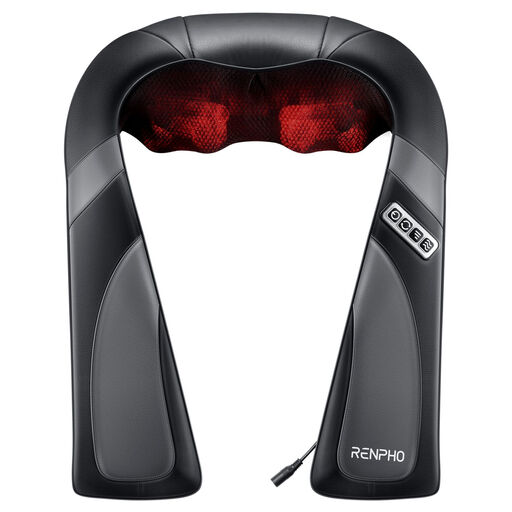
Why This Fits Their Persona: Its mains-powered format suits regular home use for people who prefer not to monitor battery levels and want a model that can also be positioned on the back, legs or feet.
It specifies three intensity levels, bi-directional rotation, optional heat, automatic shut-off and overheat protection.
Eight deep-kneading nodes, three intensity levels, optional heat, a carry bag and a contoured hands-free U-shape.
A rechargeable neck massager generally costs less to operate than a mains-powered model because it uses a built-in battery, but electricity consumption is only one part of the decision. Battery replacement, charging time and long-term storage also affect convenience.
For any electric neck massager, use the supplied adapter where instructed and keep the device away from bathrooms and damp environments. Do not use it while driving or operating machinery. Avoid placing it on swollen, inflamed, injured or broken skin. If you have a pacemaker, are pregnant, have osteoporosis, circulatory problems or a persistent neck condition, seek medical advice before use.
Follow the individual manual. A typical session for some models is around 15–20 minutes, while other products specify different limits. Start with a lower intensity, particularly when using a Shiatsu neck massager for the first time, and stop if discomfort develops.
Most household models use relatively little electricity during a short session. A mains-powered model needs to remain connected, while a rechargeable neck massager draws power during charging. The exact cost depends on the device’s wattage, session length and domestic electricity tariff.
Daily use may be suitable for some people when it follows the manufacturer’s recommended duration. Avoid excessive sessions and do not use the device as a substitute for professional advice about ongoing or severe discomfort. Choose a model with automatic shut-off and adjustable intensity to make routine use easier to control.
We have compiled a complete, real-time list of products that fully satisfy these strict selection criteria and UK safety regulations.