
24/7 Customer Support

Free returns

Same-day & Next-day Delivery

Quality Guaranteed

Unlock Your Welcome Offers: FREE Delivery | Up to 80% OFF | Free 30-day JoyPlus trial
Download the APP
That persistent ache in your neck and shoulders is a familiar feeling for many of us in the UK. Whether it's from long hours hunched over a desk, the strain of a daily commute or simply the tension of a busy life, finding effective relief is a priority. An electric neck and shoulder massager seems like a straightforward solution, but the market is filled with options that can be confusing.
As a Joybuy Product Recommendation Officer, my role is to help you navigate these choices. We'll look past the marketing buzz and focus on what truly matters for providing comfort and relief. Before you spend your money, let's discuss a few common pitfalls that lead to disappointing purchases.
To find a device that genuinely helps with neck pain relief, focus on these core parameters instead of flashy extras.
The type of massage is the most critical factor.
A heated neck massager can significantly enhance your experience by helping to relax tight muscles and improve circulation. However, not all heat functions are created equal.
How the device fits and where you can use it determines its practicality.
Based on these practical criteria, here are a few options from our catalogue, matched to different user needs.
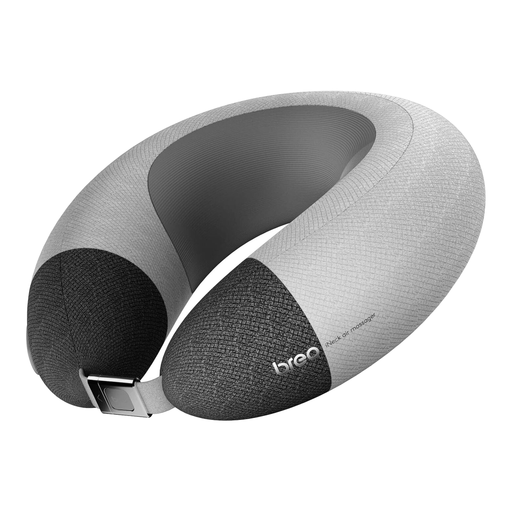
Why This Fits Their Persona: Designed specifically for life on the go, this massager inflates and deflates with a button press. It's ultra-light and recharges via USB, making it perfect for relieving stiffness on planes, trains or during a lunch break at the office.
It smartly navigates the portability vs. power trade-off by focusing on convenience. The inflatable U-shaped design provides a customisable fit, avoiding the "one-size-fits-all" problem for travellers.
Its key advantage is its packability. It combines a Shiatsu kneading massage with a soothing heat function in a compact, travel-friendly package.
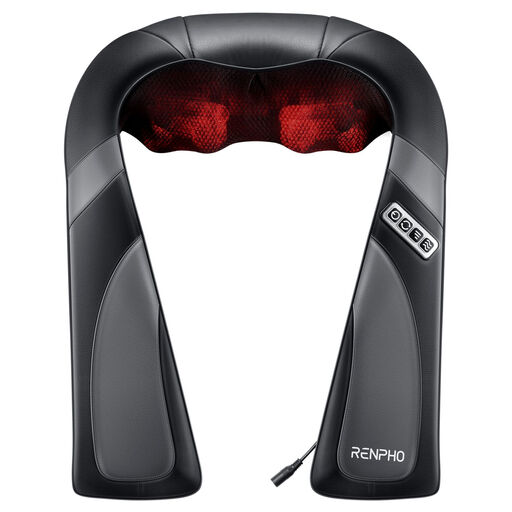
Why This Fits Their Persona: For those seeking powerful, consistent relief at home, this mains-powered model is a strong contender. It's built for deep tissue work on the neck, shoulders and back after a long day at the desk or a tough workout.
It focuses on core functionality over gimmicks. The eight deep-kneading nodes, adjustable intensity and optional heat provide a robust massage without the complexity of unnecessary smart features.
The hands-free design with arm loops allows you to pull down to increase pressure, giving you full control and overcoming the "one-size-fits-all" issue. It's a versatile and powerful tool for home relaxation.
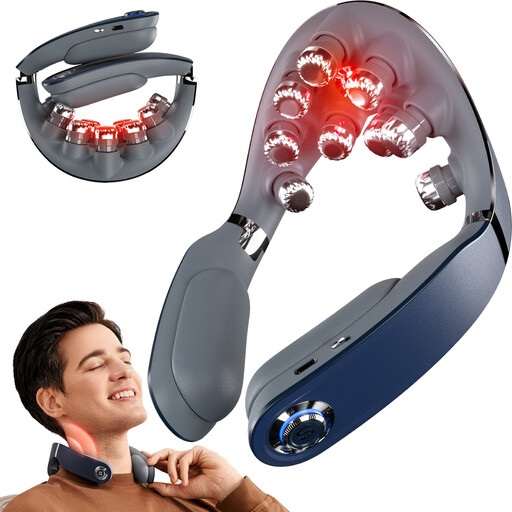
Why This Fits Their Persona: This is for the user who appreciates innovative technology and a sleek design. It combines medium frequency TENS+EMS pulses with 9-head physical vibration and a large heating area, all controlled via an app for a modern, customisable experience.
While it uses "smart" features, they are integral to its function. The app control allows for precise customisation of its advanced TENS/EMS and vibration modes, making the technology purposeful rather than a gimmick.
Its 180-degree foldable design and light weight (approx. 170g) make it exceptionally portable, while the 9-head matrix provides broad coverage for both pulse and vibration massage.
We have compiled a complete, real-time list of products that fully satisfy these strict selection criteria and UK safety regulations.
For most people, a 15-minute session once or twice a day is sufficient to help ease muscle tension. Many quality devices include an automatic shut-off timer for safety and to prevent overuse, which can sometimes lead to muscle soreness. Always refer to the manufacturer's specific guidelines.
Yes, when used according to instructions. Reputable models are designed with safety in mind and include features like overheat protection and adjustable temperature settings. It is important not to use the heat function on sensitive skin for prolonged periods and to never fall asleep while the device is operating.
The main difference is the sensation and mechanism. A Shiatsu massager uses physical, rotating nodes to knead muscles, simulating a deep tissue massage. A TENS massager uses mild electrical pulses to stimulate nerves and muscles, which feels more like a tingling or pulsing sensation aimed at blocking pain signals. The choice depends on whether you prefer physical pressure or nerve stimulation for relief.