
24/7 Customer Support

Free returns

Same-day & Next-day Delivery

Quality Guaranteed

Unlock Your Welcome Offers: FREE Delivery | Up to 80% OFF | Free 30-day JoyPlus trial
Download the APP
Neck and shoulder tension can build up after long hours at a desk, commuting, driving or exercising. A neck and shoulder massager may offer a convenient way to add massage and warmth to your routine, but product descriptions can make different technologies sound interchangeable.
Before buying, check how the device actually works, how it is powered and whether its shape suits your body. The right choice depends less on impressive-sounding claims and more on comfort, control, safety features and realistic everyday use.
Terms such as “deep tissue”, “professional touch” and “therapeutic” do not tell you how the device contacts your muscles. A Shiatsu neck massager generally uses rotating kneading nodes, while a vibrating neck massager uses oscillation or vibration. EMS and TENS devices use electrical pulses rather than mechanical kneading.
These options feel notably different. If you prefer pressure similar to kneading, look for the number and movement of massage nodes. If you dislike firm pressure, a vibration or pulse-based model may be more comfortable.
A mains-powered massager may work well beside a sofa or desk but can be inconvenient in a hotel room or shared workspace. Conversely, a cordless neck massager needs regular charging, and its advertised battery duration may depend on the selected heat and intensity settings.
Check whether the product includes a suitable power adapter, USB cable or rechargeable battery. For frequent travellers, also consider the device’s packed size, weight and storage pouch.
Heat can make a massage feel more soothing, but it should be optional and controllable. Look for multiple temperature settings, an automatic shut-off function and clear instructions about contact with skin. Do not sleep while using a heated device, and stop immediately if you feel excessive warmth, irritation, pain or dizziness.
A mechanical neck and shoulder massage device may use:
Adjustable intensity and direction are valuable because neck sensitivity varies from person to person. A device with only one strength setting may be less adaptable for everyday use.
A heated neck massager should provide a separate heat control rather than forcing you to use warmth with every massage mode. Some products specify temperature levels or a maximum temperature, while others simply offer an on/off heat function.
Look for:
Heat should not be used over swollen, inflamed, injured or irritated areas. Always follow the supplied user manual.
A hands-free neck massager should sit securely without pulling your head forwards or placing uncomfortable pressure on your shoulders. U-shaped designs can be convenient while seated, but straps, elastic supports and adjustable positioning can affect the fit considerably.
For portable use, compare the folded dimensions, total weight and charging method. A compact travel model may be more practical than a larger device with more settings if you intend to use it on trains, flights or in an office.
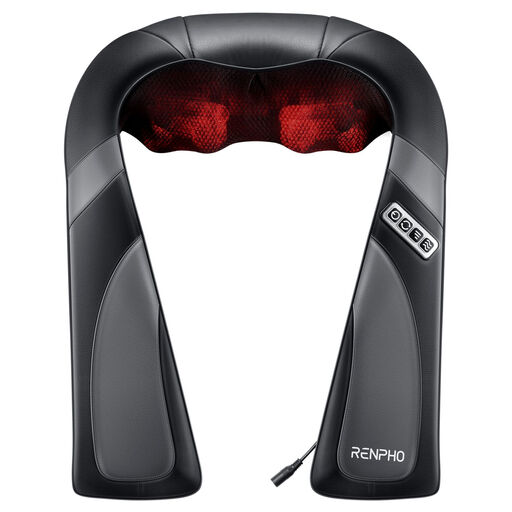
Why This Fits Their Persona: A practical option for first-time buyers wanting mechanical kneading, optional warmth and simple controls for use at home.
Three intensity levels, bi-directional rotation and optional heat make the settings more adaptable than a single-mode device.
Eight kneading nodes, a carry bag, automatic shut-off and overheat protection are listed in the product details.
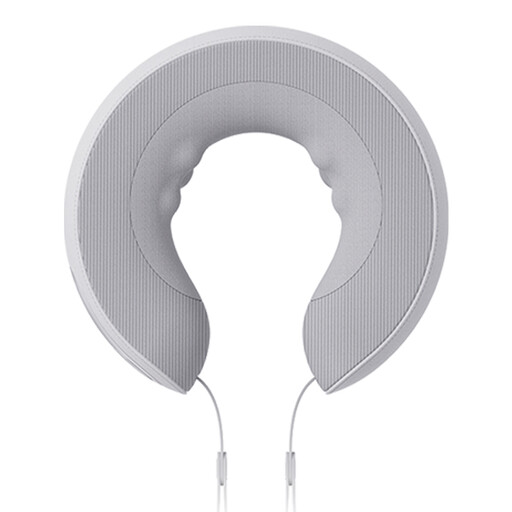
Why This Fits Their Persona: Designed for shoppers who prioritise a structured neck fit, broad contact coverage and a quiet routine while seated or reclined.
The listing specifies a 43°C heating film and a defined 3D track system, giving clearer information than vague heat or coverage claims.
The product description lists 42 contact points, adjustable positioning and a washable cover.
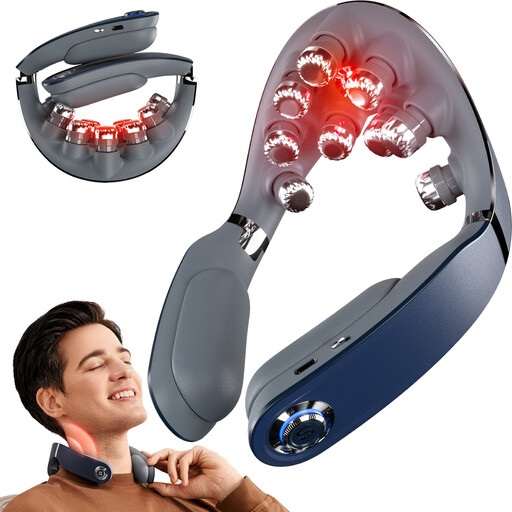
Why This Fits Their Persona: Suits users who specifically want EMS/TENS pulses, vibration, foldability and app control in a lightweight format.
The listing identifies the pulse technology, contact requirement, heat levels and recommended session limits rather than treating all massage types as the same.
It folds through 180 degrees, weighs approximately 170–180g and offers Bluetooth app connectivity according to the supplied specifications.
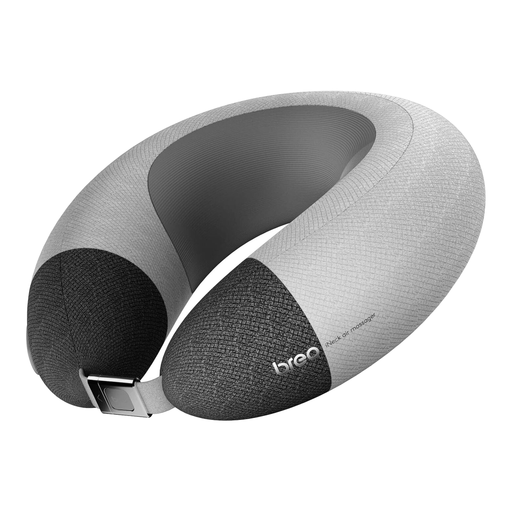
Why This Fits Their Persona: Its inflatable design, USB charging and storage bag make it suitable for packing in hand luggage or keeping in an office drawer.
The product details specify inflatable storage, USB charging and three modes, addressing portability and control rather than relying on size claims alone.
The listing includes a storage bag, USB cable, three massage modes and a stated 30-day refund or replacement policy.
We have compiled a complete, real-time list of products that fully satisfy these strict selection criteria and UK safety regulations.
Read the manual before your first session and begin with the lowest comfortable intensity. Keep sessions within the stated duration; many products recommend around 15–20 minutes. Do not use a device while driving, operating machinery or sleeping.
Avoid using a massager over open wounds, rashes, swelling or acute injuries. Seek medical advice before use if you are pregnant, have a pacemaker, circulatory problems, osteoporosis or persistent neck pain. These products are intended for personal relaxation and massage, not diagnosis or treatment.
Follow the product manual, but a typical session is around 15–20 minutes. Start for less time to assess comfort, particularly with kneading, heat or EMS/TENS functions. Allow the device to cool where instructed.
Rechargeable models generally use a small amount of electricity per charge. Running cost depends on the battery capacity, charging frequency and local electricity tariff. A cordless model can also avoid the inconvenience of finding a mains socket, although the battery will eventually require replacement or servicing according to the manufacturer’s instructions.
Clean the surface with a soft, slightly damp cloth and never immerse an electrical device in water. Store it away from heat and moisture, avoid pulling cables and use only the supplied or approved charger. For a heated neck massager, do not cover ventilation areas or continue using it if the cable, casing or controls become damaged.