
24/7 Customer Support

Free returns

Same-day & Next-day Delivery

Quality Guaranteed

Unlock Your Welcome Offers: FREE Delivery | Up to 80% OFF | Free 30-day JoyPlus trial
Download the APP
By the Joybuy Product Recommendation Officer
A Neo QLED 4K Smart TV can bring brighter HDR highlights, more controlled contrast and smoother gaming to a living room. However, the terminology used for premium televisions can make comparisons difficult. “Mini LED”, “QLED”, “144Hz” and “AI upscaling” describe different parts of the experience, not a guarantee that every model suits every room.
Before buying, focus on the specifications that affect daily use: screen size, backlight control, refresh rate, HDMI connectivity, smart platform, audio and running costs.
A television described as a gaming TV with 120Hz, 144Hz gaming TV or 165Hz model may support that rate only in selected modes, resolutions or HDMI inputs. Console games such as those on PlayStation 5 and Xbox Series X commonly target up to 120Hz, while compatible gaming PCs may use higher rates.
Check whether the specification states:
For example, the Hisense 55U7QTUK Pro lists a native 165Hz refresh rate, HDMI 2.1, VRR and ALLM. The Samsung QE55QN80F lists a 100Hz panel with Motion Xcelerator support up to 120Hz.
“QLED” generally refers to a quantum-dot colour layer, while Mini LED describes a backlight made from smaller LEDs with local dimming. A Neo QLED television, such as a Samsung Neo QLED TV, combines quantum-dot colour with Mini LED backlighting and a local dimming system.
This distinction matters in dark film scenes and bright HDR content. More precise dimming can help separate bright objects from darker backgrounds, although the result also depends on the panel, processing and viewing angle. Compare the actual display technology rather than relying on the QLED label alone.
A thin television may have limited room for speakers. If you want a Dolby Atmos TV, check whether Atmos is supported by the built-in system or passed through eARC to a compatible soundbar or receiver.
Large screens also require practical planning. Measure the TV cabinet, wall space, doorways and viewing distance. A 75 inch Smart TV or larger model can weigh considerably more once packaged. Use a suitable VESA mount or stable furniture, and secure large televisions against tipping, particularly in homes with children.
Energy labels run from A to G in the UK. The supplied product data lists Samsung QE55QN80F as class F, LG 50QNED80A6A as class E and several larger models as class E or F. Check the current label and estimated kWh consumption before purchase.
A 55 inch 4K Smart TV is a practical choice for many medium-sized lounges. A 65 inch 4K TV can create a more cinema-like image without requiring the wall space of a 75-inch model. Larger screens are more suitable where seating is positioned further away.
As a starting point, consider approximately:
These are viewing guidelines rather than fixed rules. Your room layout, eyesight and preference for an immersive image should also guide the decision.
A 4K HDR television needs more than a 3840 × 2160 resolution. Look for HDR format support, brightness control and local dimming. Models in this selection include combinations of HDR10, HDR10+, HLG and Dolby Vision formats.
Mini LED televisions such as the Hisense E8Q and TCL QD-Mini LED ranges use local dimming. The Samsung Neo QLED models use Quantum Matrix technology. These specifications indicate how the backlight is controlled, but picture quality can vary between models and content sources.
For console or PC gaming, HDMI 2.1 TV specifications are important. Look for 4K at 120Hz support, VRR gaming TV compatibility and ALLM. VRR synchronises the display refresh with the game’s frame rate, while ALLM can automatically switch to a lower-latency mode.
eARC is useful when connecting a soundbar or AV receiver, especially for high-bandwidth audio formats. Also check the number and position of HDMI ports if you use several consoles, a streaming box, a soundbar and a set-top box.
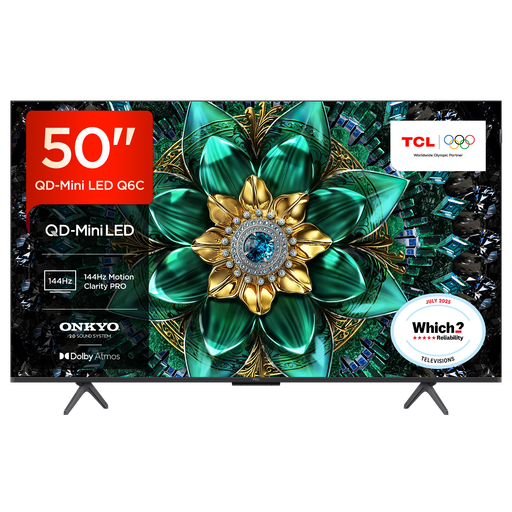
Why This Fits Their Persona: A 50-inch format can suit smaller UK lounges, bedrooms or first home cinema set-ups. Google TV brings streaming apps and casting features together in one interface.
Its listed specification identifies QD-Mini LED, HDMI 2.1, VRR and ALLM rather than relying only on a QLED label or general gaming wording.
4K HDR, up to 144Hz VRR, four HDMI inputs and a 30W Onkyo audio system with Dolby Atmos and DTS Virtual:X.
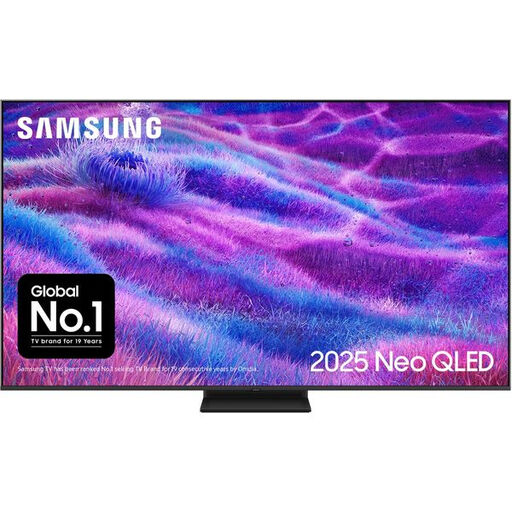
Why This Fits Their Persona: A suitable option for viewers who prioritise Samsung’s Tizen Smart TV platform, integrated smart-home controls and a slim 55-inch design.
The listed specifications clarify its 100Hz native rate, up-to-120Hz motion support, four 4K 120Hz HDMI inputs and one-year manufacturer warranty.
Quantum Matrix Mini LED backlighting, VRR, FreeSync Premium Pro, Dolby Atmos and 40W 2.2-channel audio.
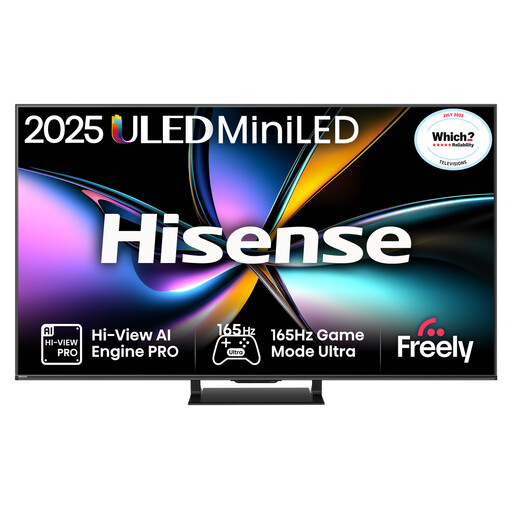
Why This Fits Their Persona: The 65-inch screen, 165Hz panel and multi-channel audio suit sports viewers, console owners and PC gamers who want a larger shared display.
The product data specifies 165Hz VRR on all HDMI 2.1 ports, rather than limiting high refresh-rate support to one connection.
Dolby Vision IQ, HDR10+ Adaptive, 2.1.2-channel Dolby Atmos audio, 4K upscaling and a two-year manufacturer’s warranty.
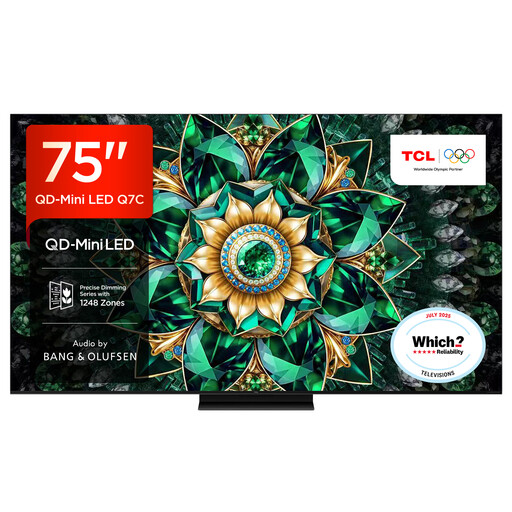
Why This Fits Their Persona: A 75-inch display is designed for larger lounges, dedicated media rooms and viewers seated at a longer distance from the screen.
Its product description identifies up to 2,048 local dimming zones and a 144Hz native refresh rate, helping shoppers compare specific figures.
QD-Mini LED, Google TV, HDMI 2.1 connectivity and audio by Bang & Olufsen according to the supplied product information.
We have compiled a complete, real-time list of products that fully satisfy these strict selection criteria and UK safety regulations.
It can be, provided the specific model supports the features your console or PC requires. Check for HDMI 2.1, 4K at 120Hz, VRR and ALLM. A 144Hz or 165Hz specification is mainly relevant to compatible gaming PCs; console owners should verify the supported output of their device.
Samsung models commonly use Tizen Smart TV, while TCL models in this selection use Google TV and Hisense models use VIDAA. Compare the apps you use, voice assistant compatibility, casting support and update information. Platform preference can be more important than small differences in interface design.