
24/7 Customer Support

Free returns

Same-day & Next-day Delivery

Quality Guaranteed

Unlock Your Welcome Offers: FREE Delivery | Up to 80% OFF | Free 30-day JoyPlus trial
Download the APP
A neoprene dumbbell set can make home strength training more convenient, but choosing the wrong pair may leave you with weights that roll away, feel uncomfortable or no longer suit your routine after a few weeks. UK shoppers comparing hand weights should look beyond colour and promotional wording.
The most common buying pitfalls are:
A practical selection starts with the intended exercises, available storage space and the weight you can control with good form.
The right load depends on your current ability and the movement. 3 kg dumbbells may suit beginners, lighter upper-body exercises and higher-repetition workouts. 4 kg dumbbells offer a middle option for users who already have some training experience, while 5 kg dumbbells may be more suitable for stronger users or movements involving larger muscle groups.
A pair of dumbbells is useful for symmetrical exercises such as squats, lunges, shoulder presses and bent-over rows. However, a heavier pair is not automatically more suitable. If you cannot maintain controlled movement, a lighter set may be more practical for home workouts.
Also check the stated tolerance. The referenced neoprene-coated dumbbells specify a possible 3% weight discrepancy, so buyers who need highly precise loads should take this into account.
Neoprene-coated dumbbells provide a softer contact surface than bare metal and can be more comfortable for floor-based home exercise. A matt or slip-resistant texture may also help with handling, but grip security still depends on hand size, technique and perspiration.
Review the handle diameter and length. The featured sets have handles approximately 11.5 cm long, with diameters between 3.8 and 4.1 cm. This information is more useful than vague terms such as “ergonomic”, particularly if you have smaller or larger hands.
Look for a handle that allows your fingers to close naturally without excessive squeezing. A coating should also be intact, evenly applied and free from visible peeling when the parcel arrives.
Hex dumbbells have flat ends that help prevent rolling when placed on a hard floor. This can be useful in a flat, spare room or compact home gym where weights might otherwise move under a sofa or towards a doorway.
The sets below range from approximately 20 to 21 cm in length, so measure your storage shelf or exercise area before ordering. Even compact fitness dumbbells should be placed down gently after use. The supplied product notes advise against storing them in elevated locations, where a dropped weight could cause injury or damage.
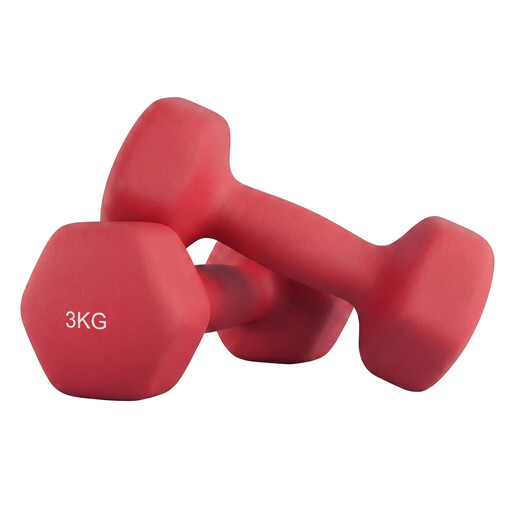
Why This Fits Their Persona: The 3 kg per-dumbbell load provides a manageable starting point for adults building a regular home routine, including light strength and cardio exercises in a flat or small-footprint workout area.
The stated 2 x 3 kg format makes the individual load clear, while the hexagonal ends address the problem of weights rolling across the floor.
Cast-iron construction, neoprene coating, a 4.5-inch handle and a listed length of approximately 20 cm.
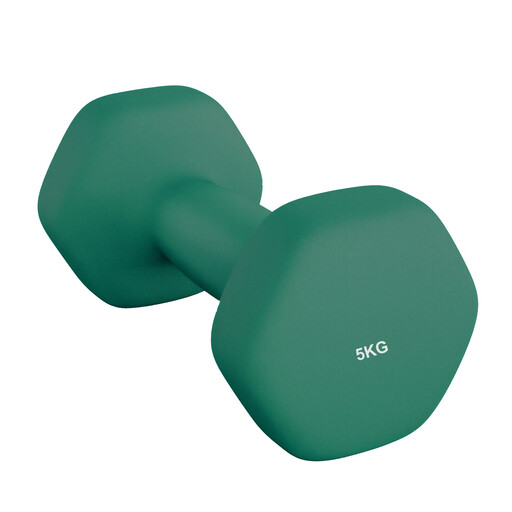
Why This Fits Their Persona: This mid-range pair suits users wanting a substantial training load for home strength sessions without moving immediately to heavier hand weights.
The product details state the coating material, handle dimensions and 3% possible weight discrepancy, helping shoppers compare practical specifications rather than relying on promotional wording.
Solid iron construction, jungle-green neoprene coating, hexagonal ends and an approximate 20.5 cm length.
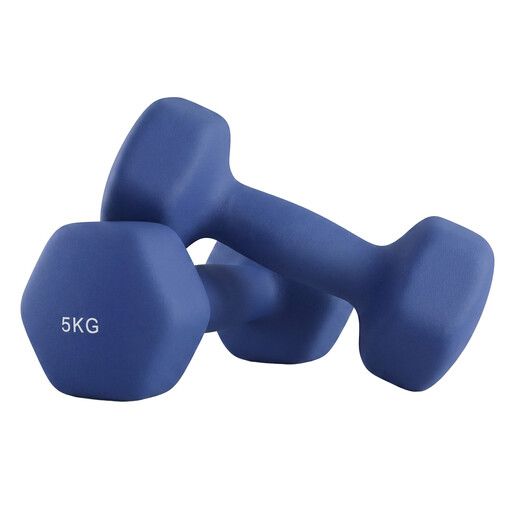
Why This Fits Their Persona: The 5 kg per-dumbbell format is suited to users who already handle moderate loads and want strength training weights for squats, rows, lunges and other controlled exercises.
The flat hex ends help keep the pair stationary between sets, while the listed weight, dimensions and possible 3% discrepancy make the load easier to assess before purchase.
Each dumbbell is listed at 5 kg, with cast iron, neoprene coating, a 21 cm length and an approximately 4.1 cm handle diameter.
Clear a stable area before starting, particularly if your flooring is smooth or delicate. Keep enough space for the full range of each movement and avoid placing weights on a high shelf. A mat may reduce noise and protect flooring, although it does not remove the need to lower weights carefully.
For beginners, start with exercises that allow controlled repetitions rather than selecting a load based on appearance. Use the same pair for movements where the weight feels manageable, then consider a heavier option when your form remains consistent. Wipe the coating with a suitable damp cloth after use and allow it to dry before storage. Avoid exposing neoprene-coated dumbbells to unnecessary heat, prolonged dampness or harsh cleaning chemicals.
They can be suitable when the selected weight matches the user’s ability. A 3 kg pair may be easier to control for lighter exercises, while 4 kg and 5 kg dumbbells require greater control. Product suitability depends on the movement, repetition range and individual training experience.
The hexagonal ends help prevent rolling, but they do not guarantee that flooring will remain undamaged. Dropping any cast-iron weight can mark hard floors or damage tiles. Place dumbbells down gently and consider using a protective exercise mat.
Dumbbells do not require electricity, batteries or subscription access, so normal use has no energy running cost. Ongoing expenses may include storage or replacement if the coating is damaged. Keeping the weights dry, clean and away from elevated positions can support safe, practical use over time.