
24/7 Customer Support

Free returns

Same-day & Next-day Delivery

Quality Guaranteed

Unlock Your Welcome Offers: FREE Delivery | Up to 80% OFF | Free 30-day JoyPlus trial
Download the APP
Choosing neoprene hex dumbbells for a UK home gym can seem straightforward until product listings leave out important details. A colourful finish, low price or promise of a “professional” workout does not necessarily tell you whether the dumbbells will feel comfortable, remain stable between sets or suit your available training space.
This guide highlights common buying traps, the specifications worth checking and a selection of neoprene-coated hand weights matched to different home-training needs.
Neoprene can provide a softer, more comfortable contact surface than bare metal, but the coating is only one part of the product. Check whether the listing identifies a solid iron or cast iron core, as well as the dimensions and total supplied weight.
A product described simply as a “fitness dumbbell” may not provide enough information to compare durability or handling. For regular home strength training equipment, the core material, handle shape and finish all matter.
A listing for 2 x 5 kg dumbbells normally refers to two individual dumbbells, each weighing approximately 5 kg. However, some shoppers read the figure as the combined pair weight. Confirm the package contents before ordering.
The supplied products in this guide list the pair weight clearly, including 2 x 2.5 kg dumbbells, 2 x 3 kg dumbbells, 2 x 4 kg dumbbells and 2 x 5 kg dumbbells. The product notes also state that a weight discrepancy of up to 3% may occur, so these should be treated as approximate rather than laboratory-calibrated weights.
Round dumbbells can roll under furniture or across a hard floor after being placed down. Hexagonal ends reduce this issue, making them practical non-rolling dumbbells for small rooms, flats and shared living spaces.
Even with a hex shape, do not drop weights. Place them down carefully on a suitable exercise mat or protective surface. This helps reduce noise and limits the risk of marking timber, laminate or tiled floors.
For beginners, 2.5 kg per dumbbell can be more manageable for lateral raises, light shoulder work and longer cardio circuits. A hex dumbbell pair weighing 3 kg or 4 kg per hand may suit general conditioning, resistance circuits and moderate upper-body exercises.
Two 5 kg dumbbells provide more resistance for users who already have a consistent routine. They may be suitable for exercises such as goblet squats, rows and chest presses, depending on individual ability. Weight selection should be based on controlled movement and sound technique rather than simply choosing the heaviest option.
If possible, plan a progression route. A single pair can support many exercises, but a mixed collection of weights may be more practical for full-body programming.
A handle that is too narrow, too wide or poorly shaped can become uncomfortable during repeated sets. Compare the listed grip length and diameter, particularly if you have smaller or larger hands.
The products below list grip dimensions from approximately 11 to 11.5 cm in length and 3.7 to 4.1 cm in diameter. Their matte neoprene finish is designed to offer a secure-feeling surface during normal use, although grip performance can vary with sweat, gloves and hand position.
Cast iron provides the load-bearing core, while the neoprene coating covers the exterior. Hexagonal ends help the weights remain stationary between exercises. Also check the overall length and width before buying if you train beside a sofa, under a desk or in a compact spare room.
For UK buyers, look for clear seller details, package contents, product dimensions, care instructions and returns information. These practical details are more useful than vague claims about performance. As with any home fitness product, follow the supplied safety guidance and inspect the coating and handles periodically.
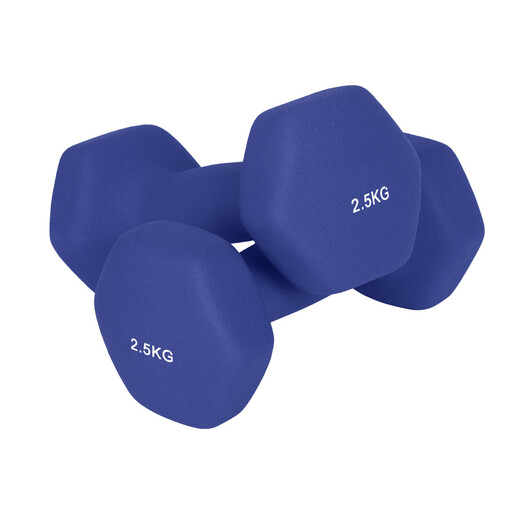
Why This Fits Their Persona: The 2 x 2.5 kg format offers a practical starting point for light home workouts, mobility-led routines and cardio circuits where repeated lifting is involved.
The listing states the individual pair weight, dimensions, cast iron construction and possible 3% discrepancy rather than relying only on promotional wording.
Neoprene coating, ergonomic grip, hexagonal ends and a compact 18 x 8.5 cm listed size.
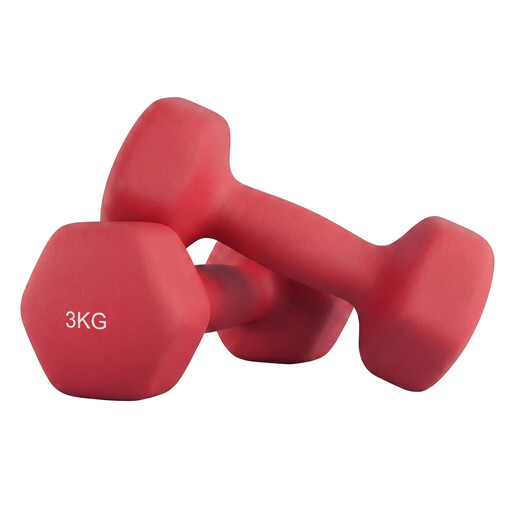
Why This Fits Their Persona: A 3 kg pair suits users combining resistance work with fitness and cardio sessions, while the ruby-red finish makes it easier to identify among home equipment.
It uses a hexagonal form rather than a round profile, so the pair is less likely to roll away during transitions.
2 x 3 kg cast iron weights, neoprene coating and listed 20 x 9 cm dimensions.
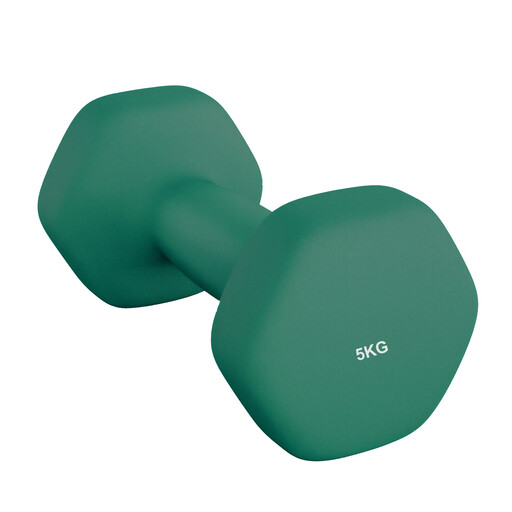
Why This Fits Their Persona: The 4 kg pair provides a middle option for users who want more resistance than starter weights without moving immediately to 5 kg per hand.
The product information includes grip size, overall dimensions, material and the stated weight tolerance, helping buyers compare rather than guess.
Cast iron core, neoprene exterior, ergonomic handle and non-rolling hexagonal ends.
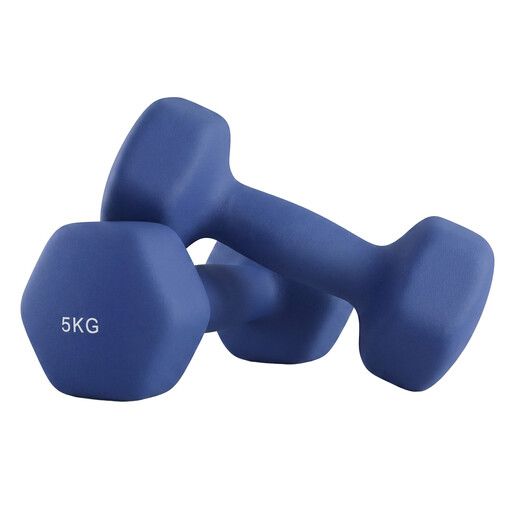
Why This Fits Their Persona: Each 5 kg dumbbell offers a higher fixed load for established home routines, compound movements and strength-focused sessions.
The pair is clearly specified as 2 x 5 kg, with cast iron construction, grip measurements and a stated 3% possible discrepancy.
Neoprene-coated handles, 21 x 10.5 cm listed dimensions and hexagonal ends designed to stay stationary.
We have compiled a complete, real-time list of products that fully satisfy these strict selection criteria and UK safety regulations.
They can be suitable, provided the selected weight allows controlled movement. For many beginners, 2.5 kg or 3 kg per dumbbell is easier to manage during lighter resistance and cardio exercises than 4 kg or 5 kg. Start with movements you can perform without swinging or losing control.
They have a cast iron core with a neoprene exterior, so this is not an either-or comparison. The coating can feel more comfortable and may help protect the surrounding surface, while the cast iron core supplies the load. Lifespan depends on frequency of use, storage, cleaning and whether the dumbbells are dropped.
No electricity or ongoing subscription is required. The main costs are the initial purchase and any protective mat or storage solution you choose. Fixed weights also avoid the adjustment mechanisms found on some variable-weight systems, but you may need to buy additional pairs as your training progresses.