
24/7 Customer Support

Free returns

Same-day & Next-day Delivery

Quality Guaranteed

Unlock Your Welcome Offers: FREE Delivery | Up to 80% OFF | Free 30-day JoyPlus trial
Download the APP
Choosing neoprene hex dumbbells for a home gym can appear straightforward: select a weight, check the price and place an order. However, a few overlooked details can make hand weights uncomfortable, difficult to store or unsuitable for your training routine.
As the Joybuy Product Recommendation Officer, I focus on practical specifications rather than inflated marketing language. This guide explains the common buying traps, the measurements that matter and which products may suit different UK home fitness users.
A coating described as non-slip may still feel smooth, stiff or uncomfortable during longer sessions. Neoprene dumbbells generally offer a softer surface than bare metal, but grip comfort also depends on handle diameter, handle length and surface texture.
A handle that is too wide can be difficult for smaller hands to control. One that is too narrow may feel uncomfortable when performing repeated presses, rows or curls. Look for product dimensions rather than relying only on promotional descriptions.
A heavy dumbbell pair may work for lower-body movements but feel unsuitable for lateral raises or longer cardio intervals. Conversely, very light hand weights may be comfortable for beginners but provide limited progression for strength training.
A hex dumbbell set with several pairs can be more adaptable if more than one person uses the equipment or if you plan to vary exercises. Before buying, consider the movements you perform most often, including squats, lunges, shoulder presses, chest presses and conditioning circuits.
Round dumbbells can roll under furniture or across a hard floor between sets. Non-roll dumbbells with hexagonal heads remain stationary when placed down, which is useful for home workouts and exercises such as renegade rows.
Storage is another common oversight. A pair may fit under a sofa, but several pairs can quickly create clutter. A compact stand can keep fitness weights organised and reduce the chance of leaving equipment in walkways.
Check whether the listed weight refers to one dumbbell or the complete dumbbell pair. For example, “2 x 5 kg” means two dumbbells, each weighing approximately 5 kg.
The suitable starting weight depends on the exercise and your current ability. Beginners may prefer a multi-weight set containing 1 kg, 2 kg and 3 kg pairs. Users who already train regularly may prefer a 3 kg, 4 kg or 5 kg dumbbell pair for more demanding movements.
Some listed products note a possible weight discrepancy of up to 3%. This is worth considering if you need closely matched loads for structured strength training.
A neoprene coating can help protect some flooring and offers a warmer, softer contact surface than exposed cast iron. Check whether the coating covers the handle as well as the heads, and look for a matt or textured finish if your hands become sweaty during exercise.
Ergonomic dumbbell handles should allow a secure hold without forcing your fingers into an awkward position. Compare the grip dimensions where provided. The 5 kg pairs listed here have a grip measuring approximately 11.5 cm long and 4.1 cm in diameter, while lighter pairs may use a narrower handle.
Hexagonal heads reduce rolling, but the overall size still affects usability. Large heads can touch the body during presses or feel cumbersome in compact rooms. Check the length, width and height against your available exercise area.
For a set with a stand, also measure the proposed storage location. One listed rack measures 38.5 x 35.5 x 14.5 cm, making it suitable for a corner, cupboard or dedicated home workout area, subject to the space available.
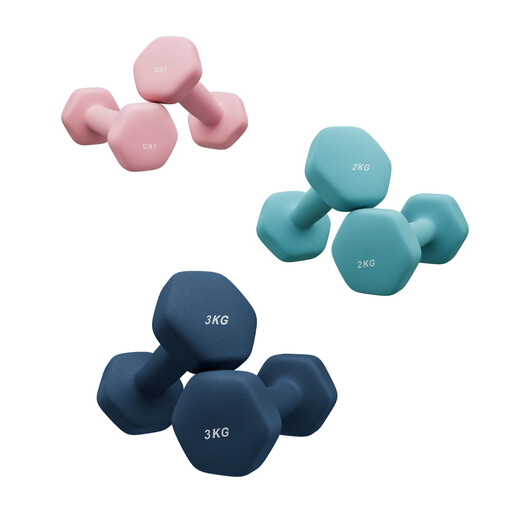
Why This Fits Their Persona: Three weight levels provide room to vary exercises and build confidence without buying separate pairs immediately. The included stand is practical for a compact UK home workout space.
It avoids the limitation of purchasing a single weight and addresses storage concerns with a dedicated rack. Hexagonal heads also help prevent rolling.
Includes six cast-iron dumbbells, three weight levels and a PP plastic stand.
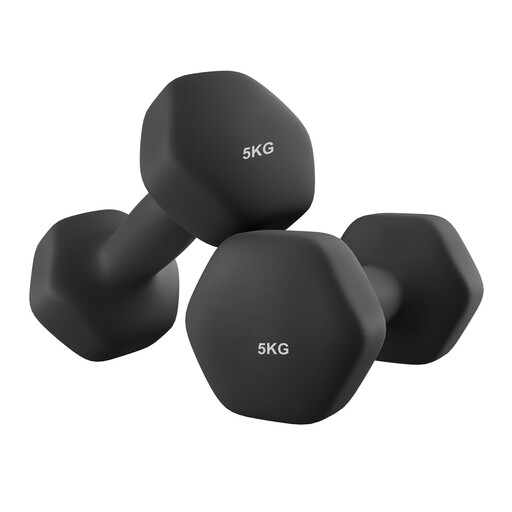
Why This Fits Their Persona: This heavier dumbbell pair suits users who want a straightforward option for home strength training, including presses, rows, squats and loaded carries.
The product specifications identify the cast-iron core, neoprene coating, grip size and approximate dimensions instead of leaving key details to a general marketing claim.
Each dumbbell is listed at 5 kg, with a neoprene-coated grip and hexagonal ends for stable placement.
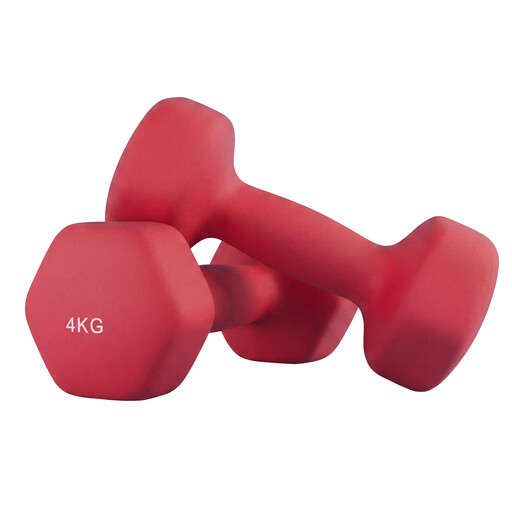
Why This Fits Their Persona: The 4 kg pair sits between lighter toning weights and heavier 5 kg options, making it suitable for users combining strength work with cardio circuits at home.
Its listed 4 kg pair and dimensions make it easier to judge suitability before purchase, while the hexagonal form limits unwanted movement between sets.
Cast-iron construction, neoprene coating and a listed grip measuring approximately 11.5 cm long.
They can be a practical choice for beginners because the coating offers a softer grip and the hexagonal shape helps prevent rolling. Start with a manageable weight, particularly for movements above the head or exercises involving repeated repetitions. A set containing 1 kg, 2 kg and 3 kg pairs allows gradual variation.
The neoprene outer layer may reduce direct contact between the cast-iron core and the floor, but no dumbbell should be thrown or dropped. Use a suitable exercise mat on hard flooring and place the weights down carefully after each set.
Their usable lifespan depends on frequency of use, storage and handling. Keeping them dry, avoiding sharp surfaces and not dropping them can help preserve the coating. Inspect the handles and heads regularly, and discontinue use if structural damage affects your ability to hold the dumbbell securely.