
24/7 Customer Support

Free returns

Same-day & Next-day Delivery

Quality Guaranteed

Unlock Your Welcome Offers: FREE Delivery | Up to 80% OFF | Free 30-day JoyPlus trial
Download the APP
Shopping for Nestlé food and drinks online can be convenient, but familiar packaging does not always tell you everything needed to make a suitable choice. UK households may be comparing breakfast cereals, instant coffee, powdered milk, chocolate biscuits and international drinks, often across different pack sizes and countries of origin.
The main risks are not usually dramatic product faults. They are quieter purchasing mistakes: choosing a pack that does not suit household consumption, overlooking allergens or assuming that a product marketed as “nutritious” is automatically low in sugar.
A 1.1kg cereal box or 550g coffee whitener may appear economical, but value depends on how quickly your household uses it and how well it can be stored. Large packs can lose freshness if the inner bag or container is not sealed properly. Compare price per 100g, serving size and expected usage rather than relying only on the headline pack price.
Terms such as “wholegrain”, “fortified” or “gluten-free” describe particular characteristics, not the entire nutritional profile. For example, a wholegrain cereal can still contain added sugar, while a gluten-free breakfast cereal may include honey, sugar or other sweetening ingredients. Check the per-serving and per-100g nutrition panels before deciding.
Nestlé groceries UK listings can include products made in different countries, with differing recipes and labelling. Cereals may contain wheat, barley or oats; milk powders and chai mixes may contain milk and soya; chocolate biscuits may contain or be produced around peanuts and nuts. Always read the latest packaging, particularly if buying for children, vegetarians or anyone with an allergy or intolerance.
Instant coffee, powdered milk, malt drinks and chai sachets are designed for different routines. A jar of instant coffee may suit daily use, while individually portioned masala tea or vanilla chai latte sachets are useful for work, travel or controlled preparation.
Look at:
For wholegrain cereal, identify the proportion and type of grain. Nestlé Shreddies, for example, lists wholegrain wheat as its main ingredient, while Cheerios contains wholegrain oat, wheat and barley flours. These products are not suitable for anyone avoiding gluten unless the current label confirms otherwise.
For a gluten-free breakfast cereal, Go Free Honey Nut Flakes lists no gluten-containing cereals in its ingredients, but it contains peanuts and notes possible cross-contact information. Always prioritise the packaging and your own dietary requirements over general product descriptions.
Instant chai mixes commonly combine tea extract, milk solids, sugar and flavourings. Nestlé Everyday Masala Tea 3in1 contains 11g of sugars per 20g portion according to the supplied product information. Karak and vanilla chai products also contain sugar, so they may be more suitable as an occasional sweet drink than as an unsweetened tea replacement.
For Nestlé instant coffee, compare the ingredient list and preparation guidance. NESCAFÉ Azera Americano contains soluble coffee and 5% roast and ground coffee, while the decaffeinated version uses decaffeinated coffee ingredients. Coffee whiteners such as Coffee Mate are separate products and should be assessed for their milk proteins, vegetable oils and sugar content.
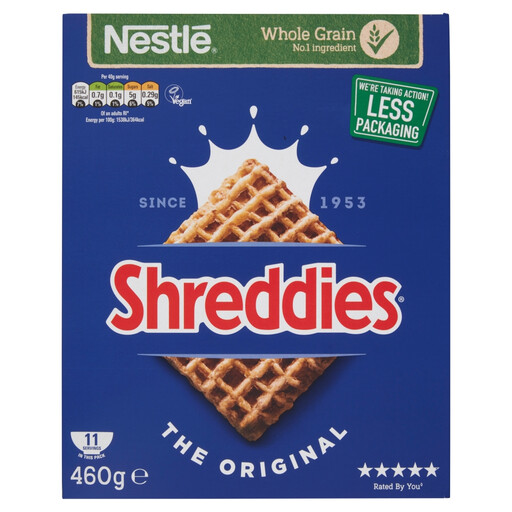
Why This Fits Their Persona: A practical starting point for UK households wanting a familiar wholegrain cereal without committing to a bulk 1.1kg pack.
The 460g format helps reduce the risk of stale cereal associated with oversized packs in smaller households.
Made with 96% wholegrain wheat; provides 5g of fibre per 40g serving according to the supplied information.

Why This Fits Their Persona: Suits coffee drinkers who want a more textured instant drink for home or office use, without a coffee machine.
The listing clearly identifies soluble coffee plus 5% roast and ground coffee, making the format easier to distinguish from standard instant coffee.
Contains a blend of Robusta and Arabica coffee; one teaspoon is prepared with approximately 200ml of hot water.
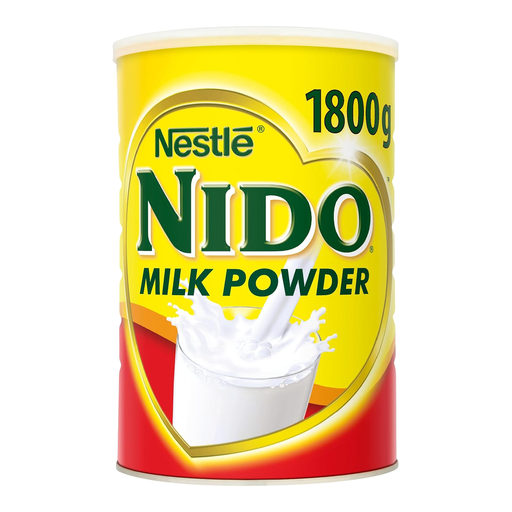
Why This Fits Their Persona: Suitable for larger families, regular baking and households that use milk powder across drinks, cereal and recipes.
The preparation ratios are stated clearly: 32.5g with 225ml water makes 250ml of reconstituted milk, helping users plan servings.
1.8kg tin; can be used with cereals, tea, coffee, hot chocolate and cooking recipes.
We have compiled a complete, real-time list of products that fully satisfy these strict selection criteria and UK safety regulations.
Nestlé Shreddies and Shreddies Frosted list wholegrain wheat as a main ingredient, while Cheerios uses wholegrain oat, wheat and barley. Compare sugar, fibre and serving sizes, and check allergens before buying. Go Free Honey Nut Flakes may suit shoppers seeking a gluten-free breakfast cereal, but peanut information requires careful attention.
Keep powdered milk in a cool, dry cupboard and close the tin firmly after each use. Use clean, dry utensils and follow the preparation instructions on the packaging. Do not assume that a large tin is economical if your household uses it slowly.