
24/7 Customer Support

Free returns

Same-day & Next-day Delivery

Quality Guaranteed

Unlock Your Welcome Offers: FREE Delivery | Up to 80% OFF | Free 30-day JoyPlus trial
Download the APP
Navigating the world of baby products can feel overwhelming, especially when you’re preparing for a new arrival. As a new parent, ensuring your baby is safe, comfortable and well-rested is a top priority. But with so many options on the market, how do you choose the right newborn sleep essentials?
My name is Joy, and as the Joybuy Product Recommendation Officer, my role is to help you find practical and reliable solutions for your family. This guide cuts through the clutter, focusing on key items that can support both daytime soothing and safer night-time sleep during those precious early months.
Before we look at specific products, it’s helpful to understand the core principles behind selecting the right gear. Here are a few key considerations based on UK safety standards and practical parenting needs.
The Lullaby Trust and NHS provide clear guidance on safe sleep for newborns. The fundamental rule is that a baby should sleep on a firm, flat surface, on their back, in a clear sleep space. This means no pillows, duvets, soft toys or cot bumpers. When choosing a crib, look for one that complies with British Safety Standard BS EN 1130:2019, which ensures it meets rigorous safety requirements for stability, structure and materials.
It's important to distinguish between a space for night-time sleep and a tool for daytime soothing.
Parenthood is demanding, and well-designed 0-6 months baby gear can make a real difference. Look for features like lightweight frames for portability, machine-washable fabrics for easy cleaning and simple, one-handed operation. These small conveniences add up, giving you more time to focus on your little one.
Based on functionality, safety features and parent-friendly design, here are two products that address different, but equally important, aspects of a newborn's routine.
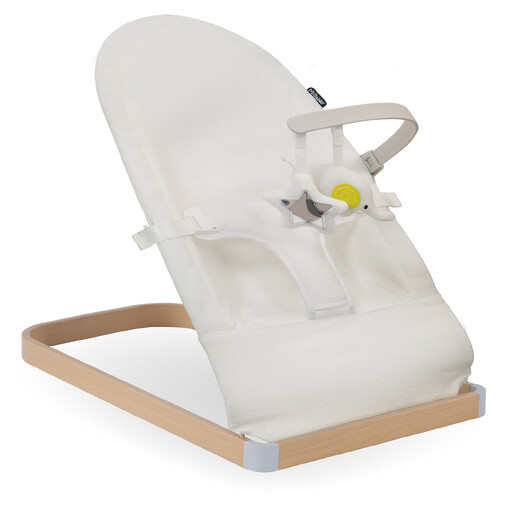
Why It Stands Out
This baby bouncer offers a simple yet effective approach to daytime comfort. Its standout feature is the natural rocking motion, which is generated by your baby’s own movements. This not only provides gentle soothing but also helps stimulate their motor skills without the need for batteries or mains power. The design focuses on providing proper ergonomic support for a newborn's developing back, neck and head.
Pros
Who is it for? This bouncer is an excellent choice for parents seeking a straightforward, portable and effective baby soothing solution for supervised daytime use. It’s ideal for those moments when you need your hands free but want to keep your baby content and safely occupied.
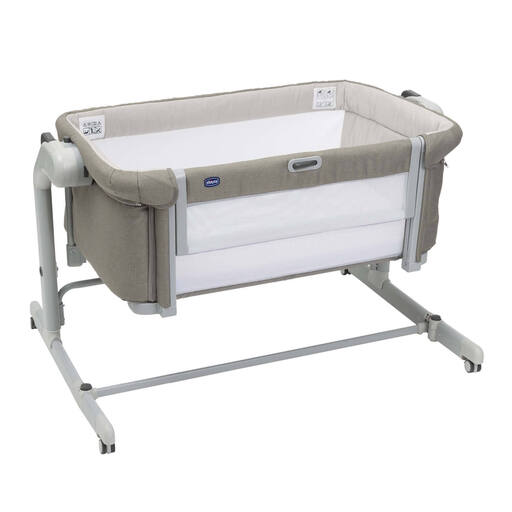
Why It Stands Out
The Chicco Next2Me Magic Evo is a thoughtfully designed bedside crib that makes night-time parenting significantly easier. Its most notable feature is the one-hand opening system, which allows you to lower the side panel with a single button press. This provides instant, easy access for feeding or comforting your baby without having to get out of bed, all while they remain in their own safe sleep environment.
Pros
Who is it for? This crib is perfect for parents who want the closeness and convenience of co-sleeping without the associated risks. It is particularly suited for those recovering from childbirth or who plan to breastfeed, as the easy access minimises disruption during the night.
Every family's needs and home are unique. If these specific items aren't quite what you're looking for, or if you're building your nursery from scratch, there are many other solutions available. Explore our full collection of nursery furniture, from cots and cot beds to changing units, to find the perfect fit for your space.
1. What do newborns actually need to sleep? For sleep, a newborn needs a safe, separate sleep space with a firm, flat mattress and a waterproof cover. Use a fitted sheet and dress your baby in appropriate sleepwear, like a baby grow or a sleeping bag, instead of using loose blankets. The space should be clear of pillows, bumpers, duvets and soft toys to ensure it aligns with UK safe sleep guidelines.
2. Can a newborn sleep in a baby bouncer? No, bouncers are not designed for safe sleep. They are for supervised, awake time or very short, observed naps. The semi-reclined position can pose a risk if a baby’s head slumps forward, potentially obstructing their airway. For any period of unsupervised or prolonged sleep, always move your baby to a firm, flat surface like a crib or Moses basket.
3. How long can I use a bedside crib? Most co-sleeper cribs are designed for use from birth up to approximately 6 months, or until the baby reaches the maximum weight limit (typically 9kg). It is crucial to stop using the crib once your child can sit up, kneel or pull themselves up unaided, as they may be able to climb out. Always refer to the specific manufacturer's instructions for your product.