
24/7 Customer Support

Free returns

Same-day & Next-day Delivery

Quality Guaranteed

Unlock Your Welcome Offers: FREE Delivery | Up to 80% OFF | Free 30-day JoyPlus trial
Download the APP
Welcoming a newborn brings a unique mix of joy and questions. As you navigate these early days, a simple item like a baby dummy can become an invaluable tool for comfort and calm. However, the sheer variety of newborn soothers on the market can feel overwhelming. How do you choose one that is safe, comfortable and suitable for your little one?
This guide is designed to cut through the clutter. We will walk you through the key features to consider when selecting dummies for newborns, from orthodontic design to materials and convenient features that make a parent's life just that little bit easier.
Making an informed choice comes down to understanding a few essential features. Keeping these points in mind will help you find a soother that meets both your baby's needs and UK safety standards.
One of the most common concerns for parents is how a soother might affect their baby's oral development. This is where orthodontic soothers come in. These are designed with a specially shaped teat—often flattened and angled—to support the natural development of the palate, jaw and teeth. A symmetrical teat is also a popular choice, as it is always positioned correctly in the baby's mouth. When looking at options for soothers 0-6 months, an orthodontic design is a feature many parents prioritise.
Your baby’s safety is paramount. Always look for a BPA free dummy. Most modern soothers are made from soft, medical-grade silicone, a durable and hygienic material. Silicone soothers are easy to clean and do not retain odours. It is also wise to check that the product complies with British and European safety standards (EN 1400). The shield of the soother should be large enough that it cannot be fully drawn into the baby's mouth and should have ventilation holes to allow air to circulate, preventing skin irritation.
Parenting a newborn is demanding, and small conveniences can make a big difference. A self sterilising soother is a game-changer for hygiene on the go. These typically come with a travel case that, with a little water, can be used to sterilise the soothers in a microwave in just a few minutes. For those middle-of-the-night fumbles, a glow in the dark dummy can be incredibly helpful, allowing you to find and replace it without turning on a bright light and disturbing your baby further.
Based on these key considerations, here are some standout options that combine thoughtful design, safety and practical features.
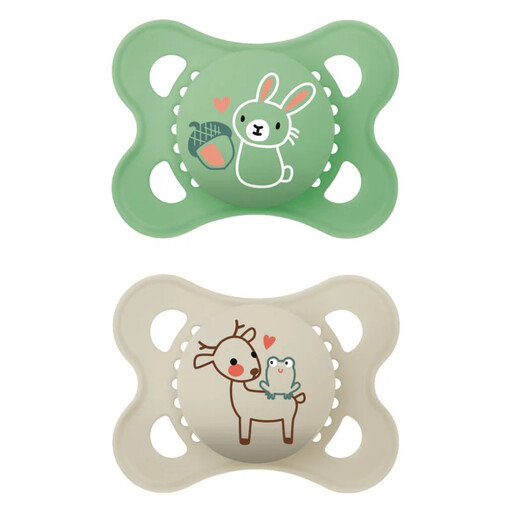
Why It Stands Out: This is MAM's first carbon-neutral soother, made from bio-renewable materials. It combines the brand's trusted design with a focus on sustainability, making it a forward-thinking choice.
Pros:
Who is it for? Environmentally-conscious parents who want a trusted, dentist-approved design without compromising on sustainability.
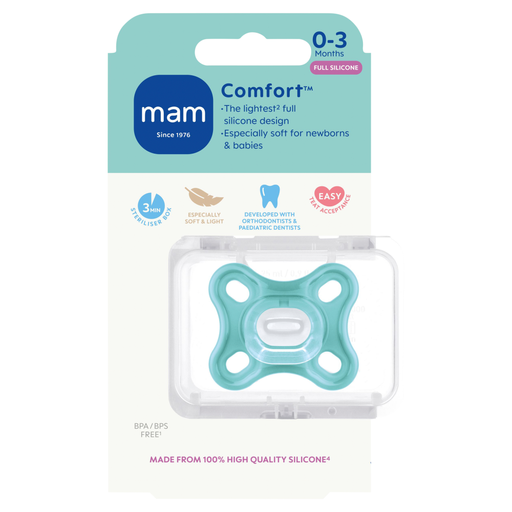
Why It Stands Out: Specifically engineered for newborns, this soother is exceptionally lightweight and made from a single piece of 100% soft silicone, making it both hygienic and easy for the smallest babies to hold.
Pros:
Who is it for? Parents of newborns, especially smaller or premature babies, who need an ultra-lightweight and exceptionally gentle soother.
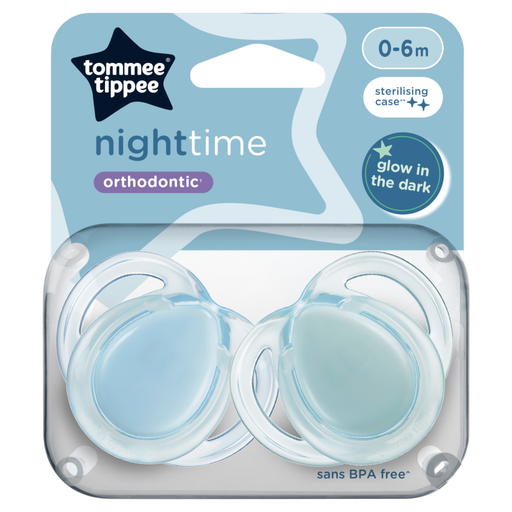
Why It Stands Out: The glow-in-the-dark handle is a simple but brilliant feature designed to solve the common problem of finding a lost soother in a dark room, helping everyone get back to sleep faster.
Pros:
Who is it for? Parents looking for a practical solution to nighttime settling and wanting to avoid searching for a lost baby dummy in the dark.
Every baby is different, and what works for one may not work for another. If these recommendations are not quite what you are looking for, or if you would like to see a wider variety of styles and brands, we have a comprehensive selection available.
Explore Our Full Range of Baby Pacifiers
1. When can a newborn have a soother? General guidance often suggests waiting until breastfeeding is well-established, which is typically around 3-4 weeks of age. This helps prevent any potential confusion for the baby. However, every situation is unique, and it is always a good idea to discuss this with your midwife or health visitor for advice tailored to you and your baby.
2. How often should you replace a baby dummy? For both hygiene and safety, most manufacturers recommend replacing soothers every 1-2 months. You should also inspect the soother before each use by pulling the teat in all directions. At the first sign of damage, weakness or stickiness, it should be discarded immediately.
3. Are orthodontic soothers a better choice? Orthodontic soothers are specifically designed with a baby's oral development in mind. The shape of the teat is intended to place less pressure on the developing gums and teeth compared to traditional round teats. While many parents and dental professionals favour them for this reason, the most important factor is finding a safe, correctly-sized soother that your baby will accept.