Workers with hot water but no milk
Look for instructions that explicitly say to add hot water. Instant products from Options, Galaxy, Tesco and Sainsbury's provide water-preparation directions, though their stated servings and ingredients differ.


Choose a hot-water instant blend if your night-shift break offers a kettle but no milk. If you can heat milk and prefer a milk-based drinking chocolate, check its preparation instructions; whichever format you choose, compare nutrition for the prepared mug and read the current ingredient and allergen label.
The facilities available during your break are the starting point; serving size and ingredients then help distinguish products within each format.
Look for instructions that explicitly say to add hot water. Instant products from Options, Galaxy, Tesco and Sainsbury's provide water-preparation directions, though their stated servings and ingredients differ.
Use the stated prepared serving rather than the powder alone. Twinings lists 40 kcal and 5.7 g sugars for an Options Belgian Choc mug made with water; Sainsbury's lists 41 kcal and 4.6 g sugars for its Low Calorie Instant Fairtrade Hot Chocolate mug. Check the portion used for each figure.
A drinking chocolate with milk-based instructions is another option when milk and a way to heat it are available. The cited Cadbury serving uses 18 g powder and 200 ml semi-skimmed milk, so its prepared-drink figures should not be treated as powder-only figures.
Start with the preparation method your workplace allows, then compare the labelled serving and ingredients of products you could actually make there.
| Priority | What to check | Your needs |
|---|---|---|
| Preparation | Check whether the instructions call for hot water or hot milk, and note the powder and liquid quantities. Confirm that you can prepare the drink with the facilities available during your break. | I only have access to a kettle and mug, so I need a product with hot-water instructions. If I can heat milk, a milk-prepared drinking chocolate is also an option. |
| Prepared serving | Compare energy, sugars, saturates and salt using each label's stated prepared serving. Check the powder weight and whether milk is included before treating two mug figures as directly comparable. | The amount in one drink matters to me more than a powder-only figure. Twinings lists 40 kcal and 5.7 g sugars for Options Belgian Choc made with 11 g powder and 200 ml water; Sainsbury's lists 41 kcal and 4.6 g sugars for its prepared Low Calorie Instant Fairtrade mug. |
| Ingredients | Read the current ingredients, allergen advice and sweetener declarations for the exact product. Distinguish an ingredient from a precautionary 'may contain' statement. | I need the blend to fit my ingredient or allergen requirements, not just my preferred preparation method. A low-calorie name alone does not answer that question. |
A milk-prepared drinking chocolate may be impractical when a break room has only a kettle. The cited Cadbury preparation includes 200 ml semi-skimmed milk, while the cited Options and Galaxy instant products use water.
Read the preparation panel before buying, particularly if you will make the drink at work rather than at home.
Twinings gives an 11 g powder portion for Options Belgian Choc, while the cited Galaxy Instant Hot Chocolate serving uses 25 g. Their prepared-mug nutrition figures describe different portions; Cadbury's cited serving also includes milk.
Check the powder quantity, liquid and prepared volume alongside the nutrition values instead of comparing a single headline number.
A product's energy figure does not establish whether its milk, soya or sweetener information fits your requirements. Sainsbury's advises that its cited low-calorie instant product is unsuitable for customers with a soya allergy because of its manufacturing methods.
Read the current pack's full ingredient list and allergen advice for the exact blend you intend to use.
These examples show why the preparation method and serving information matter more than a brand name alone.
The cited Cadbury Drinking Chocolate is a milk-prepared option for breaks where hot milk is available.
The cited Galaxy Instant Hot Chocolate uses hot water, making its preparation method relevant when milk is unavailable.
Options Belgian Choc is a water-prepared blend with a specified 11 g powder portion.
Tesco Instant Hot Chocolate is another water-prepared option for a kettle-based break.
The cited Low Calorie Instant Fairtrade Hot Chocolate is a water-prepared option with nutrition stated per mug.
M&S describes a range spanning instant hot chocolate and traditional drinking chocolate, so check the format of the individual product.
These options include blends prepared with hot water and drinking chocolates prepared with milk or a plant-based alternative. Choose the preparation route that fits your break facilities, then check the current pack before comparing prepared drinks.
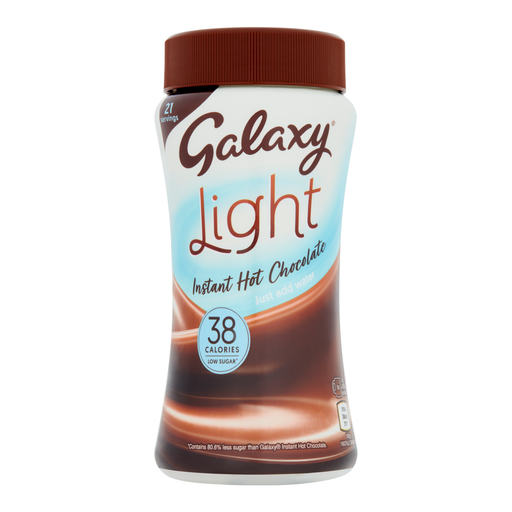 No image available
For a hot-water break: the stated method uses about 20 g powder with 200 ml hot water. The ingredient information identifies milk, soya and barley; check the current label. Confirm the basis of its nutrition table before comparing figures per prepared mug.
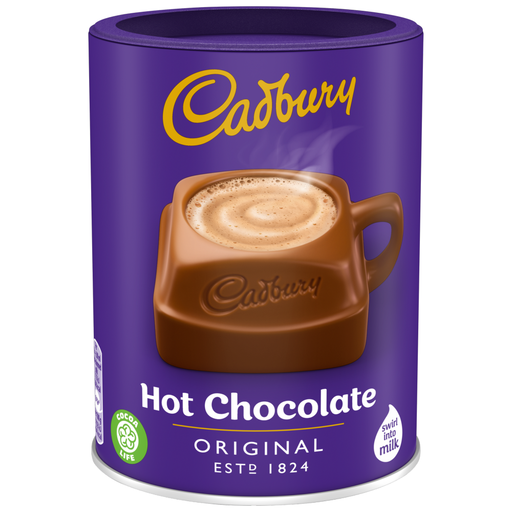 No image available
For a break with access to hot milk: the preparation directions use three teaspoons of powder mixed into hot milk. The product information says it may contain milk. Check the current pack for the amount of milk and the prepared-serving basis before comparing nutrition.
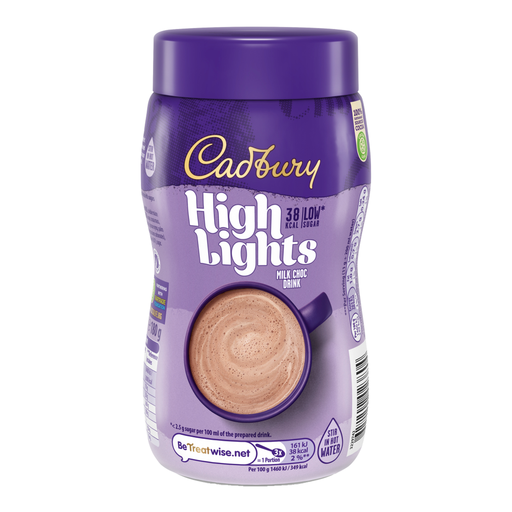 No image available
For a break using hot water: the preparation description says to mix the powder with hot water. Its listed ingredients include milk and the sweeteners acesulfame K and sucralose. Check the current pack for the powder quantity, water volume and prepared-serving nutrition.
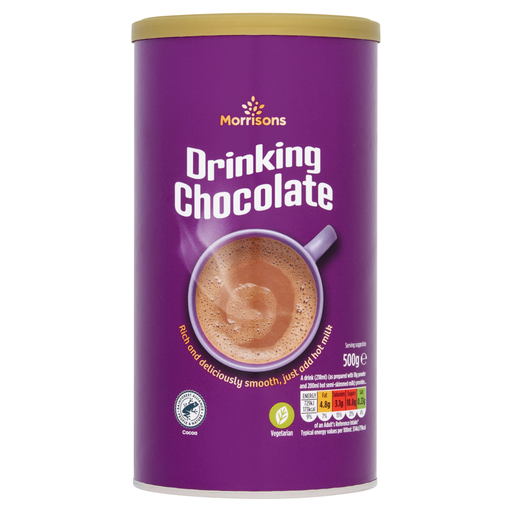 No image available
For breaks when hot milk is available: the preparation directions call for hot milk, and the ingredient description lists 25% cocoa powder. Check the current pack for the powder quantity and prepared-serving basis before comparing its nutrition with water-made drinks.
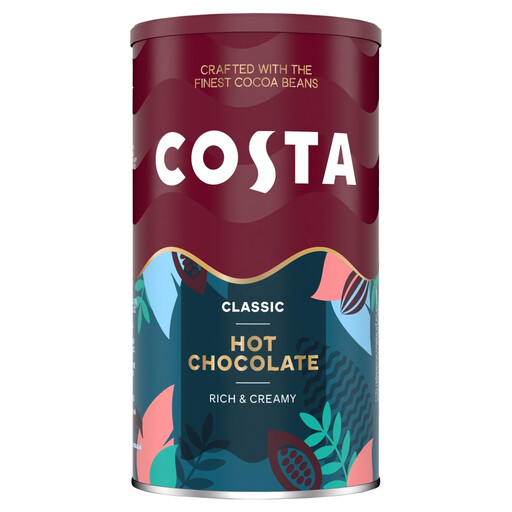 No image available
For breaks with milk or a plant-based alternative available: the preparation description calls for one of these rather than water alone. It lists 36% cocoa and nutrition for a 20 g powder serving; the prepared drink will also depend on the liquid and amount used.
Use the prepared mug when deciding what one break-time drink contains, while checking the portion and liquid behind each figure. Twinings lists 40 kcal and 5.7 g sugars for Options Belgian Choc made with 11 g powder and 200 ml water; Sainsbury's lists 99 kcal and 16 g sugars for Galaxy Instant Hot Chocolate made with 25 g powder and 200 ml water. A milk-prepared serving uses a different basis again.
No. The cited Options and Galaxy instant products have hot-water directions, while the cited Cadbury Drinking Chocolate serving uses semi-skimmed milk and M&S Drinking Chocolate calls for hot milk. Check the directions for the exact product before taking it to a workplace with only a kettle.
Read the current ingredient list and allergen advice for the exact product. Sainsbury's lists milk and soya ingredients for the cited Galaxy instant blend, while its own cited low-calorie blend carries a warning that it is unsuitable for customers with a soya allergy because of manufacturing methods. A precautionary 'may contain' statement is not the same as a listed ingredient.
No; compare the stated sugars for the prepared serving. Twinings lists 5.7 g sugars for an Options Belgian Choc serving made with 11 g powder and 200 ml water, while Sainsbury's lists 4.6 g for a prepared mug of its Low Calorie Instant Fairtrade Hot Chocolate. Check serving sizes and ingredients as well as the figures.