
24/7 Customer Support

Free returns

Same-day & Next-day Delivery

Quality Guaranteed

Unlock Your Welcome Offers: FREE Delivery | Up to 80% OFF | Free 30-day JoyPlus trial
Download the APP
As the Joybuy Product Recommendation Officer, my role is to help you navigate the crowded marketplace. With the arrival of any new Nintendo console, the excitement is matched only by a wave of confusing technical claims and marketing buzzwords. Before you decide to buy the Nintendo Switch 2 in the UK, it’s crucial to understand what truly matters for your gaming experience and how to sidestep common purchasing pitfalls.
Many buyers of previous consoles have faced a few recurring frustrations. First is the "4K gaming" promise that often turns out to be little more than upscaled video playback, not actual gameplay. Second is the hidden cost of inadequate storage, where a console advertised as "ready to play" can barely hold a couple of major titles before demanding an expensive memory card. Finally, there's the subtle pressure to purchase a separate "pro" controller because the included ones feel like a compromise. Let's analyse how the new Nintendo Switch 2 addresses these points and what you need to check before you buy.
To make an informed decision, it's essential to look past the marketing and focus on the core specifications that will define your day-to-day use. For the Nintendo Switch 2, three areas are non-negotiable: the processor, the display and its compatibility with your existing library.
The single most significant upgrade in this new Nintendo console is its custom-built processor. The NVIDIA T239 system-on-a-chip is the heart of the machine, featuring an Ampere-based GPU—the same architecture found in powerful desktop graphics cards.
What does this mean for you? Two things: power and intelligence. The chip provides the raw horsepower for more detailed game worlds and complex effects. More importantly, it enables NVIDIA DLSS (Deep Learning Super Sampling). This technology uses AI to upscale a game's resolution in real-time. In simple terms, the console can render a game at a lower, more manageable resolution (like 1080p) and then intelligently reconstruct the image to a crisp 4K quality on your television. This is how the 4K Nintendo Switch experience is achieved without the immense power draw of native 4K rendering, delivering impressive visuals while docked.
While the TV experience gets a 4K boost, the handheld experience is transformed by the new screen. The Nintendo Switch 2 features a larger 7.9-inch LCD display with a full 1080p resolution. The critical feature here, however, is its 120Hz refresh rate with Variable Refresh Rate (VRR) support.
A higher refresh rate means the screen can display up to 120 frames per second, making motion look incredibly smooth and responsive. For fast-paced action games, this is a tangible advantage, reducing motion blur and input lag. VRR ensures the screen's refresh rate syncs with the game's frame rate, eliminating the screen tearing that can plague less advanced handhelds. This focus on 120Hz handheld gaming makes the portable experience feel more premium and responsive than ever.
A major point of friction with the original Switch was its limited 32GB of internal storage. The Nintendo Switch 2 addresses this head-on with 256GB of fast UFS internal storage, significantly reducing game load times and providing ample space for a starting digital library.
For expansion, the console uses the new microSD Express card standard. It's important to note that while your old microSD cards can be used to transfer screenshots, they are not fast enough to run Switch 2 games. For existing owners, the great news is the extensive Switch 2 backward compatibility. The vast majority of your physical and digital Nintendo Switch games will work on the new console, with many benefiting from faster loading and more stable performance. The redesigned Joy-Con 2 controllers are also a welcome improvement, with a more robust build and larger sticks that feel more substantial straight out of the box.
Choosing the right gaming hardware depends entirely on your lifestyle and priorities. Below, we match some of our recommended products to different types of gamers.
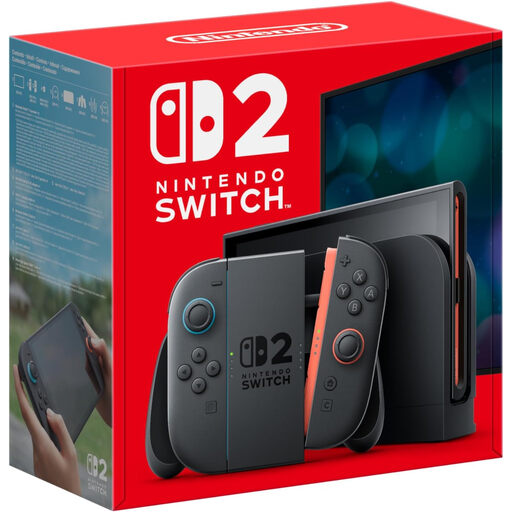
Why This Fits Their Persona: This user wants the definitive Nintendo experience. They play exclusive titles like Zelda and Mario and value the freedom to switch seamlessly between a high-performance handheld and a high-resolution TV experience.
It directly solves the storage and performance pitfalls. The 256GB internal storage avoids the immediate need for an expansion card and the DLSS technology delivers a genuine 4K upscaled image to your TV, not just a marketing claim.
The combination of a 120Hz handheld screen and 4K docked output offers two distinct, high-quality ways to play. Backward compatibility protects your existing game investment.
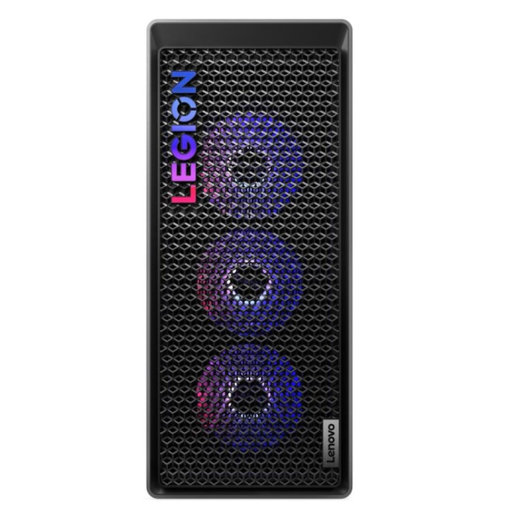
Why This Fits Their Persona: This gamer prioritises raw performance above all else. They want to play the latest multi-platform titles at the highest settings and resolutions and they value the ability to upgrade components over time. Portability is a secondary concern.
It completely sidesteps the "4K myth" by providing true native 4K gaming power with its RTX 5070 Ti. The tool-less chassis and standard components make storage and memory upgrades straightforward and cost-effective, avoiding proprietary hardware traps.
Delivers top-tier gaming and multitasking performance with its Intel Core Ultra 7 processor and 32GB of DDR5 RAM. The 34L tower offers excellent cooling and easy upgradability for future-proofing.
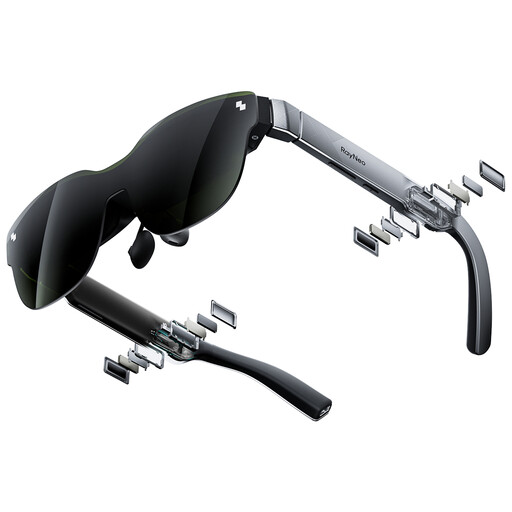
Why This Fits Their Persona: This user loves portable technology and wants a private, big-screen experience for their Switch 2, smartphone or laptop while commuting or travelling. They want to be immersed in their game or film without disturbing others.
It bypasses the physical limitations of a built-in screen entirely. Instead of being confined to a 7.9-inch display, it projects a virtual 201-inch screen, offering a cinematic experience that no handheld alone can provide.
Creates a private, immersive 120Hz viewing experience for compatible devices like the Switch 2. Whisper Mode 2.0 audio ensures sound leakage is minimal, making it ideal for use in public spaces.
We have compiled a complete, real-time list of products that fully satisfy these strict selection criteria and UK safety regulations.
Yes, the Nintendo Switch 2 is designed with backward compatibility in mind. The vast majority of your existing library of physical game cards and digitally purchased titles will work on the new hardware. However, while older Joy-Con controllers can connect to the new console, some features may be limited and they cannot be physically attached to the sides of the Switch 2 unit itself, which is designed for the new Joy-Con 2.
The Nintendo Switch 2 uses the microSD Express card format for game storage expansion. This standard offers significantly faster read/write speeds, which are necessary to run new-generation games directly from the card. While your older microSD, microSDHC and microSDXC cards can still be inserted into the console, their use is limited to transferring non-game data like screenshots and videos. To expand your playable game library, you will need to purchase a new microSD Express card.
Yes, the performance leap provided by the custom NVIDIA T239 processor and 12GB of LPDDR5X RAM makes the Switch 2 more than capable of running demanding modern games from third-party developers. While visual settings may be adjusted to optimise performance for the hybrid format, players can expect versions of titles like EA SPORTS FC 26 that run smoothly and look impressive, especially when using DLSS for 4K output on a TV.