
24/7 Customer Support

Free returns

Same-day & Next-day Delivery

Quality Guaranteed

Unlock Your Welcome Offers: FREE Delivery | Up to 80% OFF | Free 30-day JoyPlus trial
Download the APP
Buying disposable nitrile examination gloves seems straightforward until a box arrives with the wrong size, poor grip or unsuitable material. Healthcare workers, food handlers, cleaners, tattoo practitioners, gardeners and DIY users all need dependable hand protection, but the right specification depends on the task.
The main risks are not always obvious from the front of the packaging. A low price may reflect a smaller quantity, while terms such as “medical”, “heavy duty” or “chemical resistant” need to be checked against the actual product information and intended use.
Blue nitrile gloves, black nitrile gloves and yellow nitrile gloves can support workplace colour coding, but colour does not automatically indicate thickness, protection level or suitability. Likewise, a disposable gloves pack of 100 may contain 100 individual gloves rather than 100 pairs, so check the quantity before comparing prices.
Nitrile generally offers useful resistance to many oils, cleaning substances and chemicals, but no disposable glove protects against every substance for every exposure time. Solvents, concentrated acids, fuels and other aggressive products may require specialist gloves. Check the chemical’s safety data sheet and the glove manufacturer’s compatibility information before use.
Natural latex can provide a flexible, close-fitting feel, but it is not suitable for people who need latex-free disposable gloves. Powdered gloves can also be unsuitable for some hygiene-sensitive environments. For food preparation, healthcare and many professional settings, powder-free nitrile gloves are often a practical option because they avoid added powder and contain no natural rubber latex.
Nitrile is a synthetic rubber commonly selected for examination gloves, cleaning and food handling gloves, tattoo work, laboratories and general-purpose tasks. It offers a close fit and useful tactile sensitivity without natural rubber latex.
Latex can feel flexible and responsive, but check allergy warnings carefully. For example, the Royal Markets latex options are not suitable for people with latex allergies. Latex gloves may be appropriate for selected household or general tasks where the user has confirmed compatibility.
Synthetic latex-free gloves can suit lighter domestic jobs, but they may not be intended for medical, industrial or prolonged chemical use. Always follow the stated application.
Powder-free gloves are suitable for users trying to minimise particulate contamination and avoid powder residue on hands or handled items. A beaded cuff can make gloves easier to put on and may help reduce liquid rolling back towards the wrist.
Look for a cuff that sits securely without cutting into the skin. Gloves used in dentistry, healthcare, food handling or cleaning should be changed between tasks and discarded after use where hygiene requires it.
A glove that is too tight may tear during donning, while one that is too loose can reduce dexterity and snag on equipment. Measure the widest part of the hand according to the supplier’s size guide rather than relying only on familiar clothing sizes.
Textured fingertips or palms can help when handling wet, greasy or slippery items. This is particularly relevant for cleaners, mechanics, food workers and gardeners. Touchscreen compatibility may be useful for checking a phone or tablet without removing gloves, but it should not outweigh correct fit and task suitability.
For regulated healthcare applications, check that the product is appropriate for the intended procedure and that the packaging provides the relevant conformity and usage information. “Examination gloves” does not necessarily mean sterile surgical gloves.
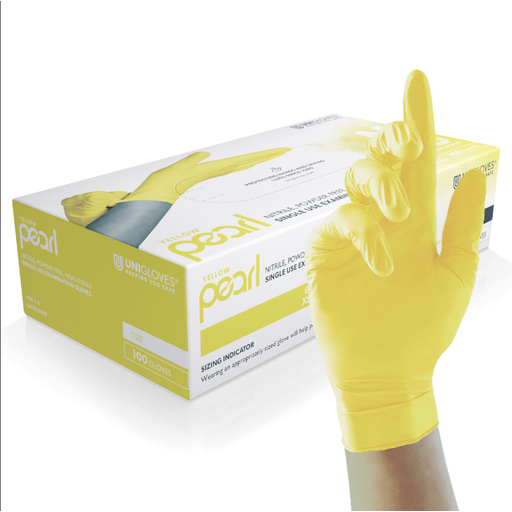
Why This Fits Their Persona: A 100-glove box gives households, small cafés and new businesses a straightforward supply for food preparation, cleaning and everyday tasks.
The listing clearly identifies a powder-free, latex-free nitrile construction and a pack quantity of 100, making key comparison points easier to verify.
Small size, textured finish, beaded cuff and stated suitability for food contact and multipurpose use.
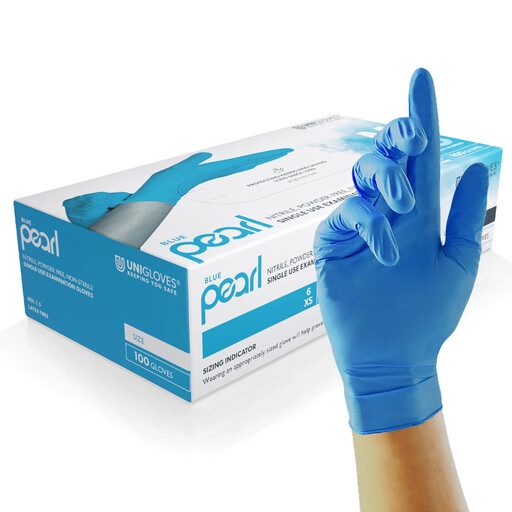
Why This Fits Their Persona: The blue colour suits colour-coded workplaces, while the large size and stated examination-glove design can suit professional users who prioritise fit and handling.
It avoids relying on colour alone by specifying latex-free, powder-free nitrile, a textured finish and a beaded cuff.
Large size, touchscreen compatibility, textured fingertips and a stated 100-glove pack.
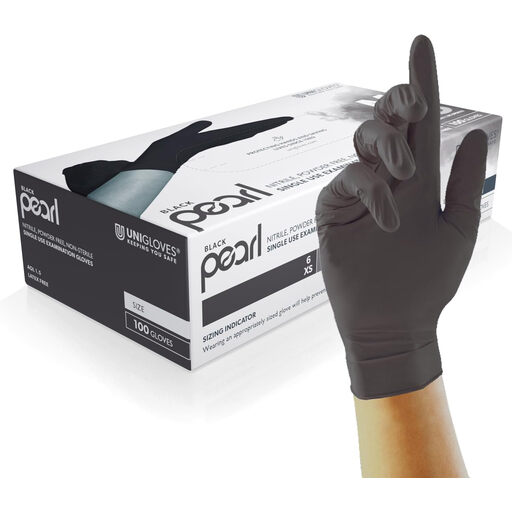
Why This Fits Their Persona: Black gloves can be useful for tattoo studios, salons, automotive work and other tasks where a darker colour helps conceal visible marks during short, frequent changes.
The listing gives practical details rather than colour-only marketing: nitrile material, powder-free construction, textured fingertips and chemical-resistance information.
Small size, touchscreen use, beaded cuff and a 100-glove supply for regular task changes.
Some products are listed as suitable for contact with food, but check the individual packaging and product information before use. Follow UK food hygiene procedures, change gloves between tasks and never treat a general-purpose glove as a substitute for proper handwashing.
There is no universal wear time. Replace them when torn, visibly dirty, contaminated, wet inside or when moving between different tasks. Healthcare, tattooing and food preparation generally require frequent changes to reduce cross-contamination.