Choose 100% apple juice when guests expect juice, but do not mistake no added sugar for sugar-free: apple juice still contains naturally occurring sugars. A no-added-sugar juice drink offers a ready-to-pour alternative, while squash needs diluting; check their fruit content and sweeteners if those distinctions matter to your guests. For children, provide water and milk as the main drinks, in line with NHS guidance, rather than relying on juice for everyone.
Who is choosing the drinks?
Hosts serving adults and children
Set out a clearly identified apple-juice option for guests who want it, alongside water and milk for children. The NHS identifies water and milk as children’s best drinks; its advice on undiluted fruit juice from age five is to serve no more than about 150ml a day, with a meal.
Hosts comparing sugars per glass
A no-added-sugar juice drink or prepared squash may have a different sugar figure from pure juice. Compare the nutrition panels on the same serving basis, then check the fruit percentage, sweeteners and, for squash, the dilution directions.
Hosts who want pure apple juice
Look for a product identified as 100% apple juice and read its ingredients. Pressed juice is ready to pour, but its naturally occurring sugars remain relevant when deciding how much to serve.
What should you check before buying?
Decide whether the table needs pure juice, a ready-to-drink apple-based alternative or a drink you will dilute. Then compare labels using the amount guests will actually be served.
100% apple juice
Choose it when: Guests expect apple juice rather than an apple-flavoured soft drink.
Bear in mind: No added sugar does not remove the sugars naturally present in juice.
No-added-sugar juice drink
Choose it when: A ready-to-pour apple-based drink matters more than serving pure juice.
Bear in mind: The Sainsbury’s apple-and-pear example contains water, fruit juice from concentrate and sweeteners, so it is not a substitute for 100% apple juice.
No-added-sugar squash
Choose it when: You can prepare diluted apple-flavoured drinks before serving.
Bear in mind: Mixing it adds a preparation step, and the concentrate is not pure apple juice.
| Priority |
What to check |
Your needs |
| Sugars per glass |
Compare sugars per 100ml, then calculate the amount in the serving you plan to pour. ASDA Groceries lists 10g per 100ml for Tropicana Pressed Apple; Sainsbury’s lists 2.6g per 100ml for its Apple & Pear Juice Drink. |
I want to know what “no added sugar” means for the drink in the glass, not just what it says on the front of the pack. |
| Drink type |
Read the product description and fruit percentage. Sainsbury’s lists 20% apple and 5% pear juice in its juice drink; ASDA Groceries lists 18% apple juice in its apple squash. |
If guests ask for apple juice, I want to serve juice and identify a juice drink or squash separately. |
| Children’s drinks |
Provide water and milk. The NHS advises no more than about 150ml of undiluted fruit juice or smoothies a day from age five, served with a meal; check age statements on individual products. |
Children of different ages may attend, so I need drink choices that do not assume juice suits everyone. |
| Preparation |
Check whether the drink is ready to pour or requires dilution. ASDA Groceries directs users to mix one part Apple Squash with nine parts water. |
Will I have time and suitable containers to mix squash, or would ready-to-serve drinks be easier at this gathering? |
| Opened bottles |
Read the storage instructions for the exact bottle. Tesco’s Copella Apple Juice 1.35L listing says to keep it refrigerated and consume it within four days of opening. |
I would rather keep bottles unopened until needed than prepare more juice in advance than guests will drink. |
What is easy to overlook?
-
Reading “no added sugar” as “sugar-free”
Apple juice can contain naturally occurring sugars. ASDA Groceries and Copella Fruit Juices each list 10g sugars per 100ml for their respective Tropicana and Copella apple-juice examples.
Check the sugars figure per 100ml and consider the portion you intend to serve before choosing between juice, a juice drink and squash.
-
Making juice the default drink for every child
The NHS identifies water and milk as children’s best drinks. Its guidance for children from age five limits undiluted fruit juice and smoothies to about 150ml a day, with a meal.
Put water and milk within easy reach, serve juice with food where appropriate, and let parents manage their children’s individual needs.
-
Presenting squash as apple juice
ASDA Groceries lists 18% apple juice from concentrate in its Apple Squash, which must be diluted before serving. It is a different drink from 100% apple juice.
Label the prepared squash separately so guests can choose the drink they expect.
-
Opening chilled juice too early
Opened-bottle storage instructions affect what can be prepared ahead. Tesco’s Copella 1.35L listing specifies refrigeration and use within four days of opening.
Check each bottle’s instructions and open it when you expect to serve it, rather than assuming the same period applies to every juice.
Brand and retailer examples
These examples illustrate differences between juice, juice drinks and squash; they do not indicate which products are listed on Joybuy.
Tropicana
Tropicana describes Orchard Apple as 100% pressed apple juice, not from concentrate.
- The ASDA Groceries listing for the 900ml pressed-apple bottle names apple juice and ascorbic acid as ingredients.
- That listing gives 10g sugars per 100ml, or 15g per 150ml serving; “no added sugar” should not be read as sugar-free.
Copella
Copella’s Cloudy Apple is a pressed-apple juice option sold in a 1.35L bottle in Tesco’s listing.
- Tesco lists nine 150ml servings in that bottle.
- Copella lists 10g sugars per 100ml; Tesco says to refrigerate the bottle and use it within four days of opening.
Sainsbury’s
Sainsbury’s provides examples of both a ready-to-drink apple-and-pear juice drink and a diluting apple squash.
- Its no-added-sugar Apple & Pear Juice Drink lists 3.9g sugars per 150ml.
- The drink contains 20% apple and 5% pear juice from concentrate, plus sweeteners; it is not 100% apple juice. Its Apple High Juice Squash also requires dilution.
Asda
ASDA Groceries lists a no-added-sugar Apple Squash for preparing diluted apple-flavoured drinks.
- The label directs users to mix one part squash with nine parts water.
- It contains 18% apple juice from concentrate and sweeteners, rather than being pure juice.
M&S
M&S lists both Cloudy Apple Juice and a concentrated Apple & Elderflower High Juice, which serve different purposes.
- The high juice is described by M&S as containing 50% fruit juice.
- M&S says its Apple & Elderflower High Juice is not suitable for babies and advises adding extra water if it is given to older children.
Tesco
Tesco’s listing for Copella Apple Juice 1.35L provides a large-bottle example to consider when planning servings.
- The Copella listing specifies nine 150ml servings.
- This is a listing for Copella, not a specification for a Tesco own-label apple juice.
Apple-based options on Joybuy
These options include individual apple-based drinks and a sparkling apple juice for the party. The apple-and-blackcurrant drinks and apple-and-pear fruit water are not the same as plain apple juice; check each pack against the kind of drink you intend to serve.
 No image available
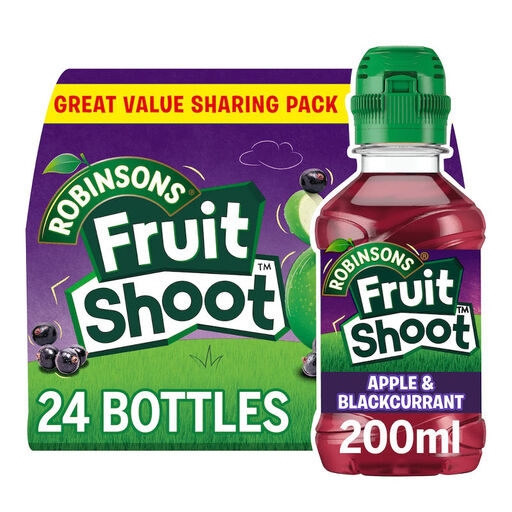
Fruitshoot Apple and Blackcurrant, 24 × 200ml
The 24 individual 200ml bottles offer an apple-and-blackcurrant drink for serving at a gathering, rather than plain apple juice. Keep the bottle caps away from children under 36 months.
View on Joybuy
 No image available
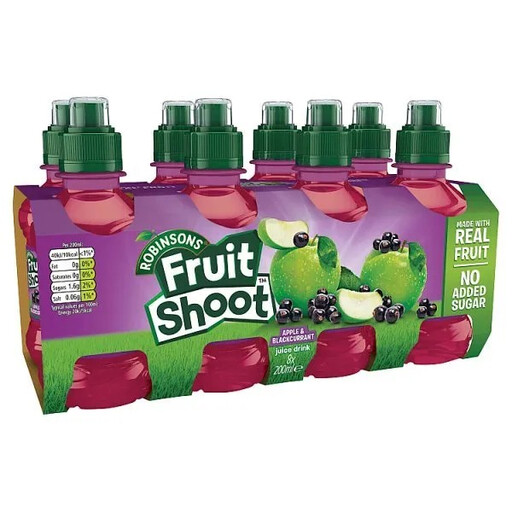
Fruit Shoot Black & Apple No Added Sugar, 8 × 200ml
The eight 200ml bottles provide a smaller multipack of an apple-and-blackcurrant drink labelled no added sugar. It is not plain apple juice; keep the bottle caps away from children under 36 months.
View on Joybuy
 No image available
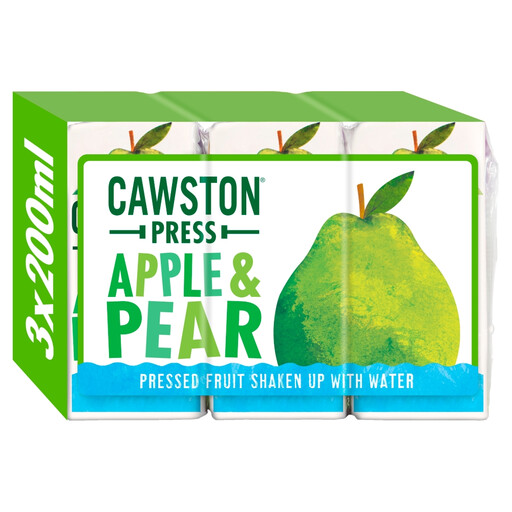
Cawston Press Apple & Pear Fruit Water, 3 × 200ml
Three 200ml cartons offer an apple-and-pear fruit water rather than plain apple juice. Check the pack’s sugars figure and ingredients if you are comparing it with juice or a no-added-sugar drink.
View on Joybuy
 No image available
Appletiser 100% Apple Juice Lightly Sparkling, 6 × 250ml
This lightly sparkling 100% apple-juice option comes in six 250ml bottles. Check the sugars information when planning portions. The product information warns that its glass bottle is unsuitable for children under four.
View on Joybuy
Common questions
Does “no added sugar” mean an apple drink is sugar-free?
No. Apple juice can contain naturally occurring sugars: ASDA Groceries lists 10g sugars per 100ml for Tropicana Pressed Apple, and Copella Fruit Juices lists the same amount for Cloudy Apple. Read the nutrition panel as well as the claim on the front.
Should juice be the main drink for children at the christening?
Provide water and milk as the main options: the NHS identifies these as children’s best drinks. Its guidance says that, from age five, undiluted fruit juice or smoothies should be limited to about 150ml a day and served with a meal.
Is no-added-sugar apple squash the same as apple juice?
No. Squash is a concentrate to dilute before serving. ASDA Groceries lists 18% apple juice from concentrate in its Apple Squash and directs users to mix one part squash with nine parts water, so identify the prepared drink separately from 100% apple juice.
What if babies or toddlers will attend?
Do not use a no-added-sugar claim as an age-suitability statement. Check the individual product label and ask parents about drinks for their children; M&S specifically states that its Apple & Elderflower High Juice is not suitable for babies.
How early can I open a large bottle of apple juice?
Follow the instructions for the bottle you buy. Tesco’s listing for Copella Apple Juice 1.35L says to keep it refrigerated and consume it within four days of opening; do not assume that every juice has the same storage period.


