Festival hosts serving a group
A ready-to-drink carton avoids mixing at the drinks table. Squash is an option when drinking water and serving equipment are available, but either choice still needs a plan for storage after opening.


For a festival food table, a ready-to-drink no-added-sugar apple-and-pear juice drink makes sense when you need an unopened carton that can be stored cool and dry and want less listed sugar per serving than the 100% apple juices considered here: Tesco and Sainsbury's list 3.9g per 150ml for their juice drinks, while Tropicana and Copella list 15g per 150ml for their pressed juices. Choose squash only if you can dilute it with drinking water; choose 100% juice if pure apple juice matters more to you, bearing in mind that its naturally occurring sugars count as free sugars under NHS guidance.
The useful distinction is whether you need drinks ready to pour, can prepare a concentrate, or specifically want 100% apple juice.
A ready-to-drink carton avoids mixing at the drinks table. Squash is an option when drinking water and serving equipment are available, but either choice still needs a plan for storage after opening.
Compare the prepared drink at the portion you expect to serve. Tesco and Sainsbury's each list 3.9g sugars per 150ml for their no-added-sugar apple-and-pear juice drinks; the Tropicana and Copella pressed apple juices considered here each list 15g per 150ml. The juice drinks contain sweeteners and less fruit juice than 100% juice.
Pressed apple juice suits someone choosing 100% juice rather than a diluted juice drink or squash. “No added sugar” does not mean sugar-free: the NHS counts sugars naturally present in unsweetened fruit juice as free sugars.
Choose when: You need an unopened carton that can be stored cool and dry, then poured without mixing.
Trade-off: The Tesco and Sainsbury's apple-and-pear examples contain sweeteners and are not 100% juice.
Choose when: Drinking water and a way to dilute and serve the concentrate are available.
Trade-off: It cannot be served straight from the bottle; the Sainsbury's example also lists sulphites.
Choose when: The preference for pure apple juice takes priority over reducing listed sugar per serving.
Trade-off: Naturally occurring juice sugars remain, and a chilled product such as Copella needs refrigeration throughout the event.
| Priority | What to check | Your needs |
|---|---|---|
| Sugar per serving | Compare sugars at the same serving size and check whether the product is 100% juice, a juice drink or prepared squash. Tesco and Sainsbury's list 3.9g per 150ml for their apple-and-pear juice drinks; Tesco Groceries and Sainsbury's list 15g per 150ml for the Tropicana and Copella pressed juices. | I want to compare what will actually go into a cup, rather than assume “no added sugar” means sugar-free. The NHS says naturally occurring sugars in unsweetened fruit juice count as free sugars. |
| Storage | Read the unopened storage directions and the refrigeration instructions after opening. Tesco lists up to 5 days after opening for its juice drink; Sainsbury's lists 4 days for its equivalent, while its Copella listing says to keep that juice refrigerated. | There may be no dependable fridge beside the food table, so I need to plan how much to open and where any remaining drink will go. |
| Preparation | Check whether the drink is ready to pour or needs dilution, and follow the concentrate's preparation directions. Sainsbury's lists 2.5g sugars per prepared 250ml serving for its no-added-sugar apple squash; that figure is not for undiluted squash. | If people will serve themselves, I want to know whether drinking water, cups and someone to prepare the squash will be available. |
| Ingredients | Read the exact pack's fruit-juice proportion, sweeteners and allergen declaration. Tesco lists sucralose in its apple-and-pear drink; Sainsbury's lists acesulfame K and sucralose in its equivalent, and sulphites in its apple squash. | For a mixed group, I need to check the current label rather than assume all no-added-sugar apple drinks have the same ingredients. |
Tropicana and Copella pressed apple juices each list 15g sugars per 150ml despite their sugars being naturally occurring. The NHS counts sugars in unsweetened fruit juice as free sugars.
Compare nutrition panels at the serving size you intend to pour, as well as checking whether you are buying pure juice or a juice drink.
Sainsbury's Copella listing says to keep the juice refrigerated. The listed ready-to-drink examples also require refrigeration after opening, which matters if drinks will sit out during an event.
Check both unopened and opened storage directions before packing, and open only what you can serve and store as directed.
An opened container that cannot be stored as directed may have to be discarded.
Apple squash is a concentrate, not a ready-to-pour drink. It needs drinking water and preparation before serving.
Use it where you can dilute and serve it properly; otherwise, consider a ready-to-drink format.
Allow for the water, cups or bottles and preparation time needed at the drinks station.
Tesco's and Sainsbury's no-added-sugar apple-and-pear juice drinks list sweeteners. Sainsbury's and M&S apple squashes list sulphites.
Read the ingredient and allergen information on each exact pack before serving it to a group.
These examples describe particular products and their labels, not every drink made by each brand.
Tesco's 1L no-added-sugar apple-and-pear juice drink is a ready-to-drink option whose listing gives cool, dry storage before opening.
Sainsbury's lists both a ready-to-drink no-added-sugar apple-and-pear juice drink and a diluting apple squash.
Tropicana Pressed Apple Juice 900ml is an example for shoppers seeking 100% pressed, not-from-concentrate apple juice.
Copella Cloudy Apple Fruit Juice 900ml is a chilled pressed-apple option.
M&S Apple and Elderflower High Juice is a no-added-sugar concentrate for a drinks station where mixing is practical.
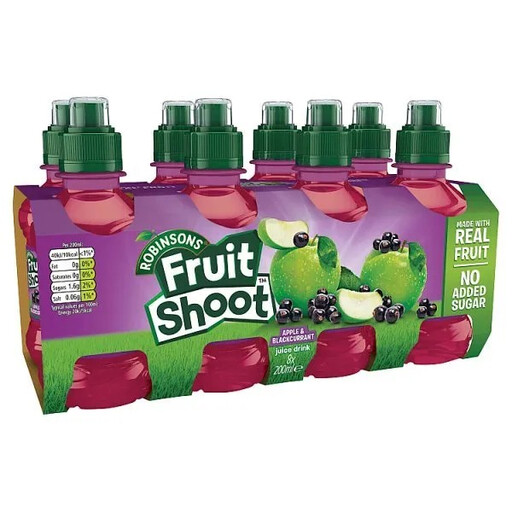
The option here is a portioned blackcurrant-and-apple drink, not plain apple juice. Consider that flavour distinction if the festival table calls for an apple-only drink.
 No image available
The eight 200ml bottles offer individual portions for a festival drinks table. This is a blackcurrant-and-apple drink rather than plain apple juice; check the current label for ingredients, sugars per serving and unopened storage directions before packing it. The product information warns that the caps contain small parts and states that it is unsuitable for children under 36 months.
No. Tesco and Sainsbury's each list 3.9g sugars per 150ml for their no-added-sugar apple-and-pear juice drinks, while the Tropicana and Copella pressed apple juices considered here list 15g per 150ml. The NHS says sugars naturally present in unsweetened fruit juice count as free sugars, so compare the nutrition panel rather than relying on the front-of-pack phrase.
Check the exact product's storage directions. The Tesco and Sainsbury's apple-and-pear juice drinks considered here can be stored cool and dry before opening, but both need refrigeration afterwards; Tesco specifies use within 5 days and Sainsbury's within 4 days of opening.
Apple squash makes sense when you have drinking water and a way to dilute and serve it. Follow the pack's dilution directions when comparing prepared servings, and check ingredients: the Sainsbury's apple squash considered here lists sweetener and sulphites.
Read each exact pack's current ingredient and allergen information. Tesco lists sucralose in its no-added-sugar apple-and-pear juice drink; Sainsbury's lists acesulfame K and sucralose in its equivalent drink, while the Sainsbury's and M&S apple squashes considered here list sulphites.