Households wanting plain apple juice
A 100% apple juice suits a weekly shop if plain juice matters more than finding the lowest sugars figure, and the household can use the opened pack within its label instructions.


Choose 100% apple juice if you want plain juice and are comfortable with its naturally occurring sugars: the Copella, innocent and Tropicana products listed by retailers contain 14–15g sugars per 150ml. If a lower sugars figure matters more than pure juice, Tesco lists a no-added-sugar juice drink with 3.1g per 150ml, made with 20% apple juice and sucralose. For a weekly shop, also check whether your household can finish an opened pack within the time stated on its label.
A 100% apple juice suits a weekly shop if plain juice matters more than finding the lowest sugars figure, and the household can use the opened pack within its label instructions.
A juice drink may suit someone prioritising a lower sugars figure per serving who is happy with less apple juice and a sweetener. Tesco’s listed no-added-sugar drink contains 20% apple juice from concentrate and sucralose.
A larger bottle needs to fit the number of people drinking it and its opened-life instructions. The NHS advises limiting fruit juice and smoothies to a combined 150ml a day, while the listed large Copella, innocent and Tropicana packs specify use within four or five days of opening.
Start with the type of drink you want, then compare sugars on the same volume basis and check whether the pack size works after opening.
| Priority | What to check | Your needs |
|---|---|---|
| Sugars | Read the sugars figure per 100ml or compare equal 150ml servings. Tesco lists 3.1g per 150ml for its juice drink; the listed Copella, innocent and Tropicana juices contain 14–15g per 150ml. | I want to compare the amount of sugar in a glass, not assume that “no added sugar” means sugar-free. |
| Drink type | Check whether the label says apple juice, apple juice drink or squash. Read the juice percentage, ingredients and any dilution instructions; a no-added-sugar claim alone does not identify the format. | For plain apple juice, I would choose a juice product. If a drink with sweetener or a dilutable apple-and-elderflower squash suits the household, I can compare those separately. |
| Pack and storage | Compare the pack volume with likely use after opening. The listed 1.35L Copella and 1.75L innocent juices say to use within four days; the 1.5L Tropicana juice says five days. Follow the pack’s refrigeration instructions. | A larger bottle is practical for us only if we can use it within the time on its label. |
| Portions | Check the volume of a serving or individual can. NHS Eatwell guidance limits fruit juice and smoothies to a combined total of no more than 150ml a day. | If I buy a large bottle or a multipack, I want to know how its serving size fits that guidance. |
Fruit juice still contains naturally occurring sugars. Tesco’s Tropicana listing and Asda’s Copella listing each give 15g sugars per 150ml.
Compare the sugars row at the same volume rather than relying on the front-of-pack wording.
Tesco’s listed no-added-sugar juice drink contains water, 20% apple juice from concentrate and sucralose. That is a different format from the listed 100% apple juices.
Decide whether pure juice or a lower sugars figure per serving matters more, then check the ingredients of the product you choose.
The listed Copella and innocent juices specify four days after opening; Tropicana specifies five. An unfinished bottle may therefore be wasted.
Match the pack to likely household use, refrigerate it as directed and follow its own use-within instruction.
M&S describes its Apple and Elderflower High Juice as a concentrate for dilution. It contains 50% apple juice from concentrate, elderflower flavouring and sucralose.
Choose it only if a dilutable, flavoured drink is what you want; check the product label for its preparation instructions.
These examples show how particular products differ; a brand name alone does not tell you the juice content, sugars or storage instructions of every variant.
Asda lists Copella Cloudy Apple as a 1.35L, not-from-concentrate juice.
Tesco lists a 1.75L innocent apple juice made from 100% apple juice, not from concentrate.
Tesco lists Tropicana Pressed Apple as a 1.5L, 100% pressed juice that is not from concentrate.
Tesco’s No Added Sugar Apple Juice Drink is a juice-drink alternative to 100% apple juice.
M&S Apple and Elderflower High Juice is a concentrate for dilution, rather than plain apple juice.
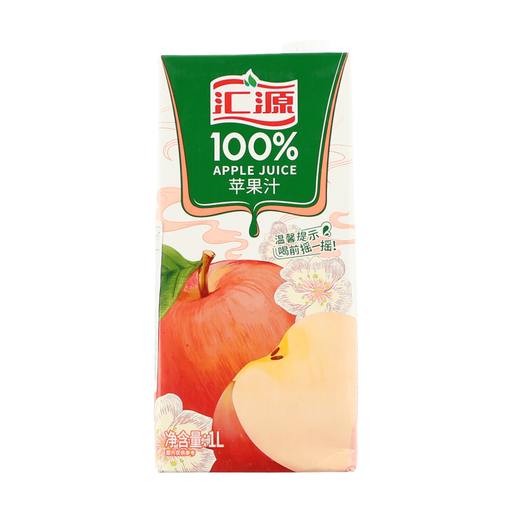
These Joybuy options are a sparkling apple-juice multipack and a 1L juice made with concentrate. Check their individual labels if the exact “no added sugar” wording or opened-pack instructions matter to your weekly shop.
 No image available
The separate cans may suit a household that wants a sparkling apple-juice multipack rather than one large opened bottle.
The listed ingredients identify carbonated apple juice from concentrate, with 10.5g sugars per 100ml. Each can holds 250ml; NHS guidance limits fruit juice and smoothies to a combined 150ml a day. Check the pack if an explicit no-added-sugar claim is important to you.
 No image available
This 1L pack is an option for a household wanting apple juice made with concentrate rather than a sparkling multipack.
The product description identifies it as 100% apple juice with no added sugar and lists water and apple juice concentrate as ingredients. It gives 10.2g sugars per 100ml. Check the packaging for refrigeration and use-within instructions before choosing it for a weekly shop.
No. Apple juice can contain naturally occurring fruit sugars without added sugar: Tesco’s listed Tropicana juice and Asda’s listed Copella juice each contain 15g sugars per 150ml. Check the sugars row for the amount in the product you are buying.
Choose 100% apple juice if plain juice is the priority; compare its naturally occurring sugars per serving. If the sugars figure matters more, a juice drink may suit you instead: Tesco’s listed no-added-sugar version contains 3.1g sugars per 150ml, but also contains 20% apple juice from concentrate and sucralose.
The NHS Eatwell Guide says fruit juice and smoothies should be limited to a combined total of no more than 150ml a day. Check serving volumes when comparing a large bottle with individual cans.
Follow the instructions on the pack you buy. The listed Copella and innocent juices specify refrigeration and use within four days of opening; the listed Tropicana juice specifies use within five days.
No. M&S describes its Apple and Elderflower High Juice as a concentrate for dilution, containing 50% apple juice from concentrate alongside elderflower flavouring and sucralose. It is a flavoured alternative, not plain apple juice.