Households using beans several times a week
A multipack can provide cupboard stock for several meals. Compare the number of cans and total quantity with how many cans your household usually opens during one shopping cycle.


For a household that uses baked beans regularly and has cupboard space, a six- or eight-can pack can cover more meals between shops. A four-can pack may suit a shorter shopping cycle; if the recipe matters, compare salt and sugars on the exact pack rather than choosing by pack size alone.
A multipack can provide cupboard stock for several meals. Compare the number of cans and total quantity with how many cans your household usually opens during one shopping cycle.
Standard, reduced-salt and reduced-sugar recipes are distinct choices. Check the nutrition panel and ingredients on the particular pack, especially when different family members eat different portions.
Start with the number of cans your household will use, then check the recipe and what happens to any leftovers from an opened can.
| Priority | What to check | Your needs |
|---|---|---|
| Pack quantity | Compare can count and total net quantity: eight 415g cans contain 3.32kg, while four 400g cans contain 1.6kg. Allow cupboard space for the unopened pack. | We use beans regularly, so I want enough cans to last until the next large shop. |
| Can size and leftovers | Check the quantity in each can against the amount used at one meal. Read that product’s instructions for refrigerating and using any opened leftovers. | If we rarely finish a can at once, I need a plan for the remainder rather than choosing on total pack size alone. |
| Salt and sugars | Compare figures per 100g and for the portion you serve. Read the ingredients as well as reduced-salt or no-added-sugar wording; those phrases do not describe every aspect of a recipe. | The recipe matters in our household, and portions may differ between family members. |
| Dietary requirements | Check the exact pack’s ingredients, allergen information and any vegetarian, vegan or gluten-free labelling. Do not assume one variant has the same recipe as another. | Someone eating the beans may need a particular ingredient or allergen check. |
A no-added-sugar recipe can still list sugars in its nutrition panel. Recipe wording also says nothing by itself about the salt content.
Check sugars and salt on the exact pack, along with its ingredients, before deciding whether that variant fits your household’s preferences.
An unopened multipack provides cupboard stock, but opening one can creates a separate leftovers decision. Branston’s 4 x 410g product and the Essential by Waitrose 420g can both instruct shoppers to refrigerate unused contents and use them within two days.
Plan meals around the amount in each can. If there are leftovers, follow the storage and use-within directions on that particular product.
Recipes can differ between variants. GOV.UK states that regulated allergens used as ingredients in prepacked food must be clearly identified in the ingredients list.
Check the current physical pack’s ingredients and allergen labelling before serving it to someone with a relevant allergy.
These ranges illustrate different pack sizes and recipes; the brand name alone does not tell you which variant fits your shop.
Tesco lists Heinz baked beans in an 8 x 415g format, while Sainsbury’s lists a 6 x 415g format.
ASDA lists a reduced-salt-and-no-added-sugar baked-bean pack of 4 x 410g.
Sainsbury’s lists own-label standard and reduced-sugar-and-salt baked beans in 4 x 400g packs.
The Essential by Waitrose range includes a standard 420g can and a separate reduced-salt-and-sugar option.
M&S lists Only 7 Ingredients Baked Beans in a 1.6kg format alongside smaller baked-bean options.
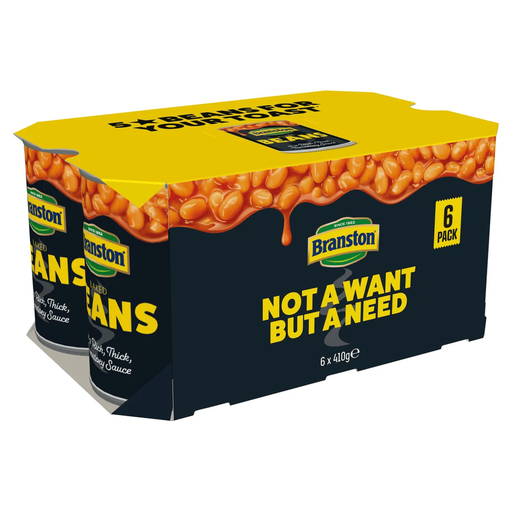
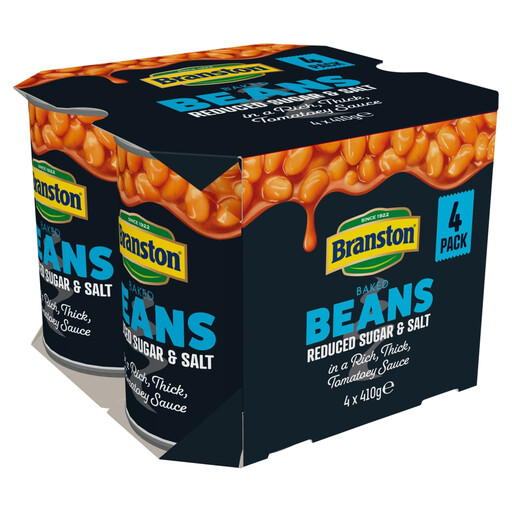
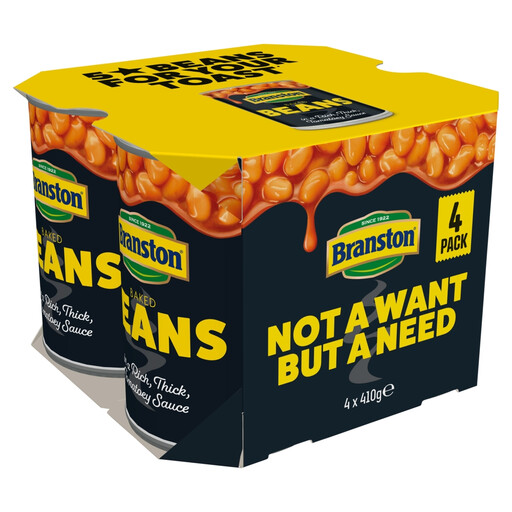
These Branston multipacks cover a six-can standard recipe and two four-can choices for a large household shop. Compare the can count and the exact recipe before choosing.
 No image available
Six 410g cans provide cupboard stock for a household that uses beans across several meals. Follow the product’s instructions for transferring and refrigerating leftovers from an opened can and using them within two days.
 No image available
This four-can pack is an option when a reduced-sugar-and-salt recipe matters more to your household than having six cans in the pack. Its ingredients include sugar and steviol glycosides: reduced sugar does not mean no added sugar.
 No image available
Four 410g cans suit a shop planned around smaller quantities than the six-can option above. ASDA’s listing for this Branston product states 0.60g salt per 100g; check the pack when comparing recipes. Transfer and refrigerate leftovers from an opened can and use them within two days.
Choose the can count around how often your household eats beans and how much it uses at a meal. Tesco lists an 8 x 415g Heinz pack containing 3.32kg, while Sainsbury’s lists four-can 400g packs containing 1.6kg; the larger quantity is more useful only if you expect to use and store it.
Six cans make sense if your household will use the extra beans before the next shop and has room to store them. Four cans may fit a shorter shopping cycle; compare the quantity in each can as well as the outer pack count.
Follow the instructions on the particular product. ASDA’s listing for Branston 4 x 410g says to empty, cover and refrigerate unused beans and use them within two days; the Essential by Waitrose 420g can also gives a two-day refrigerated use-within period.
No. Check salt and sugars on the exact nutrition panel, using the same per-100g basis when comparing products, and read the ingredients. A no-added-sugar label does not mean the beans contain no sugars, and reduced-sugar wording does not establish that no sugar was added.
Check the ingredients and allergen information on the physical pack you are buying. GOV.UK states that any of the 14 regulated allergens used as ingredients in prepacked food must be clearly labelled in its ingredients list.