Hosts looking for familiar cola flavours
If zero sugar meets the brunch request, Coca-Cola Zero Sugar and Pepsi Max are branded cola options. Check the pack before choosing a flavour for the group rather than assuming the two taste alike.


If the brunch request is specifically for a cola labelled ‘no added sugar’, check the current pack for that wording; Tesco describes its Diet Cola this way. If zero sugar meets the request, consider the guests’ taste preferences and whether anyone wants a caffeine-free version. Check sweetener and phenylalanine information before serving a guest with phenylketonuria (PKU): the NHS says aspartame is not suitable for people with PKU.
If zero sugar meets the brunch request, Coca-Cola Zero Sugar and Pepsi Max are branded cola options. Check the pack before choosing a flavour for the group rather than assuming the two taste alike.
Coca-Cola GB describes Coca-Cola Zero Sugar Caffeine Free as free from sugar and caffeine; Pepsi UK lists Pepsi Max No Caffeine as a no-sugar option. Choose the specifically labelled caffeine-free variant rather than the regular version.
Tesco lists its Diet Cola as a 2-litre, no-added-sugar bottle. A sharing bottle may suit guests happy to pour their own drinks; individual cans offer a different serving format.
Decide whether the exact ‘no added sugar’ wording matters, then check caffeine, ingredients and the number of servings you need.
| Priority | What to check | Your needs |
|---|---|---|
| Sugar wording | Read the claim on the purchased pack and its sugars figure per 100 ml. Tesco describes Diet Cola as ‘no added sugar’; Pepsi UK lists 0 g sugars per 100 ml for Pepsi Max. | I need the pack to say ‘no added sugar’ if that is the specific request. Otherwise, I can decide whether a zero-sugar cola fits. |
| Caffeine | Look for an explicit caffeine-free label. Pepsi UK lists caffeine in regular Pepsi Max, while Coca-Cola GB and Pepsi UK identify separate caffeine-free zero-sugar variants. | Someone at brunch avoids caffeine, so I want a clearly labelled alternative to the regular cola. |
| Sweeteners | Read the ingredients and any phenylalanine statement on the exact pack. The NHS says aspartame is not suitable for people with PKU. | Before serving a guest with PKU, I need to check the particular drink rather than rely on its sugar claim. |
| Serving format | Compare bottle volume with the number and size of cans. Tesco lists Diet Cola in a 2-litre bottle; the Joybuy multipacks below contain 18 or 24 cans of 330 ml. | Will guests pour from a shared bottle, or would separate cans make serving easier for this brunch? |
Regular Pepsi Max lists caffeine in its ingredients, and regular Coca-Cola Zero Sugar is distinct from Coca-Cola’s caffeine-free variant. A zero-sugar choice alone may not meet a guest’s caffeine preference.
Choose a pack explicitly marked caffeine-free when needed, and check its ingredient list.
A sugar claim does not settle suitability for a guest with PKU. The NHS says aspartame is not suitable for people with PKU.
Check the exact pack for aspartame and a phenylalanine statement before serving it to that guest.
Coca-Cola GB offers Coca-Cola Zero Sugar and a separately labelled Coca-Cola Zero Sugar Caffeine Free variant.
Pepsi UK lists Pepsi Max and Pepsi Max No Caffeine as separate no-sugar colas.
Tesco describes its 2-litre Diet Cola as a no-added-sugar cola with caffeine and sweeteners.
These multipacks offer individual cans for a brunch where zero sugar meets the request. They include caffeine-free, regular and cherry-flavoured choices; check the purchased pack if you specifically need the words ‘no added sugar’.
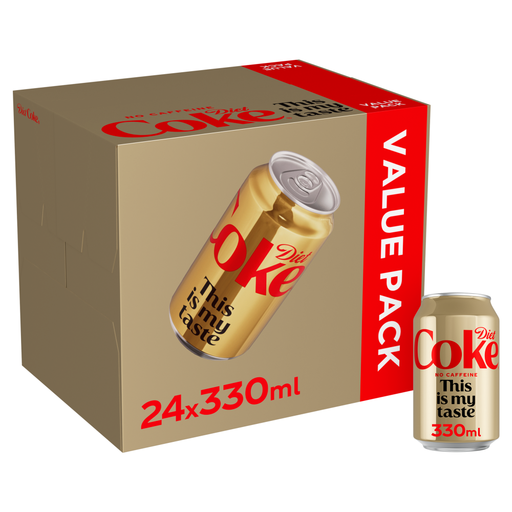 Image unavailable
Individual cans for guests who want a caffeine-free cola. The listing gives 0 g sugars per 100 ml and identifies aspartame and a phenylalanine statement. Check the pack if the exact ‘no added sugar’ wording is required or a guest has PKU.
 Image unavailable
A caffeine-free cola in individual cans. The listing gives 0 g sugars per 100 ml and identifies aspartame and a phenylalanine statement. Check the pack for the exact sugar wording or if a guest has PKU.
 Image unavailable
A regular cola option in individual cans when caffeine is acceptable. The listing gives 0 g sugars per 100 ml and lists caffeine, aspartame and a phenylalanine statement. Check the pack for the exact sugar wording or if a guest has PKU.
 Image unavailable
Individual cans of the regular Zero Sugar variant. The listing gives 0 g sugars per 100 ml and lists caffeine, aspartame and a phenylalanine statement. Choose a specifically caffeine-free variant for a guest avoiding caffeine, and check this pack for the exact sugar wording or if a guest has PKU.
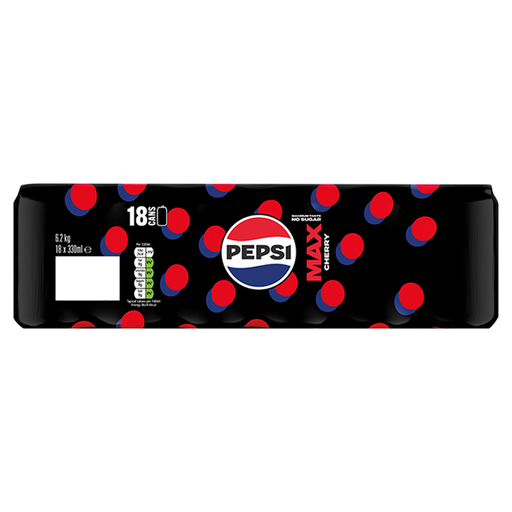 Image unavailable
A cherry-flavoured choice in individual cans. The listing gives 0 g sugars per 100 ml and lists caffeine, aspartame and a phenylalanine statement. It is not an unflavoured or caffeine-free cola; check the pack for the exact sugar wording or if a guest has PKU.
Check the purchased pack if the exact wording matters. Tesco describes its Diet Cola as ‘no added sugar’, while zero-sugar products such as Pepsi Max state their sugar content differently; do not assume the front-of-pack phrases are interchangeable for a specific shopping request.
Choose a variant expressly labelled caffeine-free, such as Coca-Cola Zero Sugar Caffeine Free or Pepsi Max No Caffeine. Regular Pepsi Max lists caffeine, so check the precise variant before serving.
It matters when a guest has phenylketonuria (PKU): the NHS says aspartame is not suitable for people with PKU. Check the ingredients and phenylalanine statement on the exact pack rather than judging suitability from its sugar claim.