If the words ‘no added sugar’ matter, look for them on the current pack: ASDA lists Cola Zero with a ‘zero added sugar’ product name, but a zero-sugar name alone does not establish the same claim. For a late dinner when you want to avoid caffeine, choose a named caffeine-free variant, such as Pepsi Max No Caffeine, which Pepsi UK describes as having no caffeine. Otherwise, compare sugars per 100 ml, ingredients and pack size; a zero-sugar cola can still contain sweeteners and caffeine.
Who is this choice for?
TV-dinner shoppers avoiding sugar
If you want cola alongside a ready meal or takeaway-style dinner, compare the ‘of which sugars’ figure on the exact drink and serving you plan to have. Several named zero-sugar colas list 0 g sugars per 100 ml, but their ingredients differ.
Shoppers looking for ‘no added sugar’ wording
If the claim itself matters, check the product name or label rather than inferring it from ‘Zero Sugar’. ASDA Groceries names its Cola Zero as a ‘zero added sugar’ drink with sweeteners.
Evening drinkers avoiding caffeine
A sugar-free name does not tell you whether a cola contains caffeine. Choose the exact caffeine-free variant and check its pack: standard Pepsi Max and Coca-Cola Zero Sugar list caffeine or caffeine flavouring in their product information.
What should you check?
Start with the claim you need, then check caffeine on the exact variant. Ingredients, warnings and pack format can help you choose between drinks that meet those requirements.
| Priority |
What to check |
Your needs |
| Sugar and claim wording |
Check ‘of which sugars’ per 100 ml and the wording on the current pack. The nutrition-claim conditions published by legislation.gov.uk distinguish ‘no added sugar’, which concerns added sugars or foods used for sweetening, from ‘sugar-free’, which has a limit of 0.5 g sugars per 100 ml. |
I want the label to say ‘no added sugar’, rather than relying on a zero-sugar product name. If the amount of sugar is my main concern, I can compare the nutrition panels instead. |
| Caffeine |
Look for an explicit ‘no caffeine’ or ‘caffeine free’ variant name, then check its ingredients. Pepsi UK describes Pepsi Max No Caffeine as caffeine-free; its standard Pepsi Max product information lists caffeine. |
For a later TV dinner, I want to avoid picking up the caffeinated version by mistake. |
| Sweeteners and warnings |
Read the sweetener list and any warning on the exact pack. ASDA lists acesulfame K and sucralose for Cola Zero; some named cola packs also carry a source-of-phenylalanine warning. |
I need to know which ingredients are in my drink, particularly if a listed ingredient or warning matters to me. |
| Pack format |
Compare the stated bottle volume or number and size of cans. Use the serving information on the pack if you want to compare what you would pour or open with dinner. |
A bottle may suit a shared meal; individual cans may be easier for me to keep for separate dinners. |
Common mistakes to avoid
-
Treating ‘no added sugar’ and ‘sugar-free’ as the same claim
Legislation.gov.uk publishes separate conditions for the two claims: one concerns what has been added for sweetening, while the other sets a sugar-content limit.
If you require ‘no added sugar’ wording, check for that claim on the current pack. Use the nutrition panel to compare sugar content, not to assume that a different claim appears on the label.
-
Assuming zero sugar means no caffeine
Pepsi UK lists caffeine in standard Pepsi Max, and Coca-Cola GB lists caffeine flavouring in standard Coca-Cola Zero Sugar. A caffeine-free version is a distinct product choice.
When avoiding caffeine, choose a variant explicitly named caffeine-free or no caffeine and check its ingredient list.
-
Skipping the ingredients because the drink has no sugar
The named zero-sugar and zero-added-sugar examples use sweeteners. Some exact products also carry a source-of-phenylalanine warning, which may matter to someone who needs to consider that ingredient.
Read the ingredients and warnings on the pack you buy, particularly if you have an individual dietary reason to check them.
-
Relying on a product name when listing details conflict
An ASDA Groceries listing for a Coca-Cola Zero Sugar Zero Caffeine multipack describes it as having no caffeine in one place but says it contains caffeine elsewhere.
For that variant, confirm the caffeine information on the physical pack rather than resolving the contradiction from the online description.
Relevant cola brands
These brand references concern specific named drinks, not every cola in each brand’s range.
Coca-Cola
Coca-Cola GB lists 0 g sugars per 100 ml for standard Coca-Cola Zero Sugar, alongside sweeteners and caffeine flavouring.
- The published nutrition figure makes it possible to compare sugar content per 100 ml.
- Do not assume standard Coca-Cola Zero Sugar is caffeine-free. Check the exact pack of a separately named caffeine-free variant.
Pepsi
Pepsi UK lists 0 g sugars per 100 ml for Pepsi Max and describes Pepsi Max No Caffeine as having zero sugar and zero caffeine.
- The two named variants allow a choice according to whether caffeine is acceptable with dinner.
- Standard Pepsi Max lists caffeine and sweeteners; choose the exact no-caffeine variant when caffeine avoidance matters.
Tesco
Tesco Groceries lists Tesco Xero Cola as a sugar-free cola in a 2-litre bottle, with less than 0.1 g sugars per 100 ml.
- The stated bottle size and per-100 ml sugar figure help with pack and nutrition comparisons.
- Its listed ingredients include caffeine, acesulfame K and sucralose.
Asda
ASDA Groceries gives ASDA Cola Zero the product name ‘zero added sugar carbonated cola flavour soft drink with sweeteners’ and lists less than 0.5 g sugars per 100 ml.
- Its named product makes the ‘zero added sugar’ wording explicit for shoppers seeking that claim.
- The listed ingredients include caffeine, acesulfame K and sucralose; it is not the caffeine-free route.
Joybuy cola options
These multipacks offer caffeine-free choices for a later dinner and standard colas for when caffeine is acceptable. If you specifically require ‘no added sugar’ wording, check the current pack rather than assuming it from a sugar-free or zero-sugar name.
 Image unavailable
Pepsi Max Caffeine Free 24 x 330 ml
A 24-can option for a TV dinner when avoiding caffeine matters. The product information reports 0 g sugars per 100 ml and lists aspartame, acesulfame K and a source-of-phenylalanine warning; check the current pack if an ingredient or the exact claim wording matters to you.
View on Joybuy
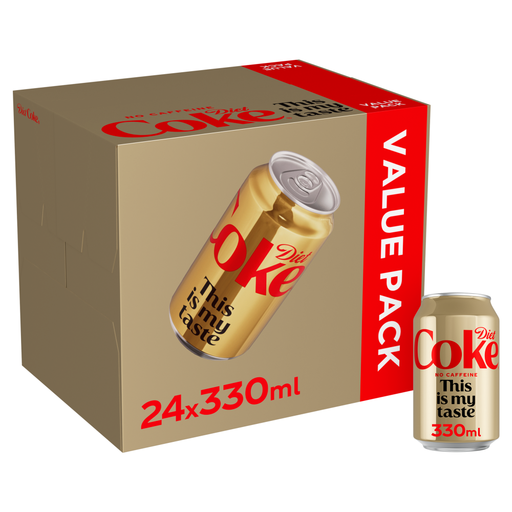 Image unavailable
Diet Coke No Caffeine 24 x 330 ml
Another 24-can choice when you want cola with dinner but are avoiding caffeine. The product information reports 0 g sugars per 100 ml and lists aspartame, acesulfame K and a source-of-phenylalanine warning; check the pack for its current ingredients and claim wording.
View on Joybuy
 Image unavailable
Pepsi Max 24 x 330 ml
A 24-can cola option when avoiding sugar is the priority and caffeine is acceptable. Its product information reports 0 g sugars per 100 ml and lists caffeine, aspartame, acesulfame K and a source-of-phenylalanine warning.
View on Joybuy
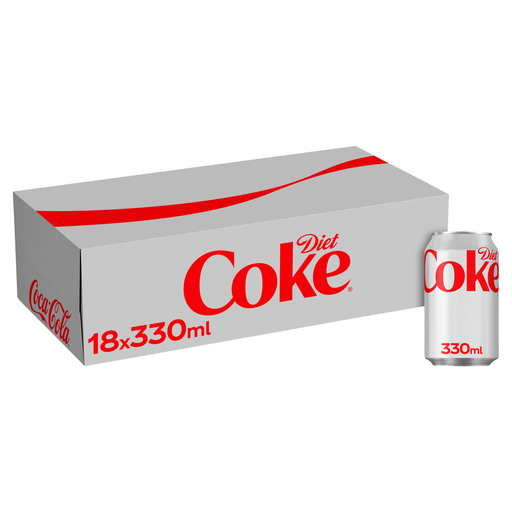 Image unavailable
Diet Coke 18 x 330 ml
An 18-can option for dinner when caffeine is acceptable. The product information reports 0 g sugars per 100 ml and lists caffeine, aspartame, acesulfame K and a source-of-phenylalanine warning; this is not the separately named No Caffeine variant.
View on Joybuy
 Image unavailable
Coca-Cola Zero Sugar 24 x 330 ml
A 24-can option for dinner when you want zero-sugar cola and caffeine is acceptable. The product information reports 0 g sugars per 100 ml and lists caffeine, sweeteners and a source-of-phenylalanine warning; check the pack if you need a particular claim or ingredient list.
View on Joybuy
Frequently asked questions
Does ‘Zero Sugar’ mean ‘no added sugar’?
No: the name alone does not establish that the pack makes a ‘no added sugar’ claim. Legislation.gov.uk publishes distinct conditions for ‘sugar-free’—no more than 0.5 g sugars per 100 ml of drink—and ‘no added sugar’, which concerns added sugars or foods used for sweetening. Check the current label if you need the latter wording.
Which named cola uses ‘zero added sugar’ wording?
ASDA Groceries names its Cola Zero 2 Litres as a ‘zero added sugar carbonated cola flavour soft drink with sweeteners’. Its listing reports less than 0.5 g sugars per 100 ml and includes caffeine, so check the current bottle for both the claim and ingredients.
What should I choose if I want to avoid caffeine at dinner?
Choose a specifically named caffeine-free cola, not just one labelled zero sugar. Pepsi UK describes Pepsi Max No Caffeine as having zero caffeine and zero sugar, while its standard Pepsi Max product information lists caffeine. Check the exact variant on the pack.
Are no-added-sugar colas unsweetened?
Not necessarily. ASDA Groceries names acesulfame K and sucralose in its zero-added-sugar Cola Zero. Read the ingredient list on the drink you choose if particular sweeteners matter to you.
Should I check the can or bottle after ordering online?
Yes. Check the physical pack’s claim wording, sugars, caffeine information, ingredients and warnings before drinking it. This is particularly important if you ordered an exact caffeine-free variant or need to consider a source-of-phenylalanine warning.


