Parents planning a family snack occasion
A cola might be one drink at a half-term gathering, but it need not take the place of water or milk for children. The NHS recommends water and milk as their everyday drinks.


If the exact wording ‘no added sugar’ matters, choose a cola whose current pack or listing states it explicitly; Tesco Diet Cola is one example. If avoiding caffeine matters more, look for a specifically labelled caffeine-free variant rather than assuming a standard zero-sugar cola has no caffeine. For children, the NHS recommends water and milk as everyday drinks, so a cola for a half-term snack is a separate, occasional choice.
A cola might be one drink at a half-term gathering, but it need not take the place of water or milk for children. The NHS recommends water and milk as their everyday drinks.
Check the exact pack or product listing for that wording. A ‘zero sugar’ name alone does not establish that the product carries a ‘no added sugar’ claim.
Choose a cola specifically labelled caffeine free and check the current ingredients. Coca-Cola GB and Pepsi UK distinguish their caffeine-free zero-sugar variants from their standard versions.
Start with the label requirement, then check caffeine and the pack format for the occasion.
| Priority | What to check | Your needs |
|---|---|---|
| No-added-sugar wording | Look for the exact claim on the current pack or listing. Check the ingredients and declared sugars per 100ml separately; Tesco Groceries describes its Diet Cola as no added sugar and lists sweeteners. | I need the product to say ‘no added sugar’, not merely ‘zero sugar’. |
| Caffeine | Check for ‘caffeine free’ on the specific variant and review its ingredients. Coca-Cola GB and Pepsi UK list caffeine in their standard zero-sugar colas and offer separate caffeine-free versions. | For this occasion, avoiding caffeine matters more to me than choosing a standard cola variant. |
| Children’s everyday drinks | Keep the drink’s role separate from its sugar label. The NHS recommends water and milk as everyday drinks for children; Healthier Together NHS advises avoiding fizzy drinks. | I’m choosing drinks for a snack gathering, while keeping water or milk available for routine drinking. |
| Pack format | Check the quantity and container size for the exact product. Individual cans and a larger bottle serve drinks differently at a group occasion. | Would separate cans be useful, or would one bottle suit the group? |
A zero-sugar name does not, by itself, confirm that the exact no-added-sugar wording appears on that product.
If that wording is essential, read the claim and ingredients on the current pack or listing for the format you intend to buy.
Coca-Cola GB and Pepsi UK list caffeine in their standard zero-sugar colas, while offering separately named caffeine-free variants.
Choose the specifically labelled caffeine-free version when avoiding caffeine matters, and check its current ingredients.
A sugar claim does not change the NHS guidance that water and milk are the preferred everyday drinks for children.
Keep water or milk available when planning drinks for a family snack occasion.
The Department for Education describes England’s school-food standards as requirements for food and drink provided in state-funded schools, not for family snacks bought for home.
If the drinks are instead being bought for a school, check the rules for that nation and setting before ordering.
Coca-Cola GB lists Coca-Cola Zero Sugar and a separate Coca-Cola Zero Sugar Caffeine Free variant.
Pepsi UK presents Pepsi Max and Pepsi Max No Caffeine as distinct no-sugar colas.
Tesco Groceries explicitly describes its Diet Cola as a no-added-sugar drink, including an 8 × 330ml can pack and a 2-litre bottle.
Sainsbury’s grocery range lists own-label Cola Zero and Diet Cola alongside branded zero-sugar colas.
These can multipacks cover caffeine-free and standard cola variants for a half-term snack occasion. If you require the exact ‘no added sugar’ claim, check the current pack or listing before choosing.
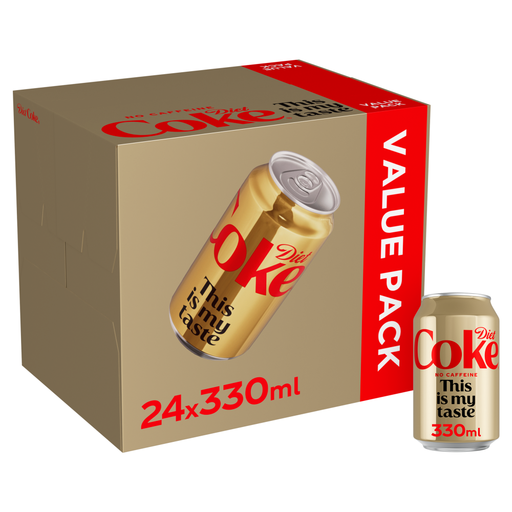 No image available
A caffeine-free Diet Coke variant in individual 330ml cans. If you need an explicit no-added-sugar claim, check the current pack or listing.
 No image available
For a Pepsi Max variant without caffeine, in individual 330ml cans. Pepsi UK describes the caffeine-free variant as no sugar; check the pack if you specifically require ‘no added sugar’ wording.
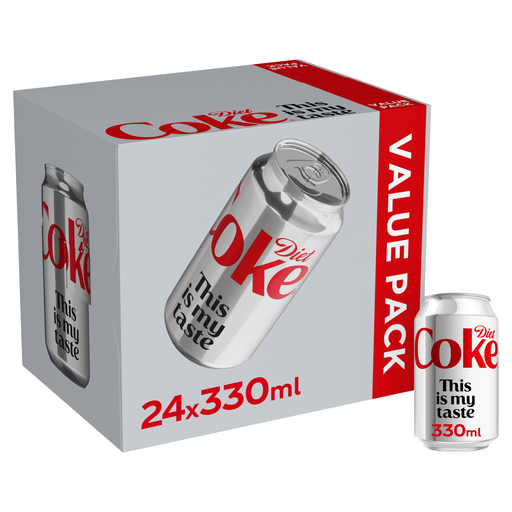 No image available
Individual Diet Coke cans for serving separately. Check this pack’s sugars declaration, no-added-sugar wording and ingredients against your requirements; do not assume the standard variant is caffeine free.
 No image available
Standard Pepsi Max in individual cans. Pepsi UK lists 0g sugars per 100ml for this cola and includes caffeine in its ingredients; choose the separately named caffeine-free variant if avoiding caffeine.
 No image available
Individual cans of the standard Zero Sugar variant. Coca-Cola GB lists 0g sugars per 100ml and caffeine flavouring; check the pack for an exact no-added-sugar claim if required.
No. The claim does not mean the drink is unsweetened: Tesco Groceries describes Diet Cola as no added sugar while listing sweeteners. Read the ingredients if a particular sweetener matters to you.
Not necessarily. Coca-Cola GB lists caffeine flavouring in standard Coca-Cola Zero Sugar, and Pepsi UK lists caffeine in standard Pepsi Max. Both offer separately named caffeine-free variants; check the specific pack.
The NHS recommends water and milk as everyday drinks for children. A no-added-sugar label answers a different question about the product, so keep those everyday drinks available when planning a snack occasion.
England’s school-food standards do not govern family shopping at home. The Department for Education identifies them as requirements for food and drink provided in state-funded schools in England. If you are buying for a school rather than home, check the rules for its nation and setting.