Who these choices suit
The useful distinction is whether your lunch choice is mainly about listed sugars, caffeine or a particular ingredient.
Cola drinkers checking sugars
If you want cola with 0g or very low listed sugars, compare the figure per 100ml on the exact pack. Coca-Cola Zero Sugar and Pepsi Max list 0g sugars per 100ml on their UK product pages; Tesco and Asda list small amounts for their diet colas. These drinks are not necessarily free of sweeteners.
People avoiding caffeine at lunch
Pepsi UK describes Pepsi Max No Caffeine as containing zero caffeine and lists 0g sugars per 100ml. Standard Pepsi Max, Coca-Cola Zero Sugar and the Tesco and Asda diet colas described here list caffeine or caffeine flavouring, so check the particular variant rather than the sugar wording.
People who must check for aspartame
Check the ingredients and phenylalanine statement on the exact drink. The NHS says aspartame is not suitable for people with phenylketonuria (PKU); the Coca-Cola Zero Sugar and Pepsi Max product information identifies aspartame or a source of phenylalanine.
What to check before choosing
Start with the nutrition panel and ingredients, then check whether the caffeine status and pack size work for one lunch.
| Priority | What to check | Your needs |
|---|
| Listed sugars |
Compare sugars per 100ml on the exact variant. Coca-Cola GB and Pepsi UK list 0g for Coca-Cola Zero Sugar and Pepsi Max; Tesco lists under 0.1g for Tesco Diet Cola and Asda lists under 0.5g for Asda Diet Cola. |
I want cola alongside lunch while keeping an eye on the sugars shown on the pack. |
| Caffeine |
Look for an explicit caffeine-free variant and check its ingredients. Pepsi UK identifies Pepsi Max No Caffeine as containing zero caffeine; Asda declares 25mg per 250ml serving for its Diet Cola. |
For an afternoon at my desk, I may want to avoid caffeine or take account of what I also drink during the day. |
| Sweeteners |
Read the ingredient list rather than treating ‘no added sugar’ as ‘unsweetened’. Tesco Diet Cola lists acesulfame K and sucralose; Pepsi Max lists aspartame and acesulfame K. Check for a phenylalanine statement if aspartame matters to you. |
I need to know which sweeteners are in my cola; for someone with PKU, the NHS says aspartame is unsuitable. |
| Pack format |
Check can size, number of cans and, for a large bottle, the instructions after opening. Tesco says to consume its 2-litre Diet Cola within 3 days of opening. |
A can gives me a defined lunch portion; if I choose a larger bottle, I need somewhere to keep it and a plan to use it after opening. |
Brand and own-label references
These examples show why the variant and its ingredients matter more than the brand name alone.
Coca-Cola
Coca-Cola GB positions Coca-Cola Zero Sugar as closer in taste to Coca-Cola Original Taste and describes Diet Coke as a different, lighter flavour blend.
- Coca-Cola GB lists 0g sugars and 0.3kcal per 100ml for Coca-Cola Zero Sugar.
- Coca-Cola Zero Sugar lists sweeteners and caffeine flavouring and carries a source-of-phenylalanine statement.
Pepsi
Pepsi UK offers standard Pepsi Max and a separate Pepsi Max No Caffeine variant.
- Pepsi UK lists 0g sugars per 100ml for both variants and describes Pepsi Max No Caffeine as containing zero caffeine.
- Both variants list aspartame and acesulfame K; standard Pepsi Max also lists caffeine.
Tesco
Tesco describes its 2-litre Diet Cola as a no-added-sugar cola drink with caffeine and sweeteners.
- Tesco lists under 0.1g sugars per 100ml for this product.
- Its ingredients include caffeine, acesulfame K and sucralose; Tesco says to consume it within 3 days of opening.
Asda
Asda Diet Cola is an own-label diet cola sold in a 2-litre bottle.
- Asda lists under 0.5g sugars and 1kcal per 100ml for this product.
- Its ingredients include sucralose, acesulfame K and caffeine; Asda declares 25mg caffeine per 250ml serving.
Cola multipacks on Joybuy
These are 330ml-can multipacks for the desk-lunch scenario, including caffeine-free and standard cola variants. Check the exact variant if avoiding caffeine or a particular sweetener is important to you.
 No image available
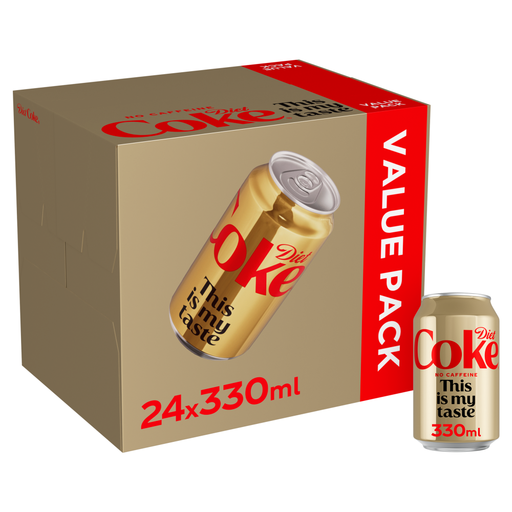
Diet Coke No Caffeine 24 x 330ml
A caffeine-free Diet Coke variant in 330ml cans for an individual lunch. Check the current ingredients if you need to avoid aspartame or another sweetener.
 No image available
Pepsi Max Caffeine Free 24 x 330ml
A 330ml-can option when you want the caffeine-free Pepsi Max variant. Pepsi UK lists 0g sugars per 100ml for Pepsi Max No Caffeine; it still contains aspartame and acesulfame K.
 No image available
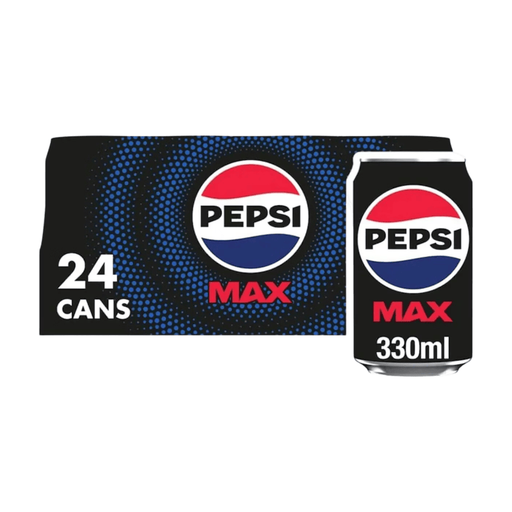
Pepsi Max 24 x 330ml
The standard Pepsi Max variant in 330ml cans. Pepsi UK lists 0g sugars per 100ml and ingredients including caffeine, aspartame and acesulfame K; choose the separate caffeine-free variant if caffeine avoidance is the deciding factor.
 No image available
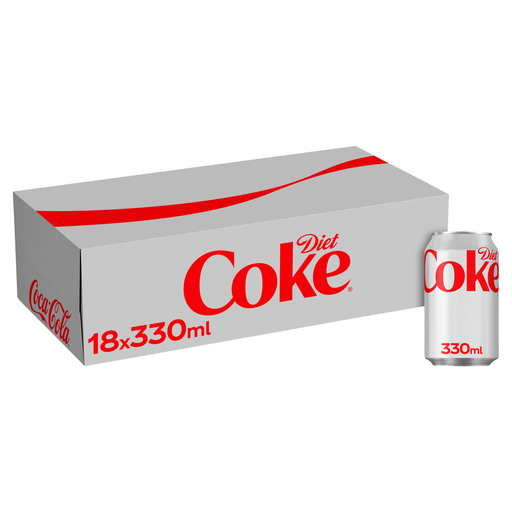
Diet Coke 18 x 330ml
An 18-pack of 330ml Diet Coke cans for lunches where a single can is convenient. Coca-Cola GB describes Diet Coke as having a different flavour blend from Coca-Cola Zero Sugar; check this pack’s ingredients and caffeine status before choosing it for a specific restriction.
 No image available
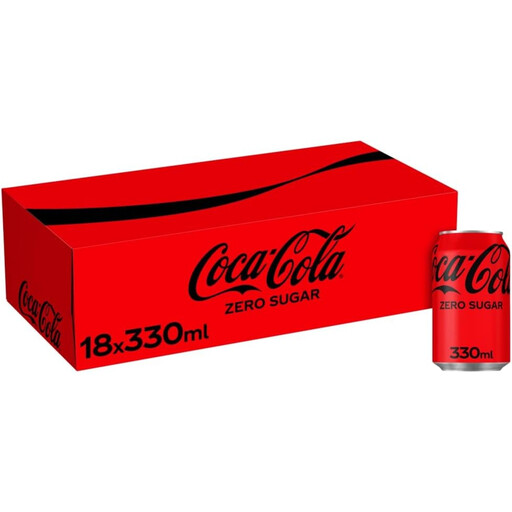
Coca-Cola Zero Sugar 18 x 330ml
An 18-pack of 330ml cans for a lunch-sized serving. Coca-Cola GB lists 0g sugars per 100ml for Coca-Cola Zero Sugar; its ingredients include sweeteners and caffeine flavouring, so it is not the caffeine-free choice.
Questions about desk-lunch cola
Does ‘no added sugar’ mean a cola has no sweeteners?
No. Tesco calls its Diet Cola no added sugar, but lists acesulfame K and sucralose. Read the sugars figure and ingredients separately.
Which cola should I check if I want to avoid caffeine at lunch?
Look for an explicitly caffeine-free variant and confirm the current pack label. Pepsi UK describes Pepsi Max No Caffeine as containing zero caffeine and lists 0g sugars per 100ml; standard Pepsi Max lists caffeine.
Why does a cola label mention phenylalanine?
A source-of-phenylalanine statement can identify an aspartame-containing drink. UK food-labelling guidance specifies phenylalanine wording for aspartame, and the NHS says aspartame is not suitable for people with phenylketonuria (PKU).
Does zero sugar remove concerns about acidic drinks?
No. The NHS notes that carbonated drinks are associated with dental erosion because of their acidity, including when they use sweeteners. A zero-sugar label answers a sugar question, not every question about frequent consumption.
What should I check before buying a cola multipack?
Check the exact variant’s sugars per 100ml, ingredients, caffeine status, can size and number of cans. Read the current pack label, particularly if avoiding an ingredient, because product formulations can change.


